Up and down the Malay peninsula
Street food and skylines from Singapore to Kuala Lumpur, colonial George Town, and a beach finale on Phuket's Phi Phi islands.
Singapore
- Countries
- 🇸🇬 Singapore · 🇲🇾 Malaysia · 🇹🇭 Thailand
- Region
- Asia
- Duration
- 15 days
- Best months
- February–April
Highlights
- Streetfood culture, both Singapore and KL are great for this.
- Rooftop pool views over KL during the day and the night.
- Penang's streetart and colonial buildings are a must-see.
- Island hopping around the Phi-Phi archipelago is out of this world.
Quick tips
- Singapore is one of the most expensive places we've visited, but it is 100% worth it.
- Malaysia is somewhat underdeveloped for tourism, so the experience can be a bit more authentic.
- Travel via low-cost direct flights between the different cities.
- Best weather for visiting is from January to April.
Day 1
01
🇸🇬 Singapore
Arrive and settle in, discover the city and its streetfood culture.
Day 2
02
🇸🇬 Singapore
Gardens by the Bay and Chinatown free walking tour
Day 3
03
🇸🇬 Singapore • 🇲🇾 Kuala Lumpur
Little India and flight to Kuala Lumpur
Day 4
04
🇲🇾 Kuala Lumpur
City tour, KLCC, street food at Jalan Alor
Day 5
05
🇲🇾 Cameron Highlands
Day trip to tea plantations, butterfly farm and strawberry farm
Day 6
06
🇲🇾 Taman Negara
Canopy walk, river cruise and jungle trek in the oldest rainforest in Malaysia
Day 7
07
🇲🇾 Kuala Lumpur
Batu Caves and National Mosque of Malaysia
Day 8
08
🇲🇾 Kuala Lumpur
Petronas Towers and KL Bird Park
Day 9
09
🇲🇾 Kuala Lumpur • 🇲🇾 Penang
Flight to Penang, exploring the old town and street art
Day 10
10
🇲🇾 Penang
Penang hill and Kek Lok Si temple
Day 11
11
🇲🇾 Penang • 🇹🇭 Phuket
Flight to Phuket, beach time
Day 12
12
🇹🇭 Phuket
Relax on the beaches in Patong
Day 13
13
🇹🇭 Phi Phi Islands
Island hopping tour, Maya Bay, Pileh Lagoon and Bamboo Island
Day 14
14
🇹🇭 Phuket • 🇸🇬 Singapore
Half-day beach time, then Flight back to Singapore
Day 15
15
🇸🇬 Singapore
Last day in Singapore, last walking tour
Days 1-3: Singapore
After a long flight from Istanbul, you would expect to be exhausted, but Singapore is the kind of city that will energize you, even on a hot, humid day at 30°C. As we later found out, that’s just called a day in Singapore.
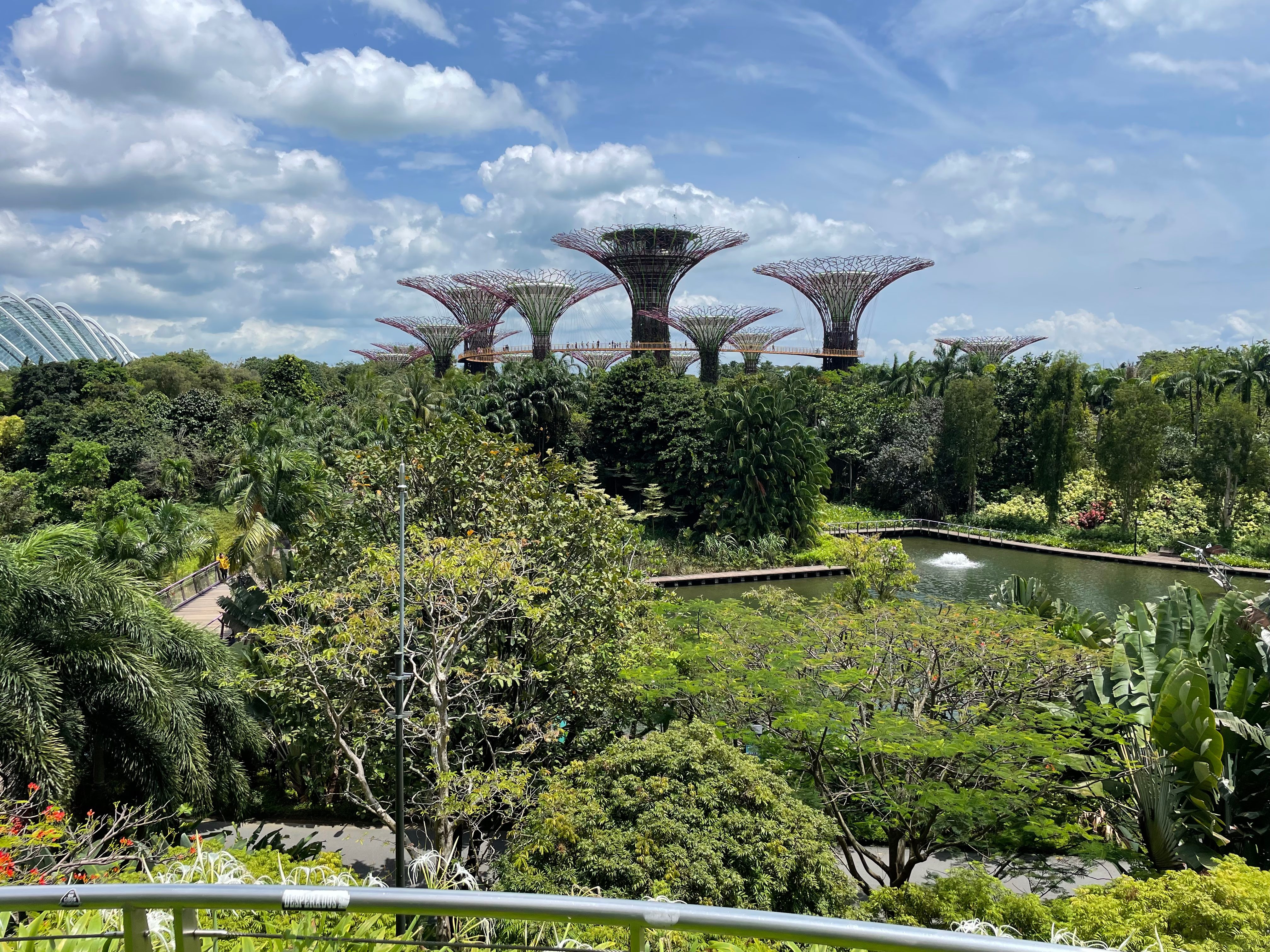
We instantly fell in love with the city, with its green spaces and clean streets. The promenade along the Singapore River is one of the best spots to enjoy evening strolls or some running.
And of course the famous Marina Bay area is absolutely breathtaking day and night.
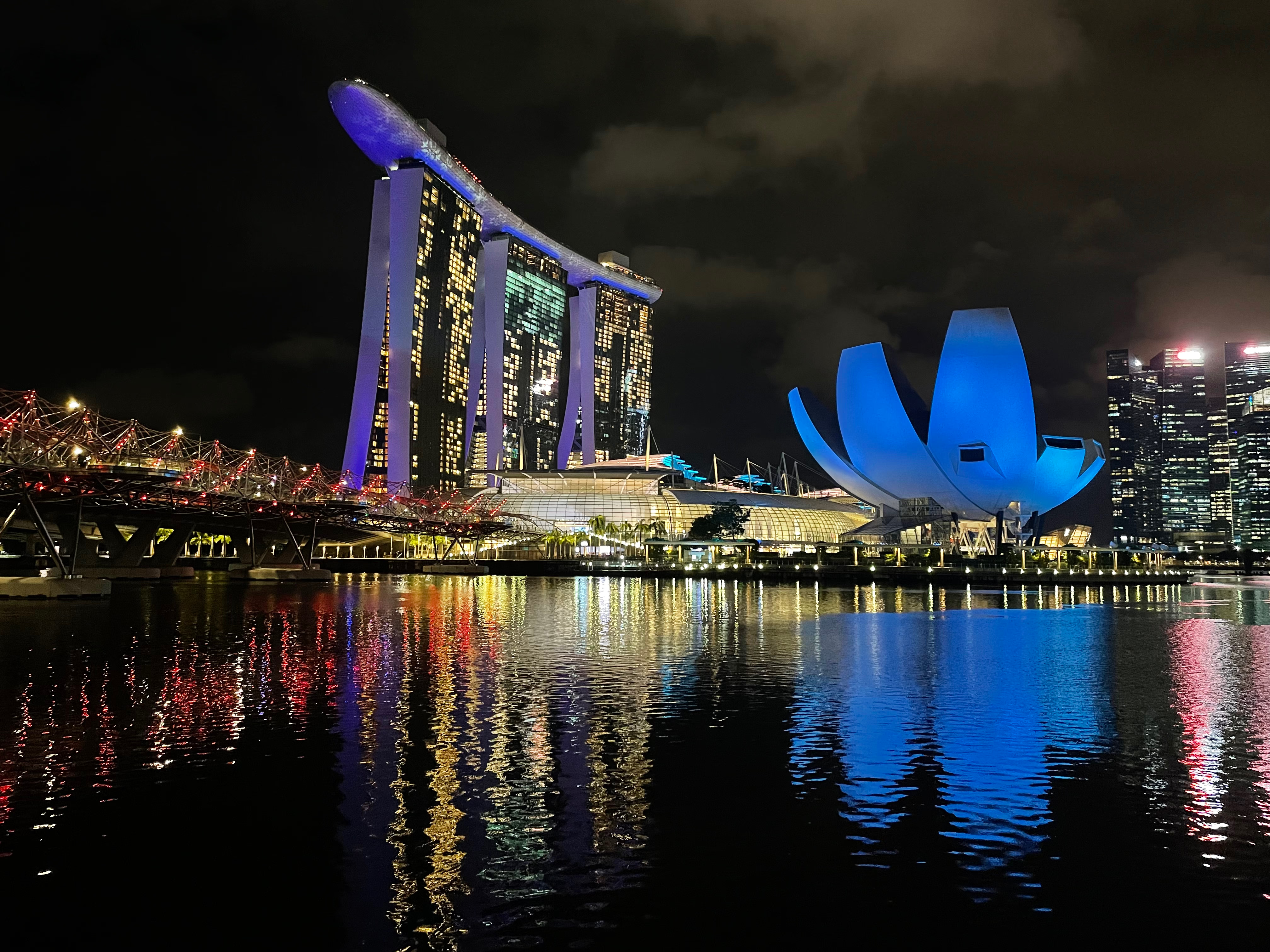
Don’t miss the Gardens by the Bay evening shows and the Spectra light show in front of Marina Bay Sands. It’s hard to describe how captivating these shows are. For more photos of the skyline and the light shows, see our Singapore by night spotlight.
What’s unique about Singapore is the mix of cultures that can be sampled in the historical neighbourhoods: Chinatown, Little India and Kampong Glam, the latter being the Muslim quarter. We wrote more about those areas in our historic districts of Singapore guide.
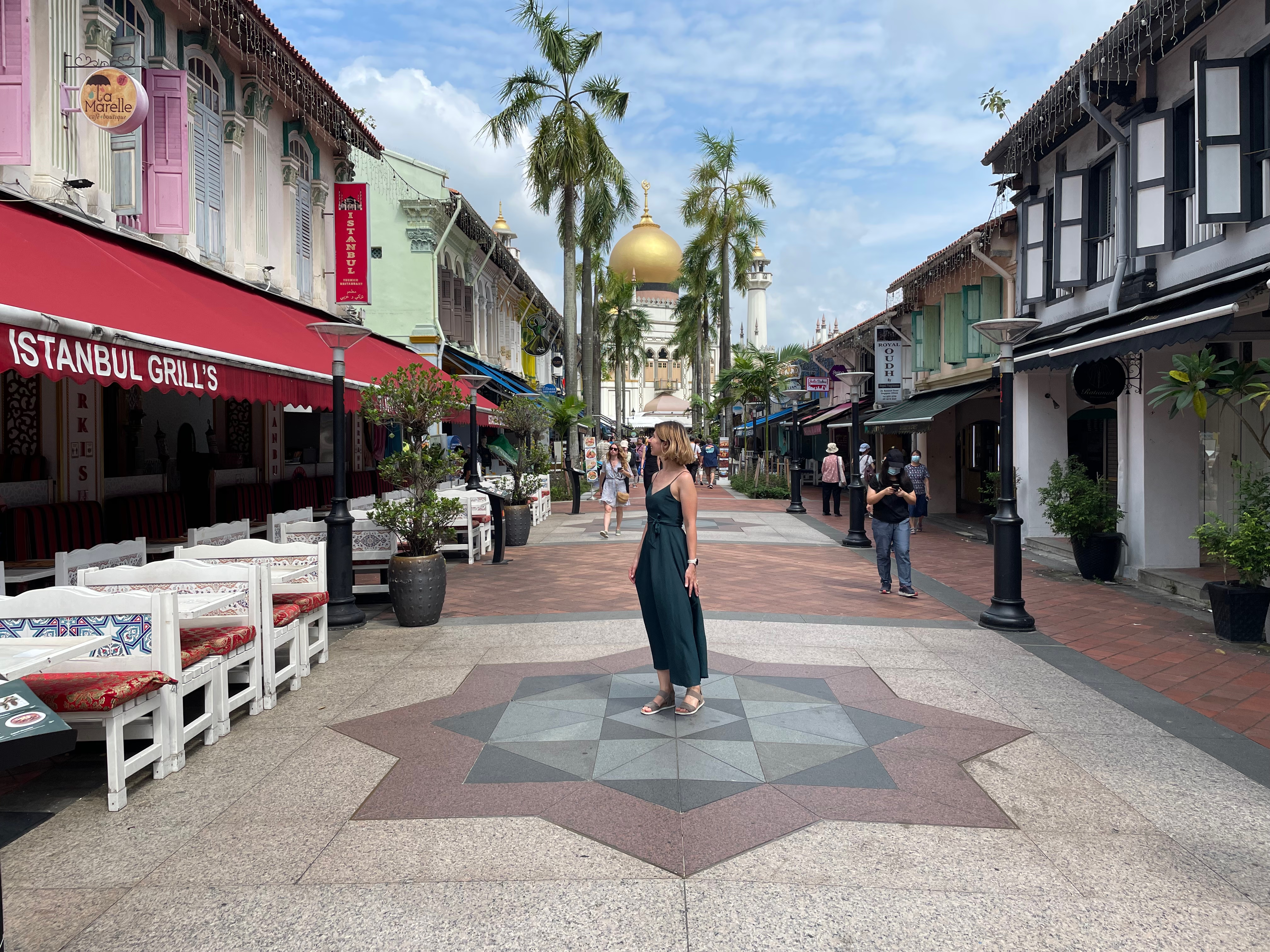
There are tons of stereotypes about Singapore’s strict laws, and while some of those are true (like a strict ban on any kind of drugs), the reality is that the city is one of the safest and most welcoming places in the world.
One thing which is definitely true is that the city is very expensive. Hotels, restaurants and bars tend to be 50% more expensive than even the most expensive cities in Europe. Luckily, you can enjoy the numerous hawker centers around the city, which are a great way to sample the local street food culture.
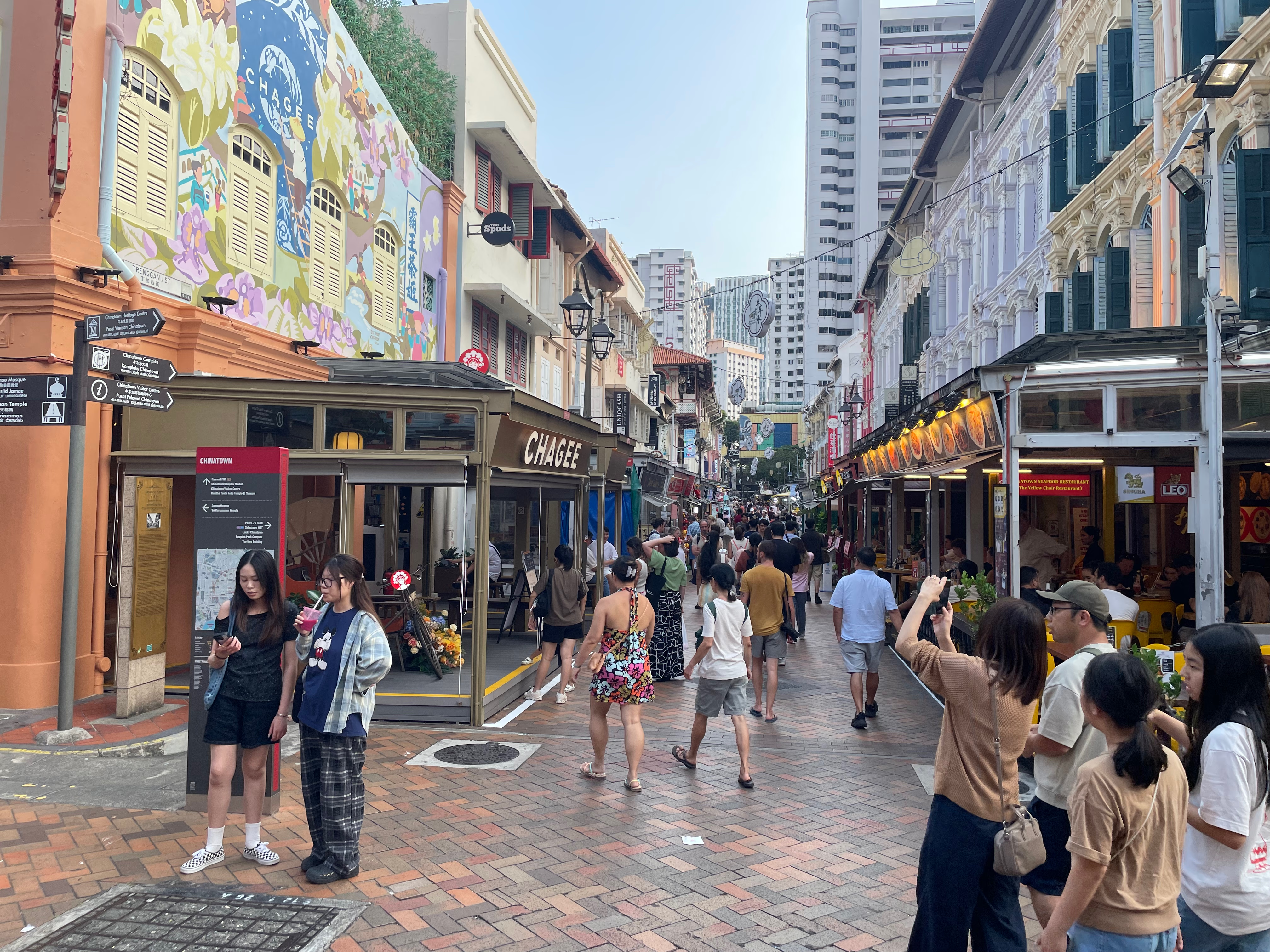
For our second and third day in Singapore we booked tours with Monster Day Tours. They offer a lot of free walking tours of the historical neighbourhoods and they have great local guides. We did the Chinatown and Little India tours, and when we later returned to Singapore at the end of the trip, we did the generic City Tour. All three were great and we learned a lot about the city and its history.
Days 4-8: Kuala Lumpur
While Kuala Lumpur shares a lot of similarities with Singapore, it is definitely more affordable and less crowded, but it is also a bit more chaotic. It has that stereotypical modern Asian city feel, with busy markets and huge luxurious shopping malls. It is also less people-oriented and more car-centric, which makes it a bit more challenging to navigate.
The city is known for having some of the most affordable 5-star hotels in the world, but we went for an apartment instead, in the Eaton Residence building, and it turned out to be a great choice. The flat itself was nothing special, just a regular fully equipped apartment, but the building has one of the best rooftop pools in the city, completely free of charge for all tenants.
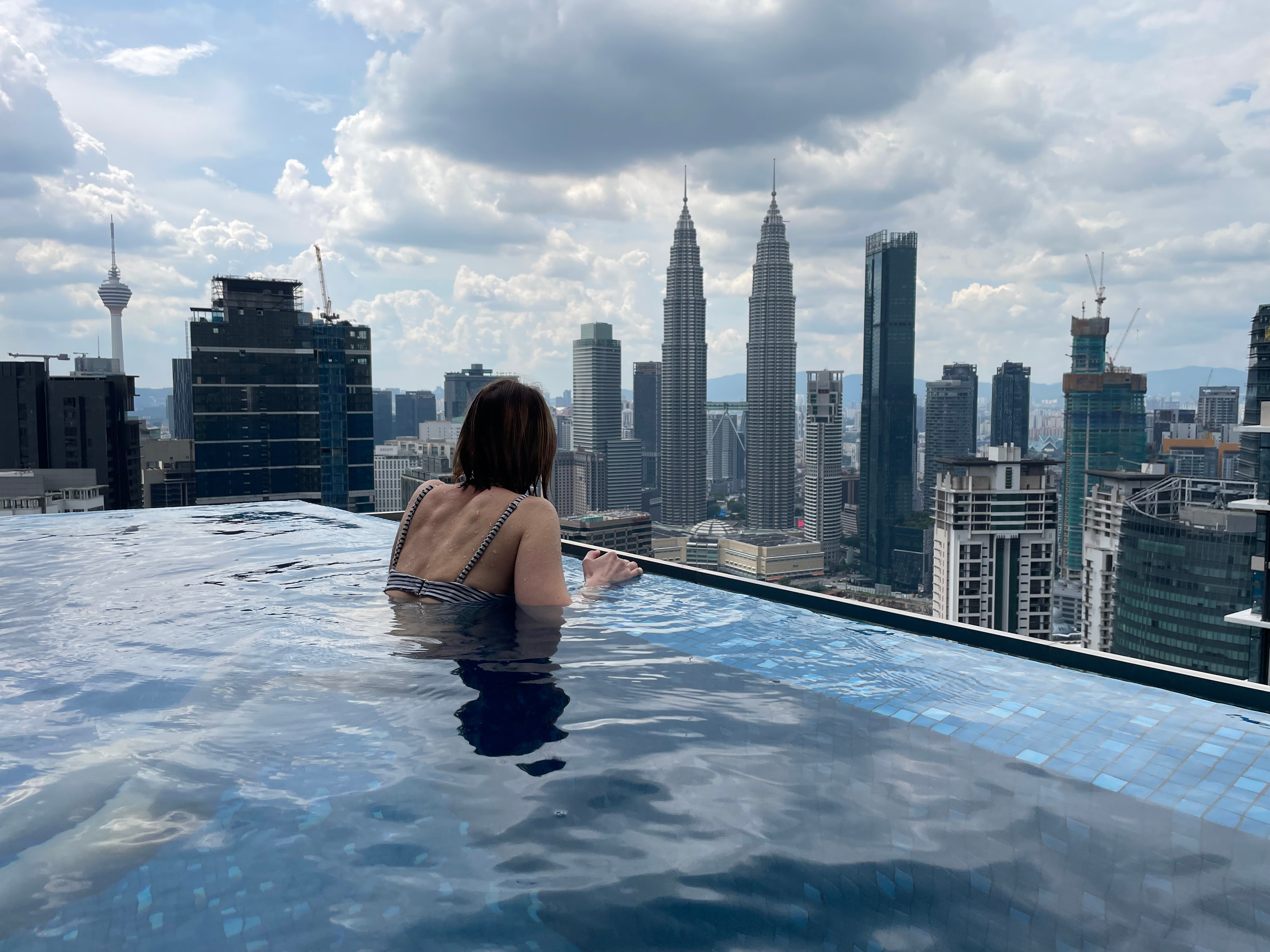
Malaysia is a very interesting country. It is a Muslim-majority country, but it doesn’t feel extremely religious or conservative. Locals are very friendly and welcoming, and very open to interacting with foreigners.
It is also not a very touristy country, especially compared to Vietnam, Thailand or other similar countries around. This makes it harder to find good day tours and activities, but it also makes the whole experience more authentic.
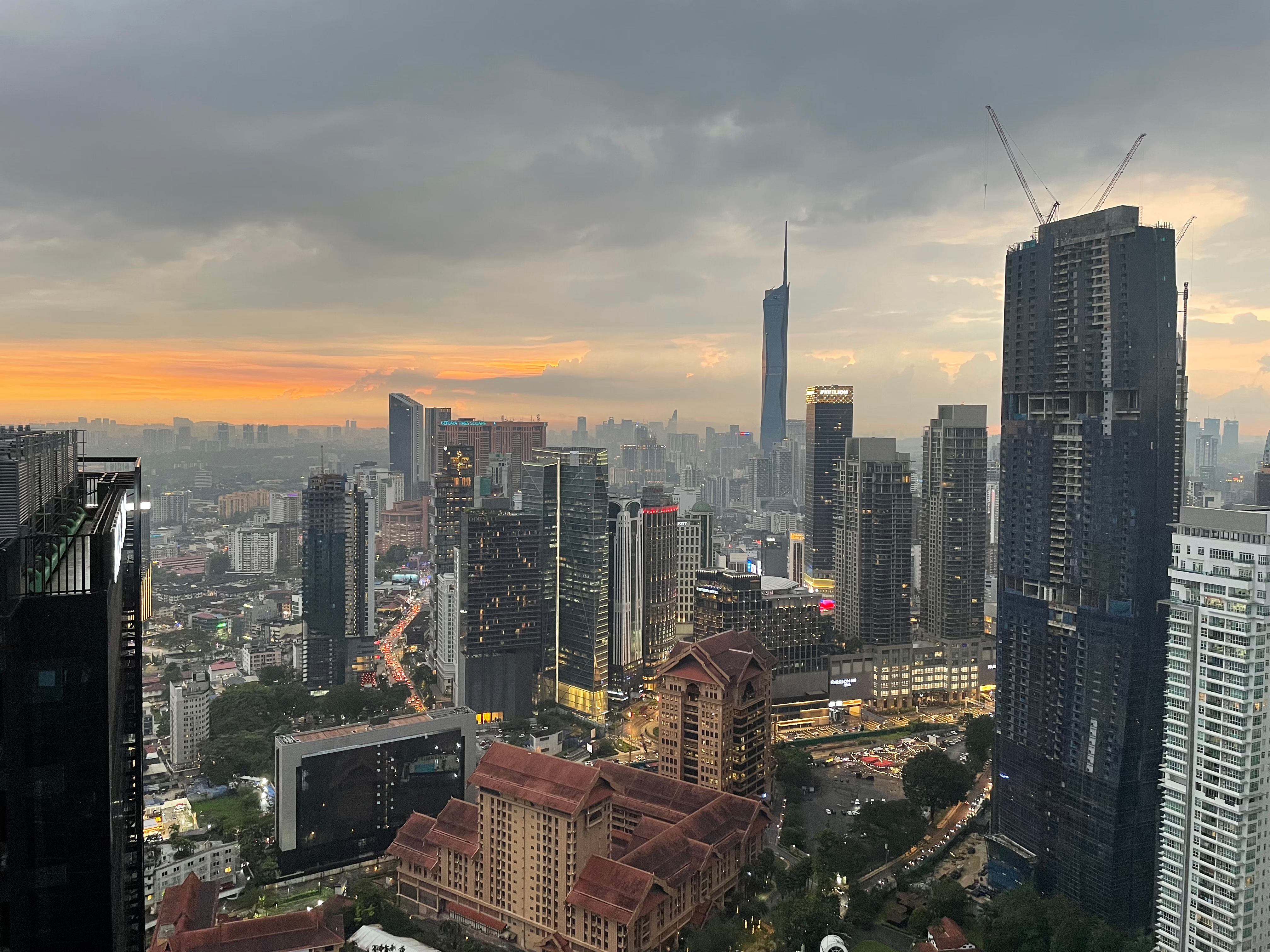
Similar to Singapore, KL has a ton of food courts and street food areas, and the food in Malaysia is some of the best in the world, as far as we are concerned. The blend of sweet, salty and spicy flavors is hard to beat.
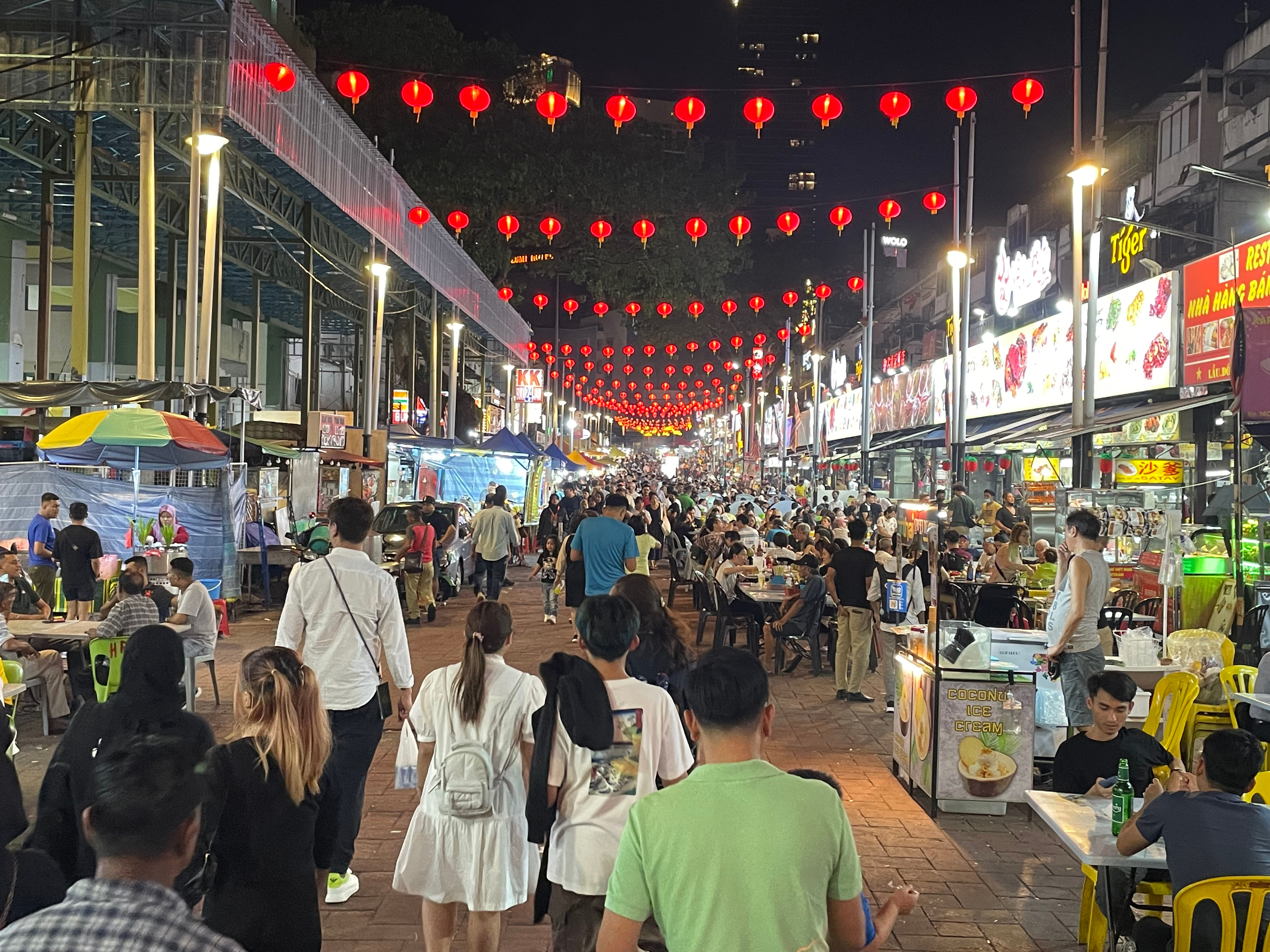
Don’t miss Jalan Alor with its endless variety of terraces and food stalls. Some people might be skeptical about the cleanliness of the street food, but we found the stalls clean and the food fresh and delicious.
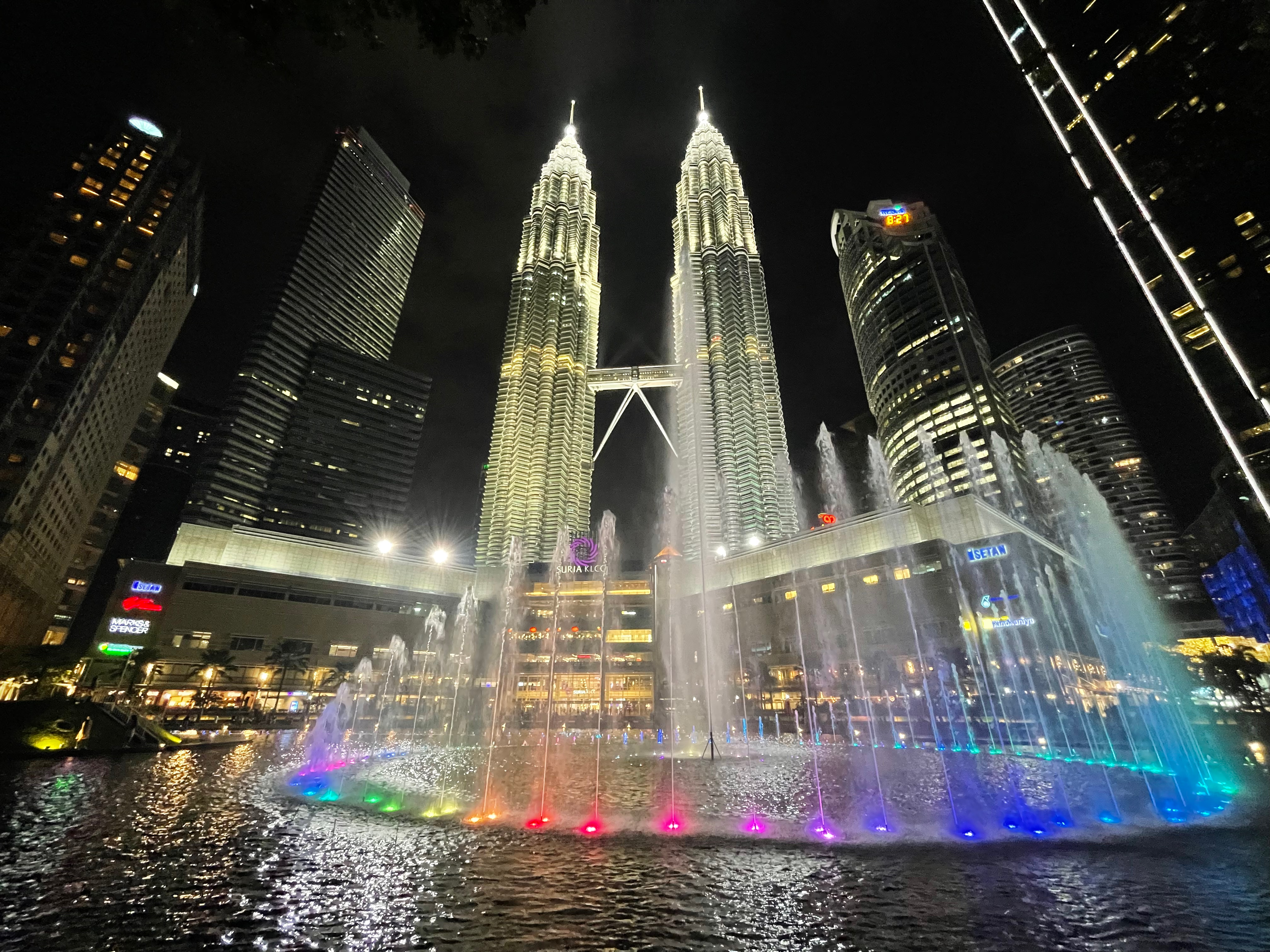
Jalan Alor is well connected to KLCC and the Petronas Towers via a long pedestrian bridge that bypasses several streets and has multiple entries and exits along the way.
While in KL, make sure you visit the world-famous Petronas Towers, the tallest buildings in the world at the time of their construction and still the tallest twin towers today.
The KL Bird Park was also a great experience. It is one of the largest walk-in aviaries in the world, so most of the birds fly free around you instead of sitting behind glass.
While staying in KL for a few days, we booked several day trips to explore more of the Malay peninsula.
Cameron Highlands
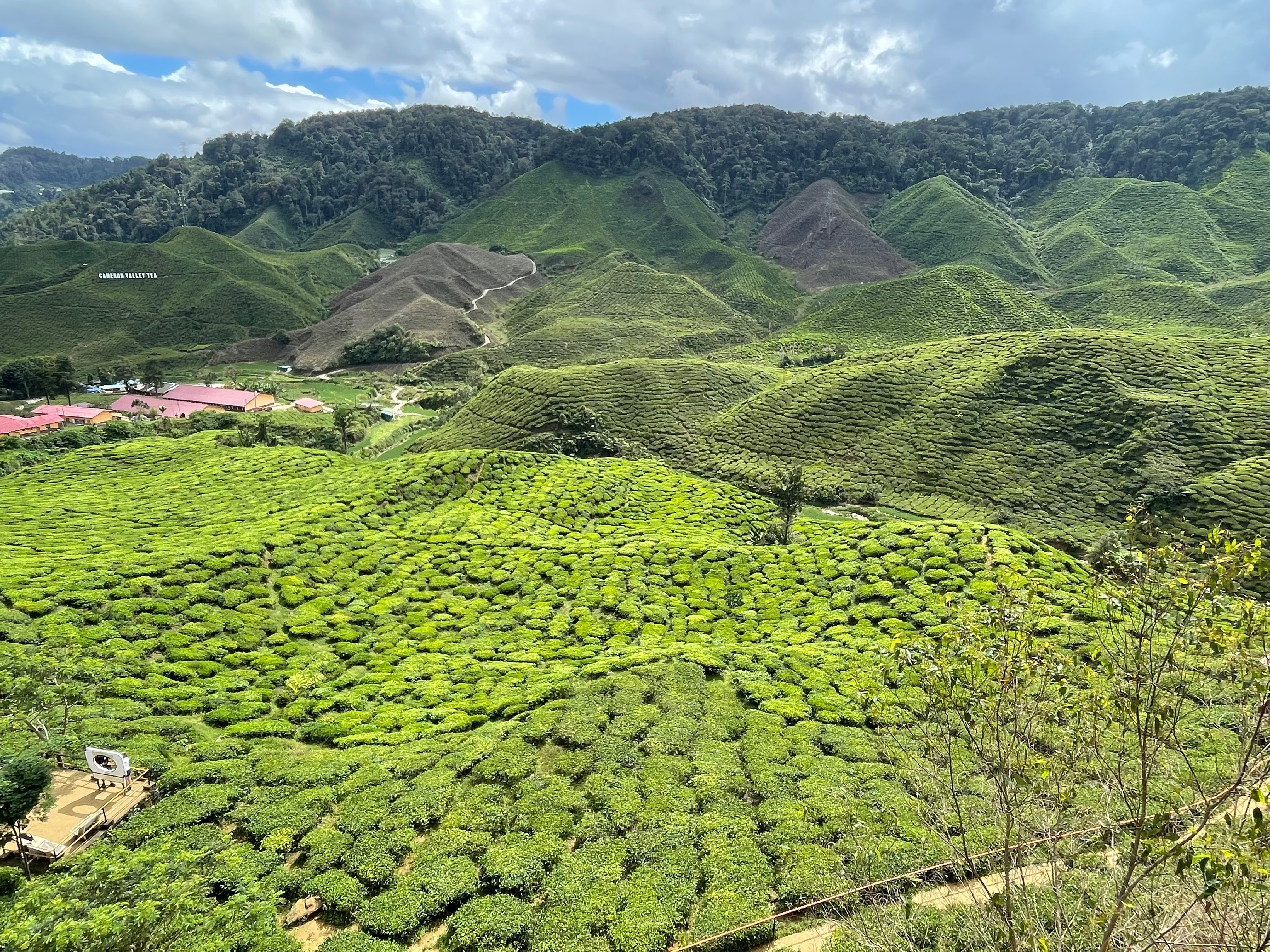
The Cameron Highlands are famous for their tea plantations and for mild temperatures compared to the lowlands of Malaysia. Our tour stopped at several locations including a strawberry farm, a butterfly farm where we saw some of the biggest butterflies in the world and, of course, the famous tea plantations.
Taman Negara
Taman Negara is one of the oldest rainforests in the world, estimated at over 130 million years, and the largest national park in Malaysia. Funny enough, Taman Negara translates to “National Park” in Malay, so calling it Taman Negara National Park, as is quite common in travel guides, is a bit weird for locals.
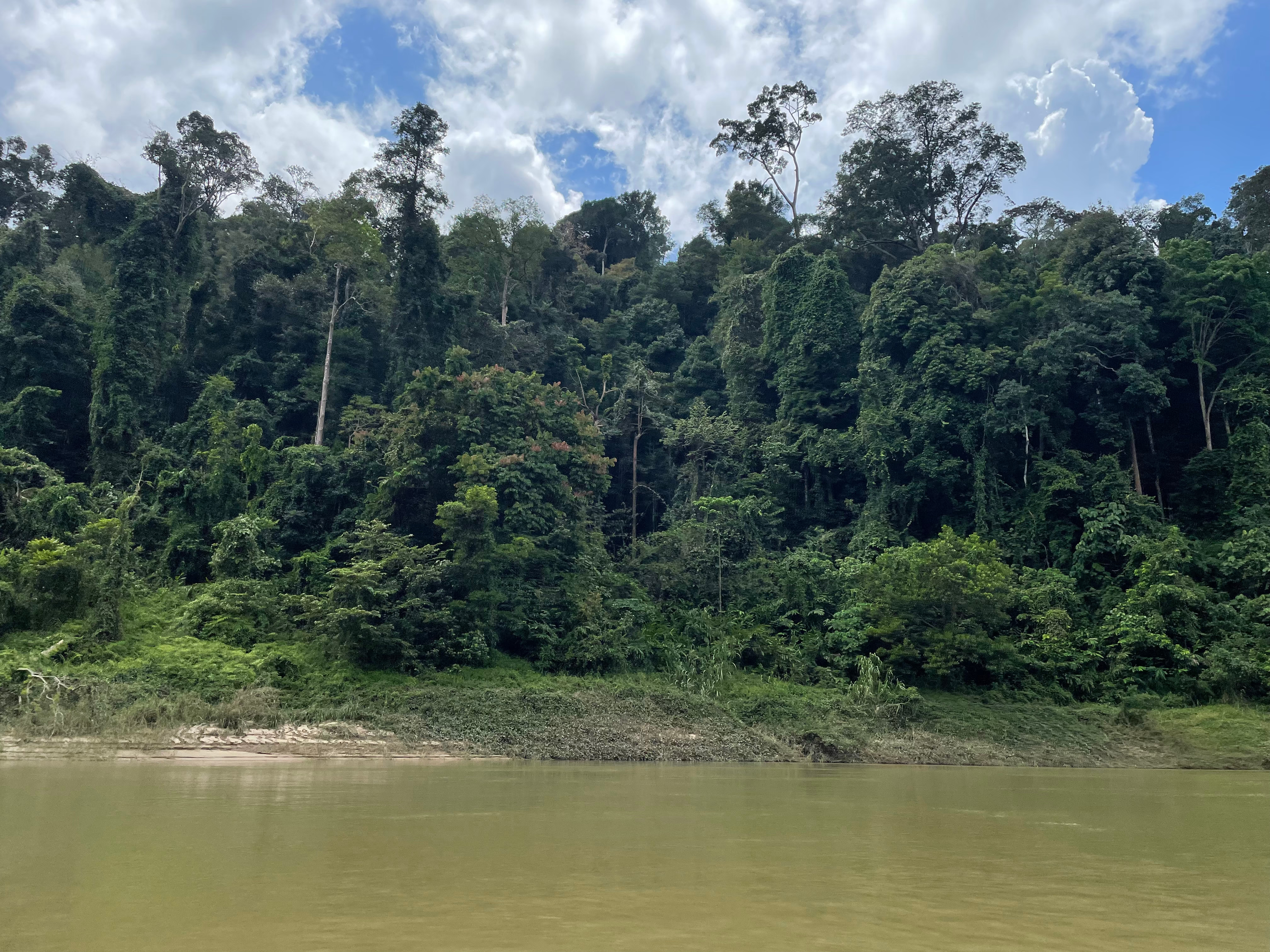
We booked a tour for the entire day, which turned out to be a private one: a driver took us to the park and a local park guide took over once we arrived. This is the part of Malaysia we mentioned as being rather underdeveloped for tourism, since you would usually expect to share a day tour like this with a small group of other travellers.
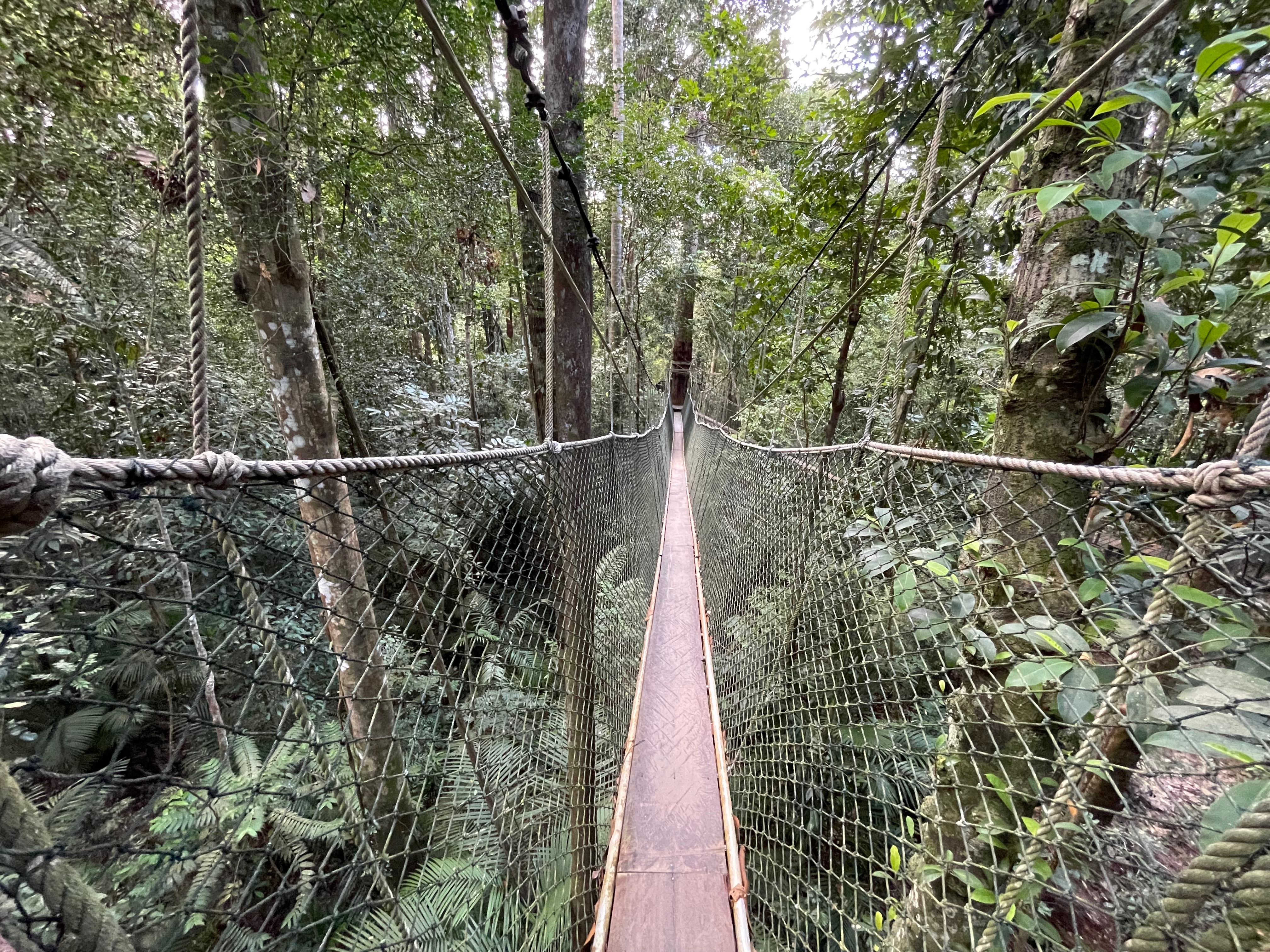
Some of the highlights of the park were the canopy walk, where you get to experience the jungle from above, and the cruise up and down the river. We also visited an Orang Asli settlement and got to see how the community lives in the jungle.
The downside with these day trips from KL is that you spend quite a lot of time in a car or bus, so keep that in mind when booking the tours.
Batu Caves
One of the most impressive sights in Kuala Lumpur also requires some planning as it’s quite far from the city center. We reached Batu Caves with a hired local driver and we spent a few hours there.
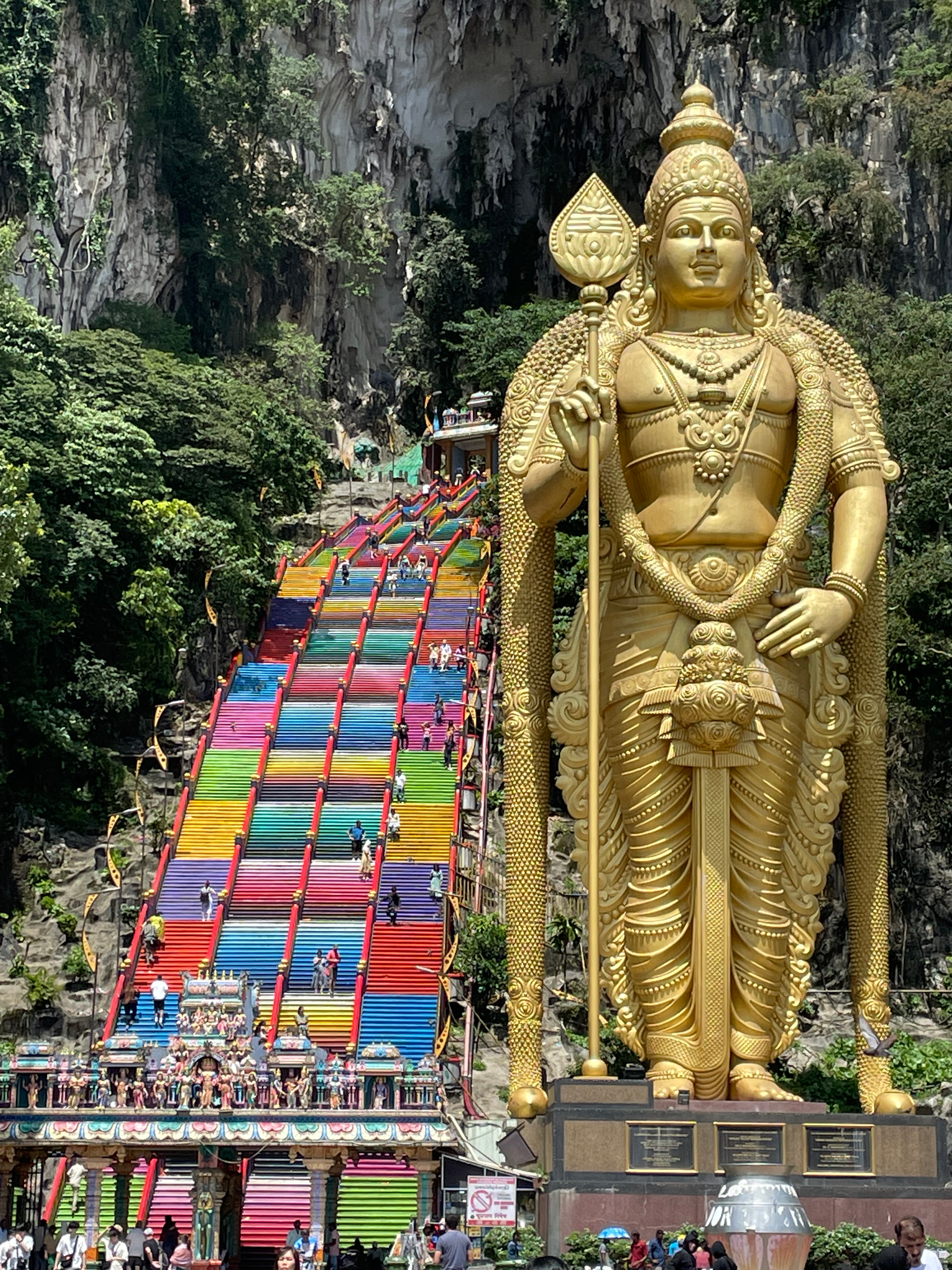
The caves are a natural limestone formation that hosts a Hindu temple. The iconic colorful stairs leading up to the cave system are guarded by a giant statue of Lord Murugan, the Hindu god of war and victory.
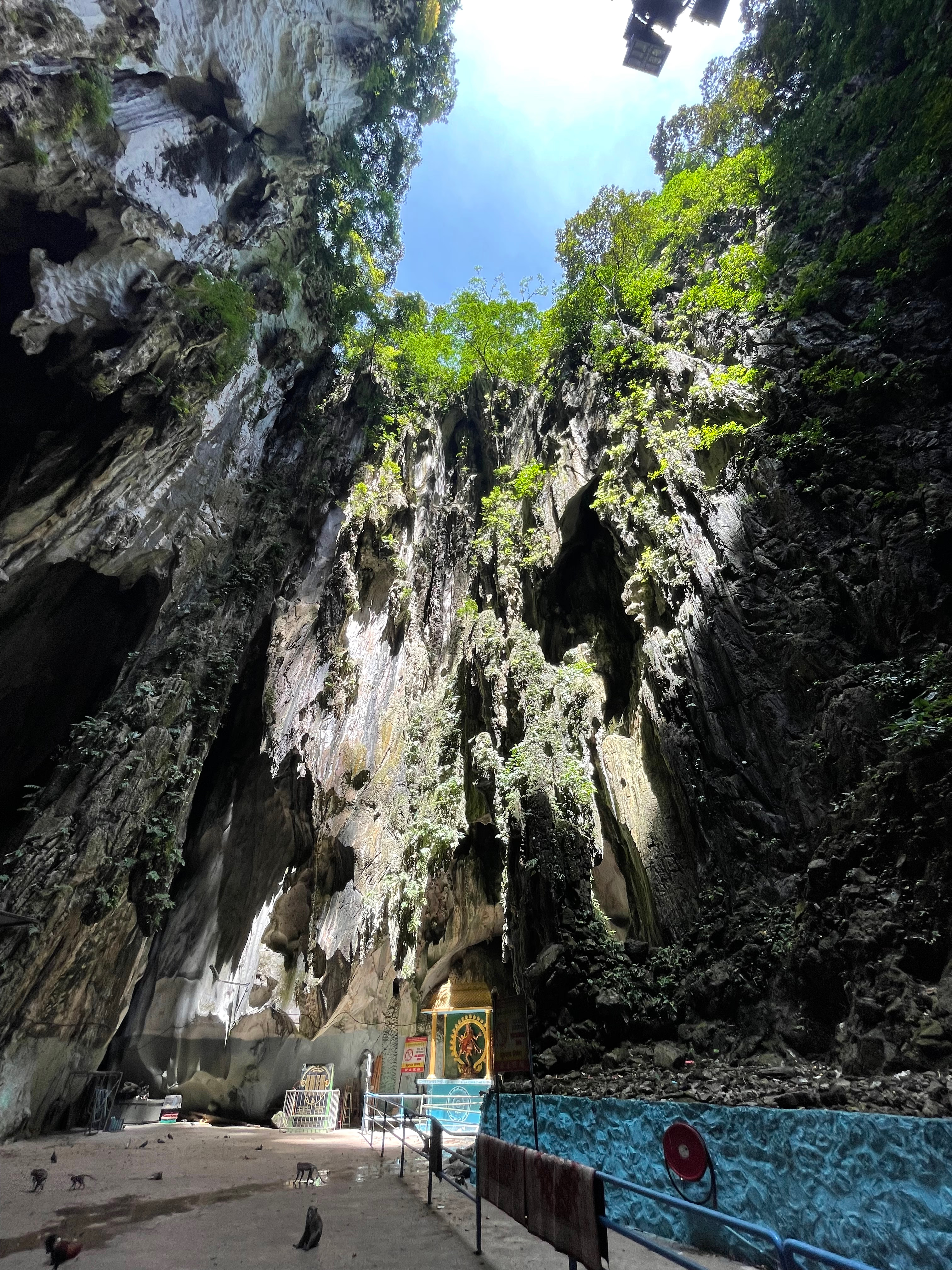
Beware of the monkeys in the caves: they are quite aggressive and not at all afraid of tourists. We heard that they are particularly fond of sunglasses and hats, so keep an eye on your belongings while visiting.
The same driver then took us to the National Mosque of Malaysia and to the Thean Hou Temple, so the day was quite packed with visits to religious sites.
The caves are really worth a visit and the mosque is worth the stop if you are interested in Islamic architecture. The temple is pretty and colorful, but it’s the one to drop if you are tight on time.
Days 9-10: Penang
Our initial plan was to take a train from KL to Penang, but after doing more research we decided to fly with a low-cost airline, as it was both cheaper and faster to reach the north of the country.
Penang is one of the biggest urban areas in Malaysia, but it could not contrast more with the modern look of KL: here it is all colonial buildings and narrow old streets.
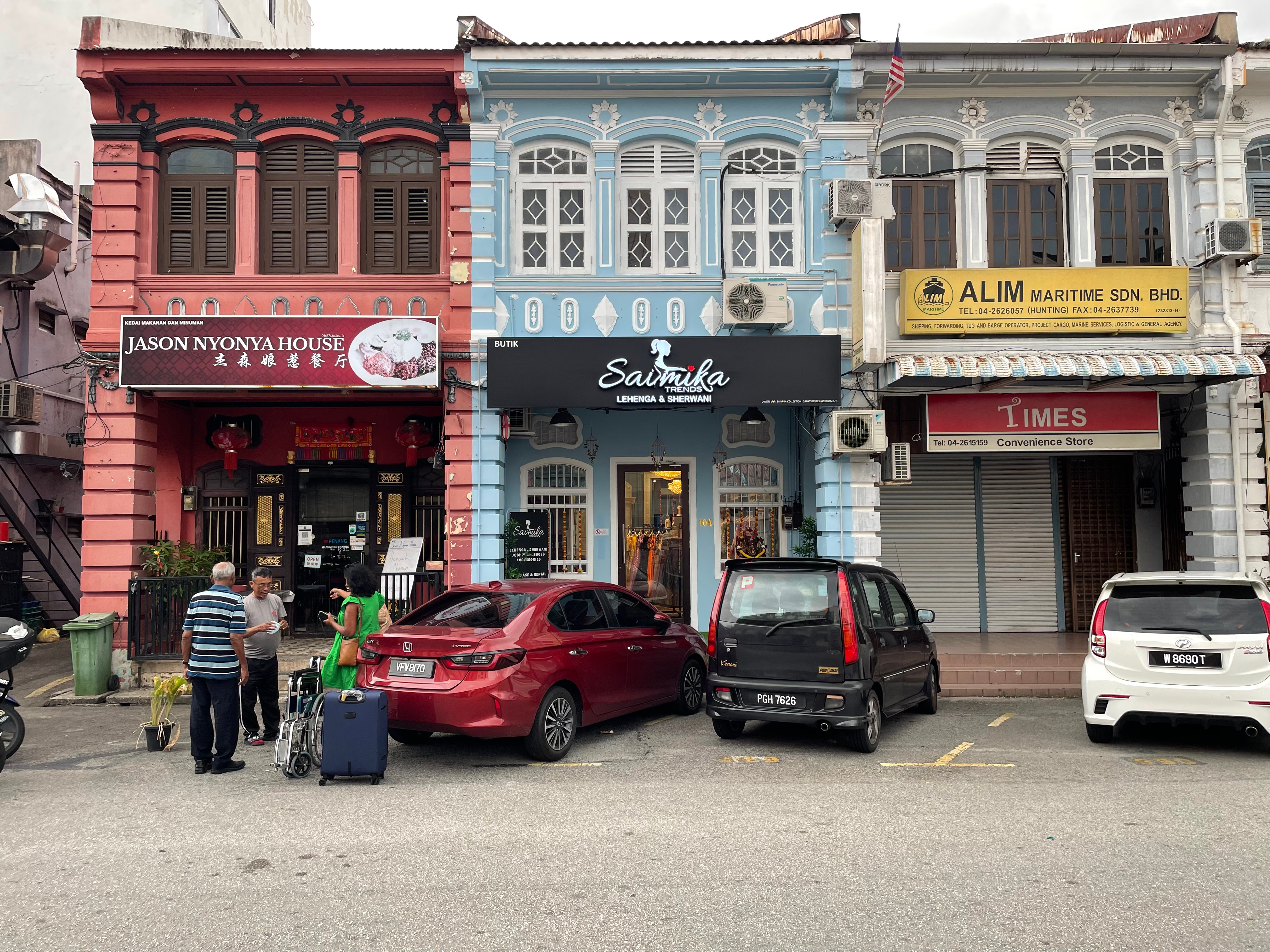
Fun fact, Penang is actually a state, not a city, but Malaysia has a weird way of organizing cities and states. As a tourist, you will hear Penang used as if it were a city, but the old colonial core is called George Town. That old town sits on an island just off the coast, while Penang state covers the island plus a chunk of the mainland. It’s confusing, we know…
George Town
The old part of Penang is a UNESCO World Heritage Site and it is home to thousands of traditional shophouses built during the colonial era, from the late 18th century onwards.
It is also home to the Clan Jetties, a group of traditional Chinese settlements built on stilts over the water, still lived in today by the descendants of the Chinese immigrant families who built them in the 19th century.
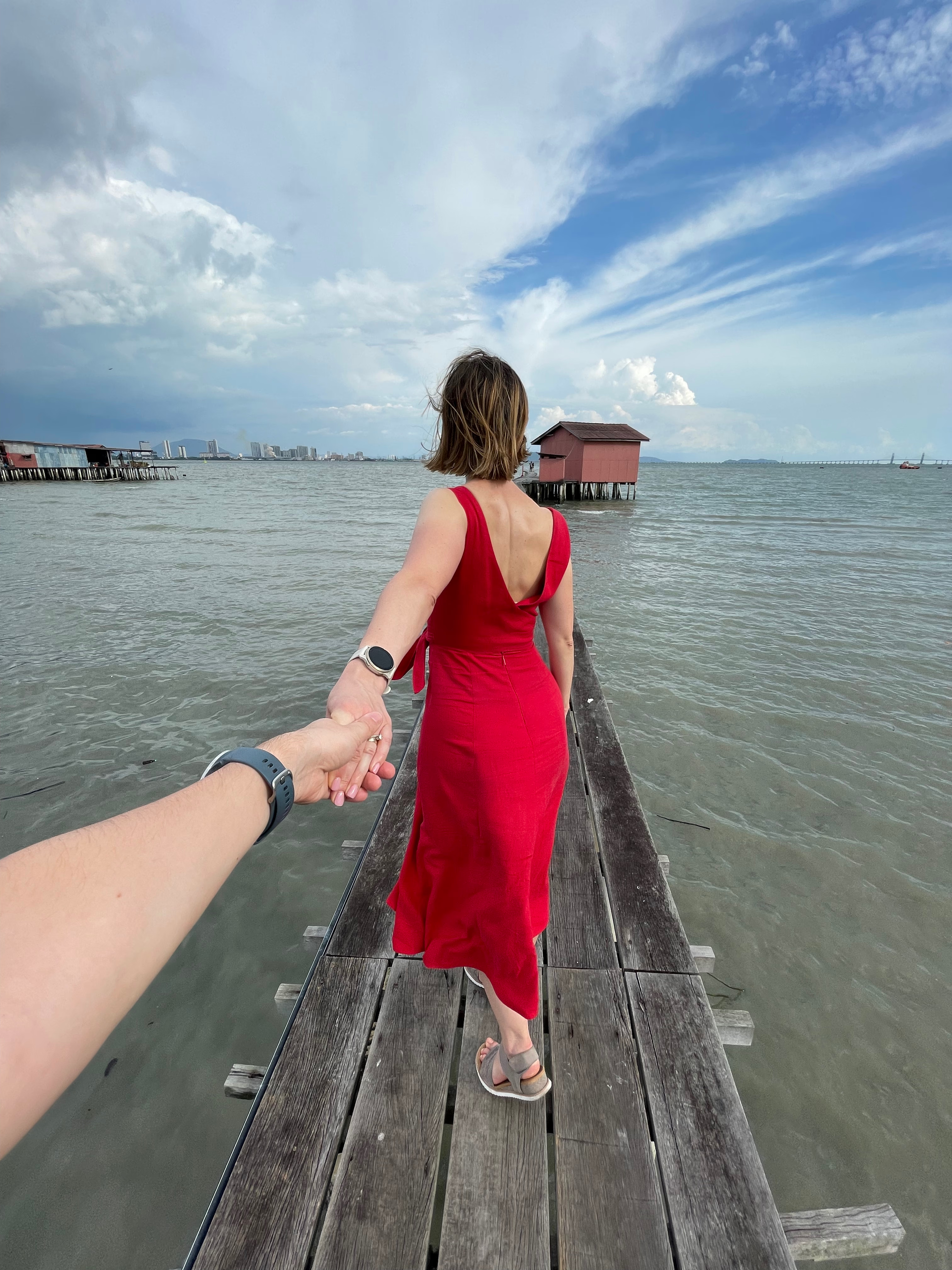
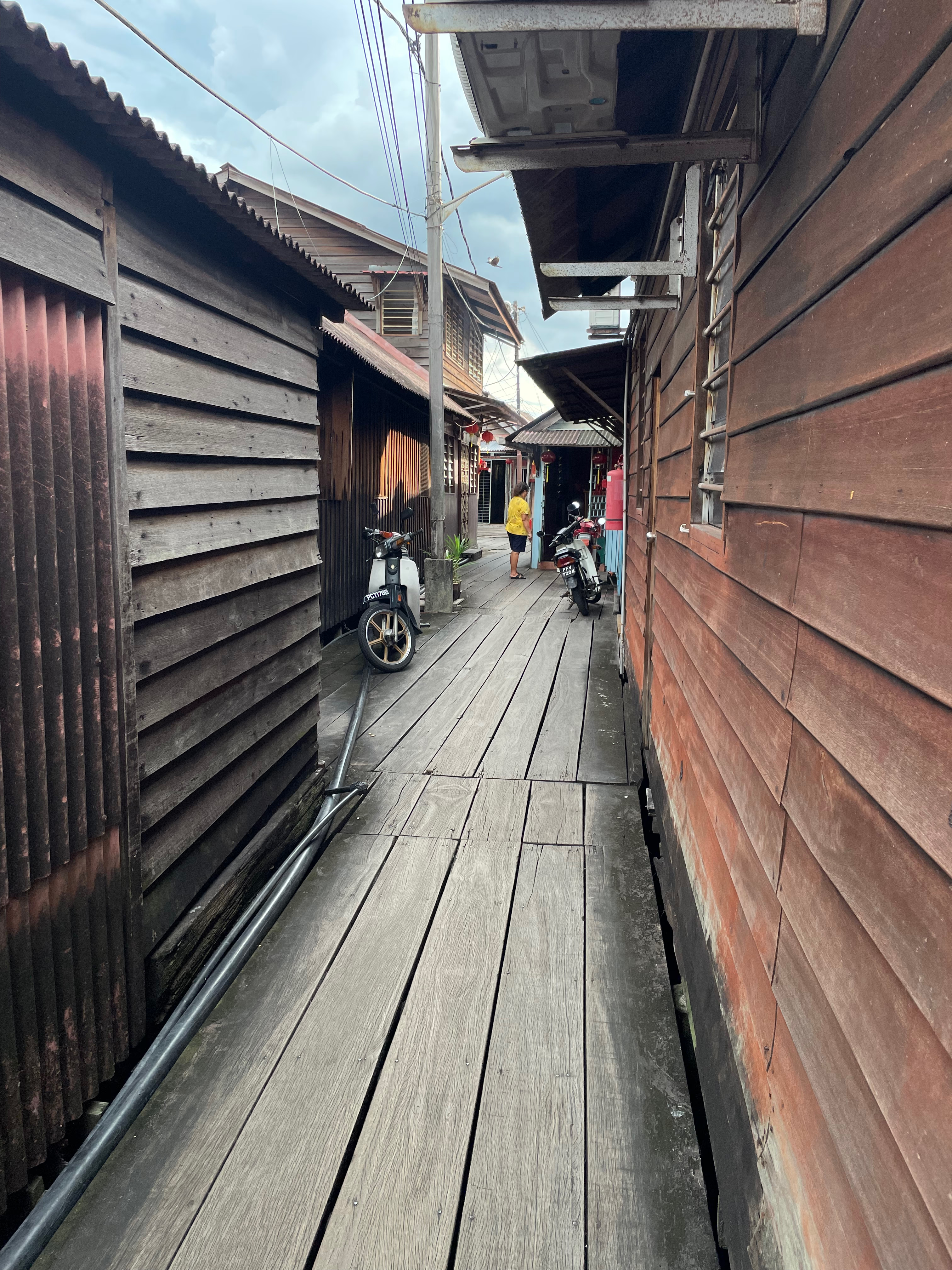
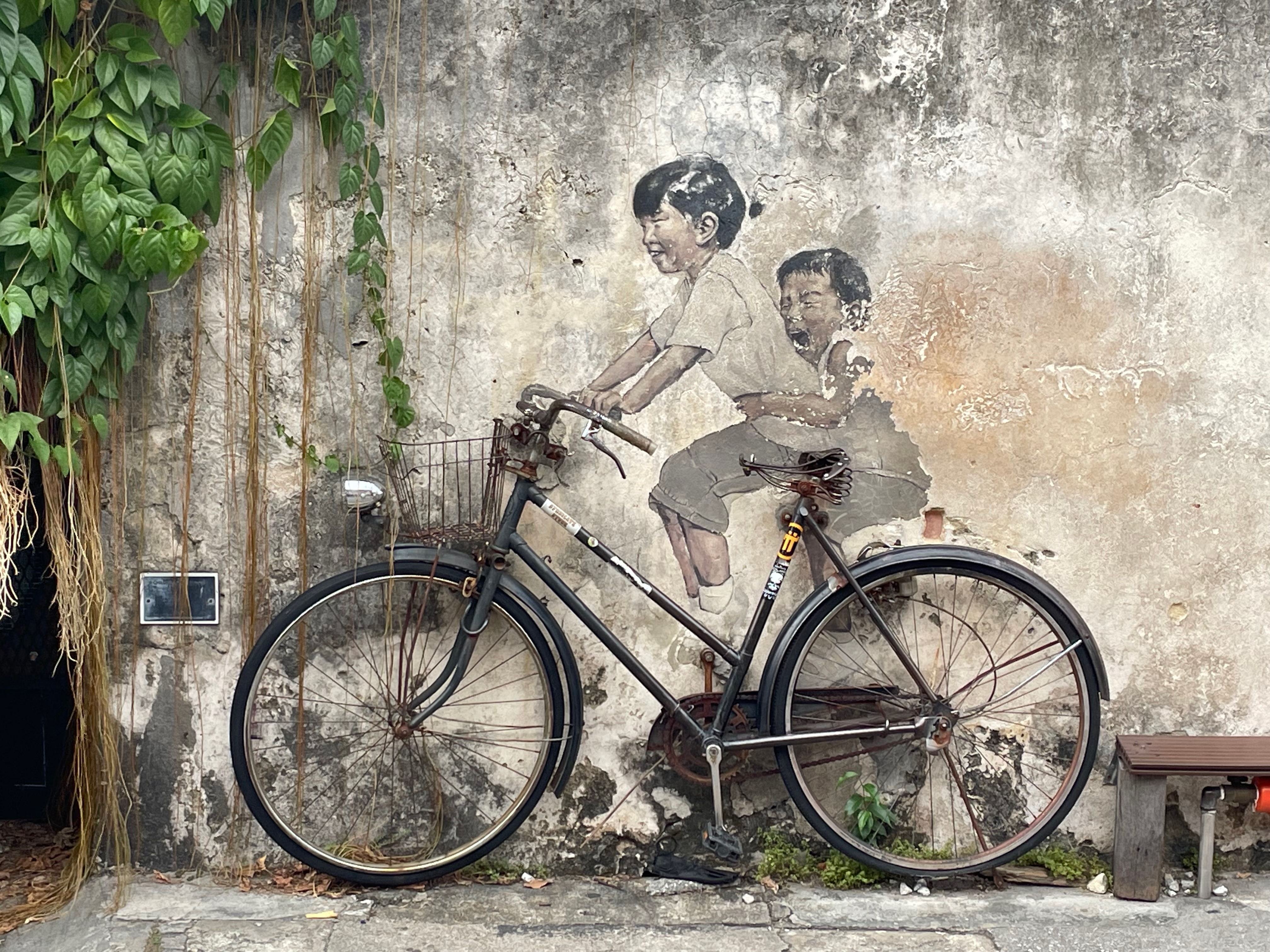
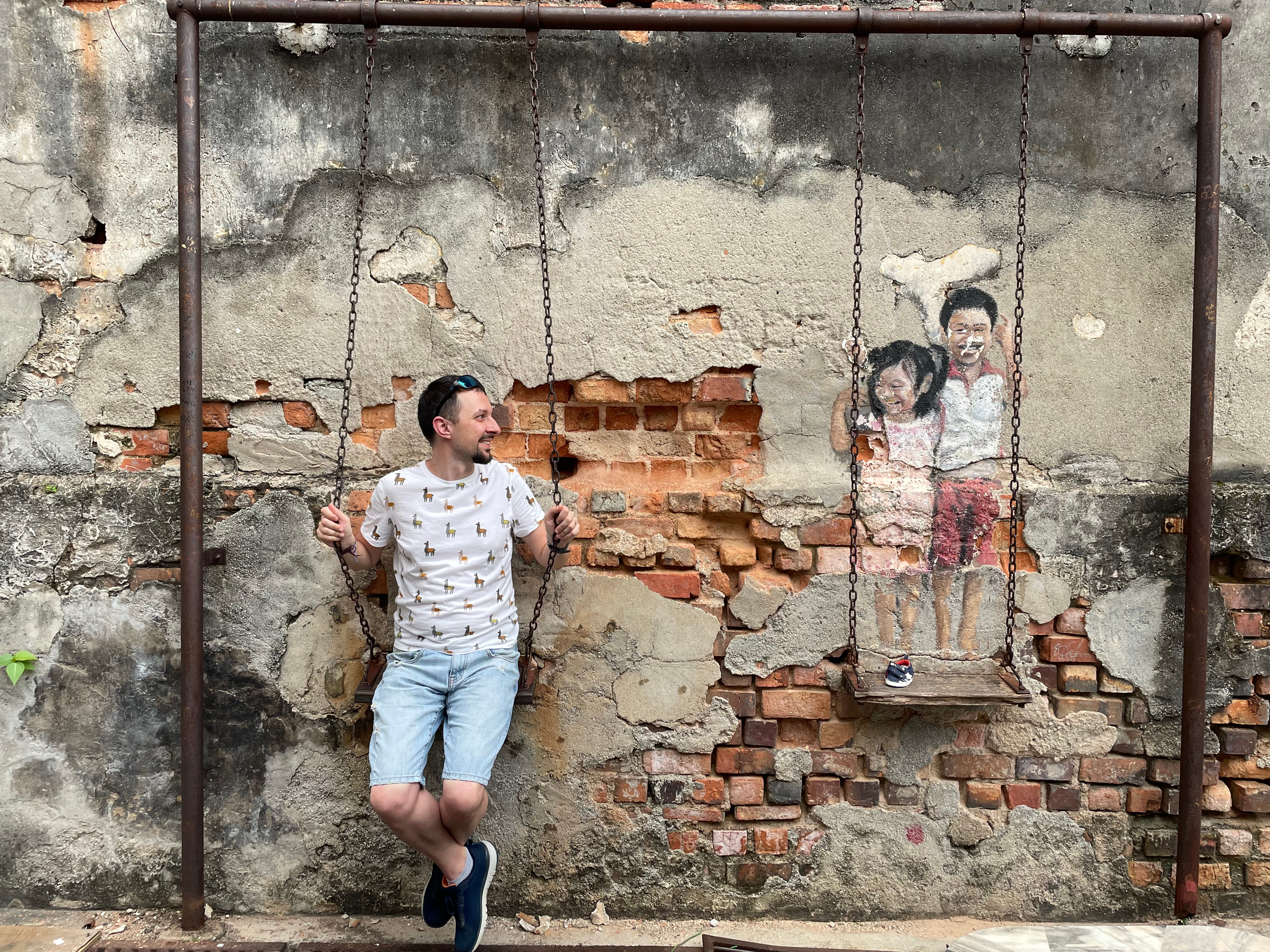
George Town is also famous for its street art, especially around Armenian Street, but also spread around the old town. We highlighted some of the murals in our Penang street art spotlight.
Penang Hill
A quick taxi ride away from George Town is Penang Hill, which offers a panoramic view of the city and the sea. The hill is also designated as a nature reserve and has a lot of trails for nature walks.
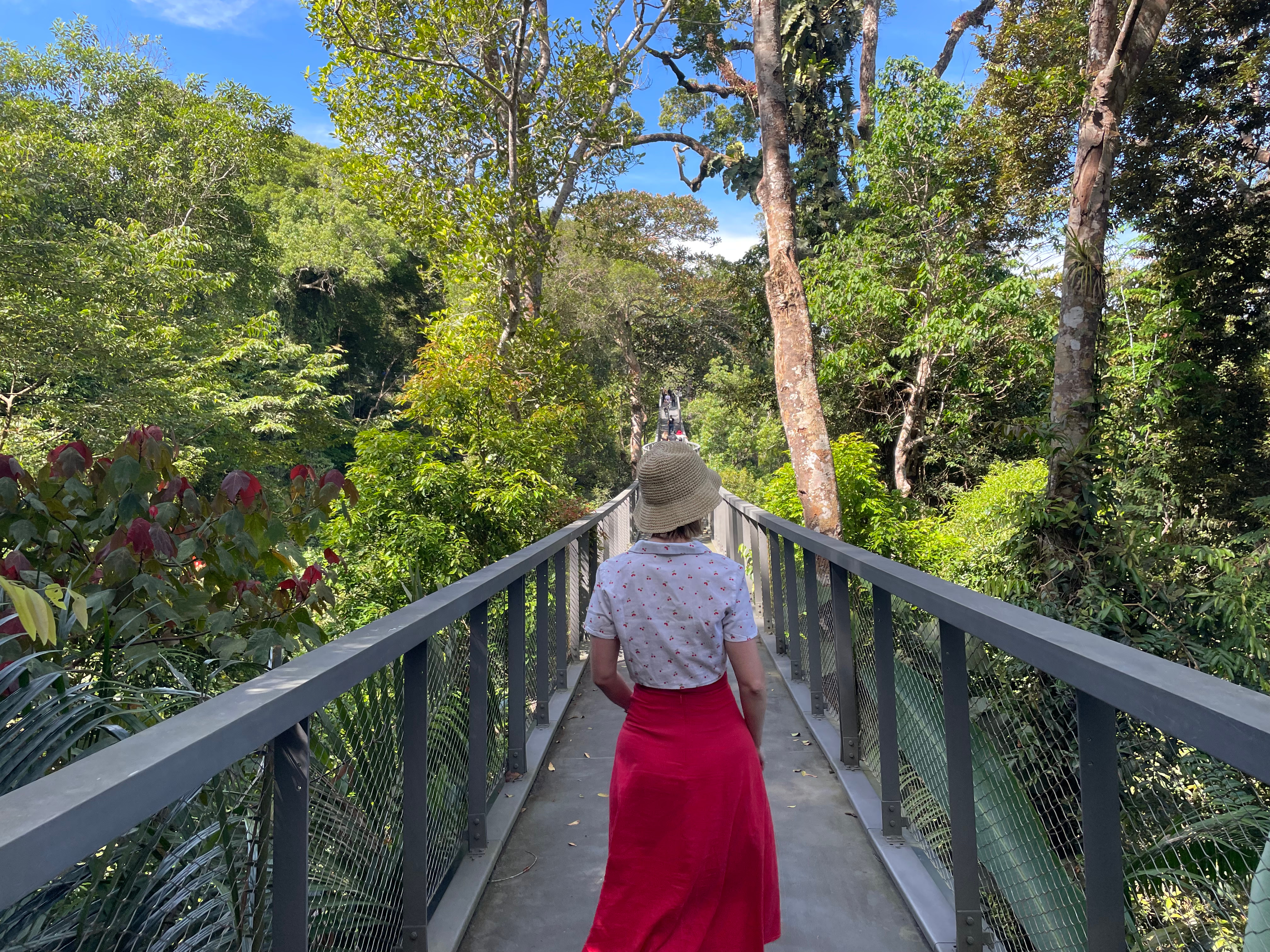
You can hike up the hill or you can take the funicular railway from the Penang Hill station. Keep in mind that the funicular is quite busy during the weekends, as we found out during our visit.
Kek Lok Si Temple
At the base of Penang Hill, you can visit the Kek Lok Si Temple, which is one of the largest Buddhist temples in Southeast Asia. The temple is known for its towering pagoda and its golden Buddha statue.
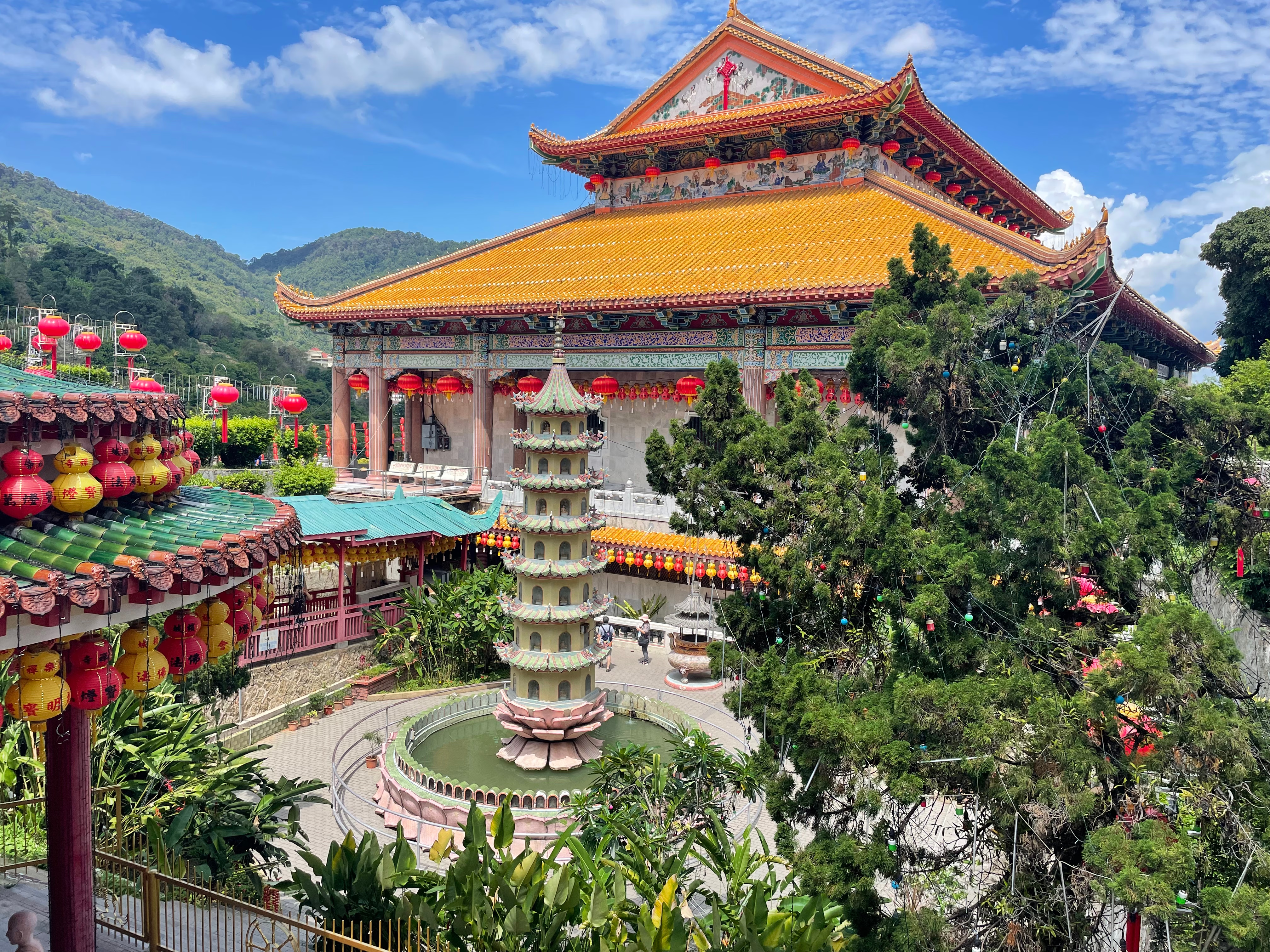
To travel between George Town, Penang Hill and the Kek Lok Si Temple, we used Grab, the local Uber alternative in Southeast Asia. It’s reliable, fast and relatively cheap as distances aren’t too long.
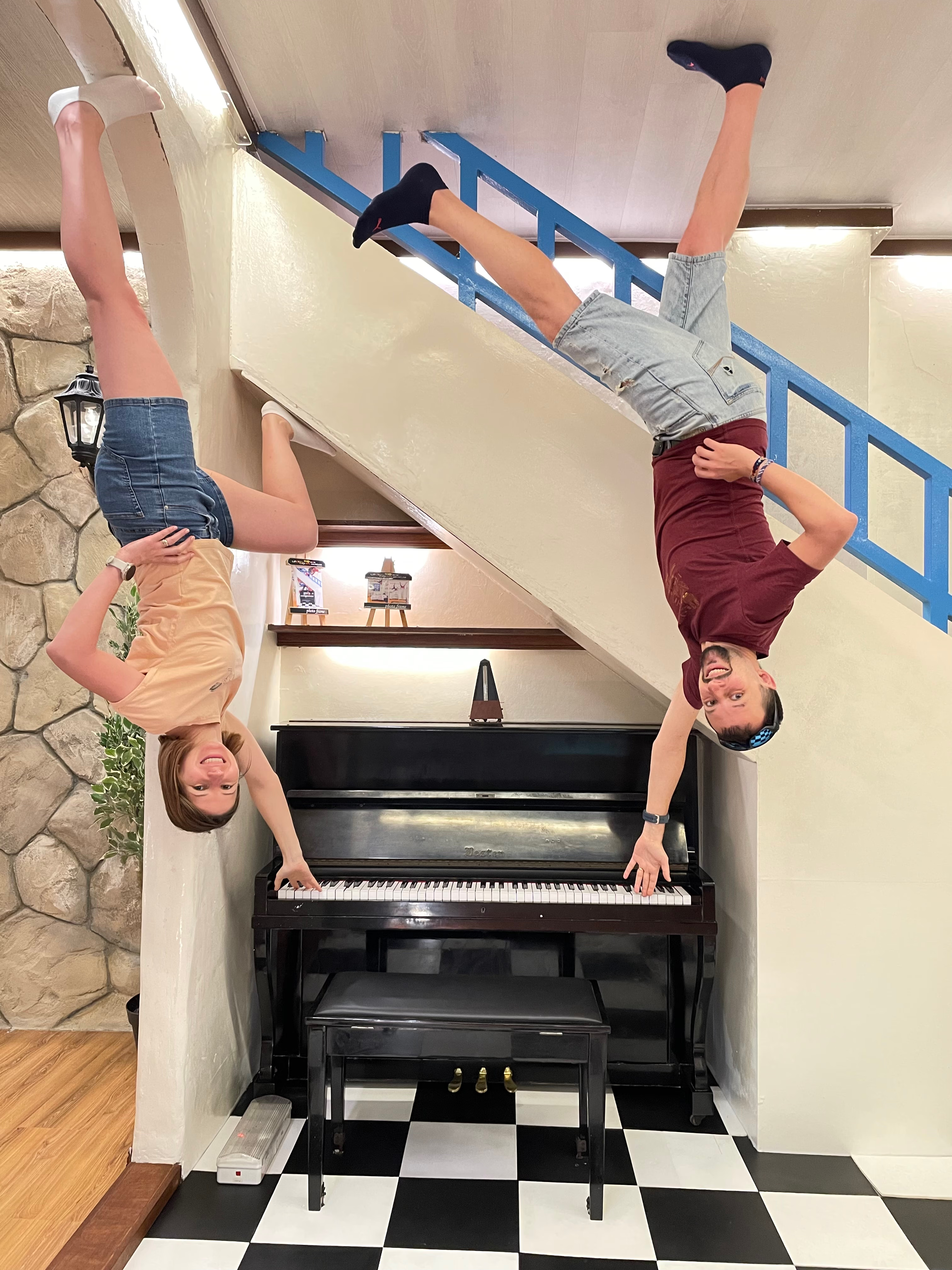
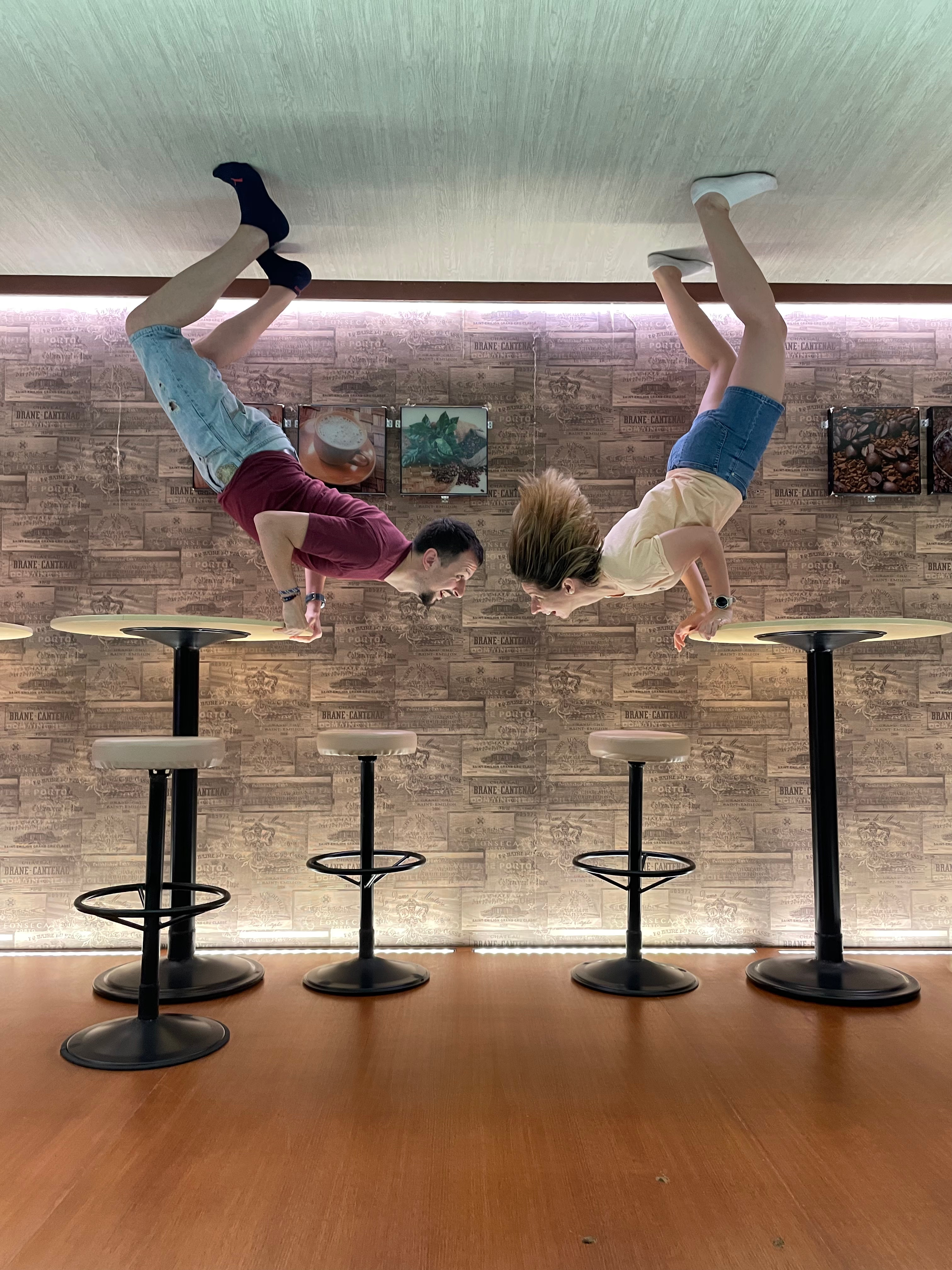
During the last day in Penang, we visited the Upside Down House, a popular tourist attraction with some very cool interior arrangements that create some fun illusions.
Days 11-13: Phuket
Our third country of the trip was Thailand. We looked for a place that is easy to reach from Penang and has beautiful beaches and crystal clear waters. While Malaysia’s Langkawi is usually a popular destination after Penang, we decided to go to Phuket instead.
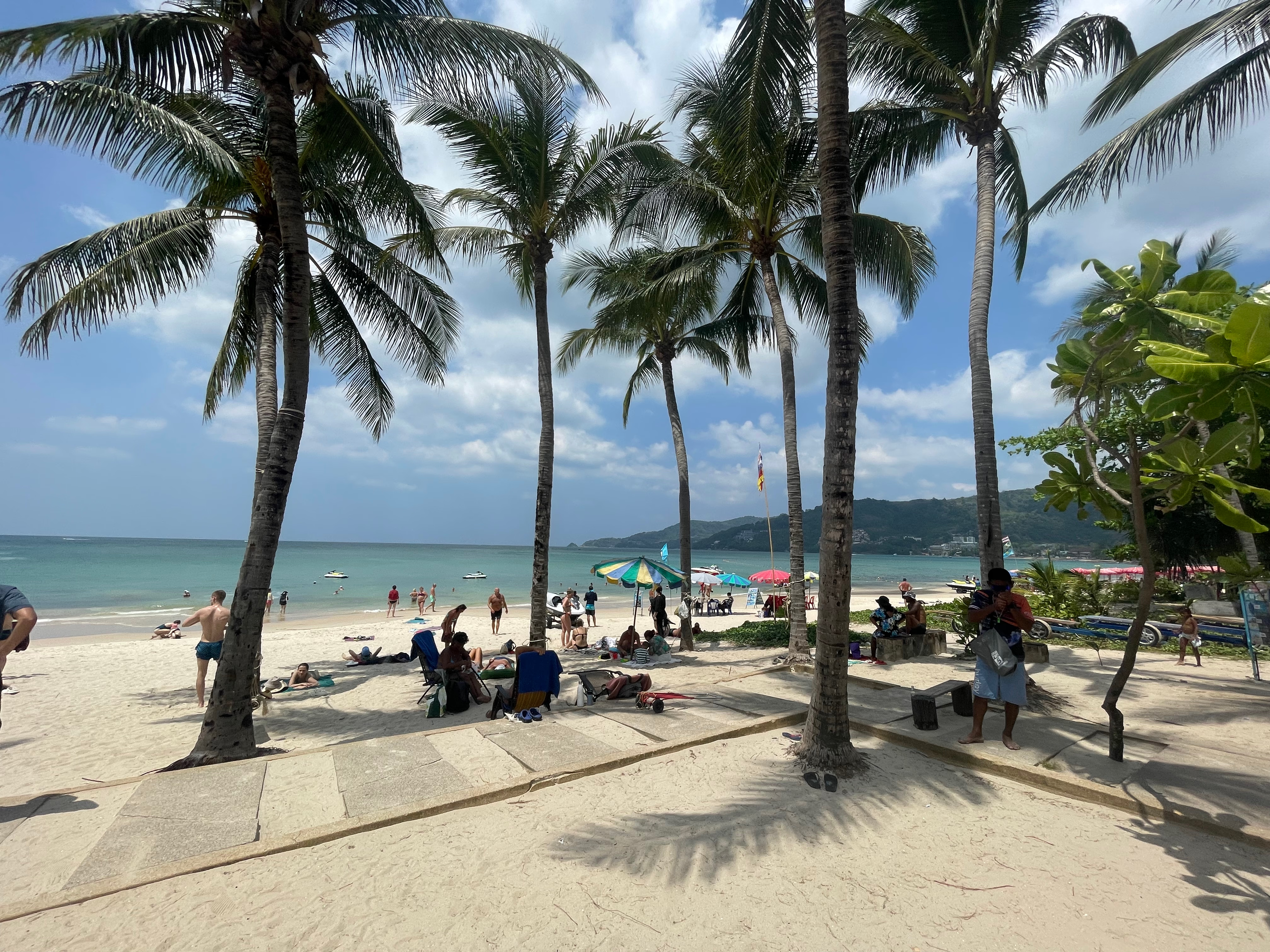
Three days in Phuket does not do Thailand justice, but since we were so close and since Phuket is such a popular destination, we decided to give it a try while keeping our expectations low.
Truthfully, the island is great, but it is also very touristy and packed with people. Airport transfers are long and the distance between the different towns makes it difficult to venture far from your resort without booking a tour or renting a car or scooters.
Patong Beach
We decided to stay in Patong, probably the most popular spot on the island, with a long sandy beach and a very vibrant nightlife.
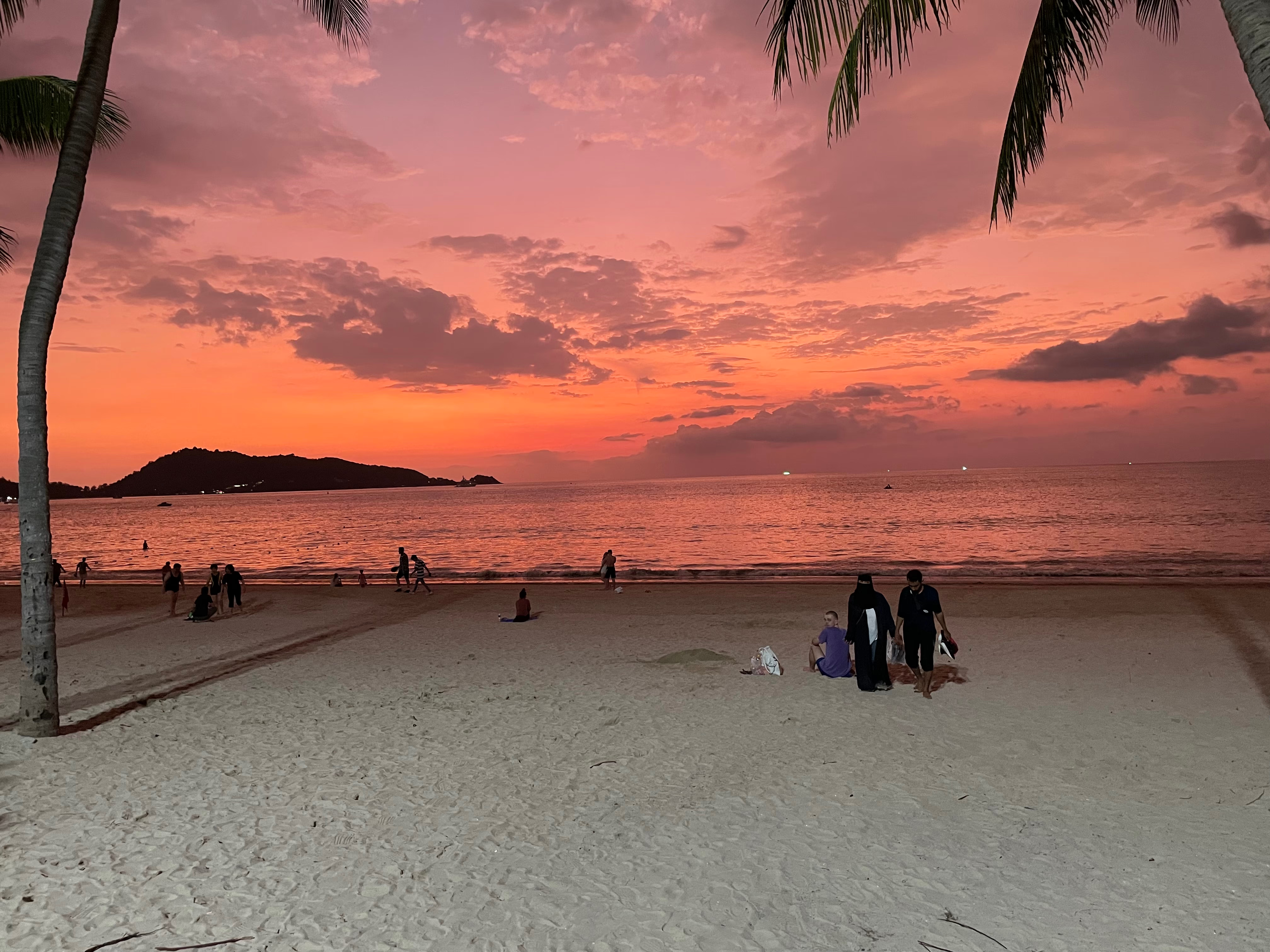
We’re not really into drinking and partying while travelling, but we like to wander around during the evenings and enjoy the vibe of the place. Patong Beach and especially Bangla Road are the places to be if you want to experience the nightlife of Phuket.
Phi Phi Islands
During one of the days in Phuket, we booked a tour with one of the many local tour operators to visit the famous islands of the Phi Phi archipelago that are known for their beautiful beaches and crystal clear waters.
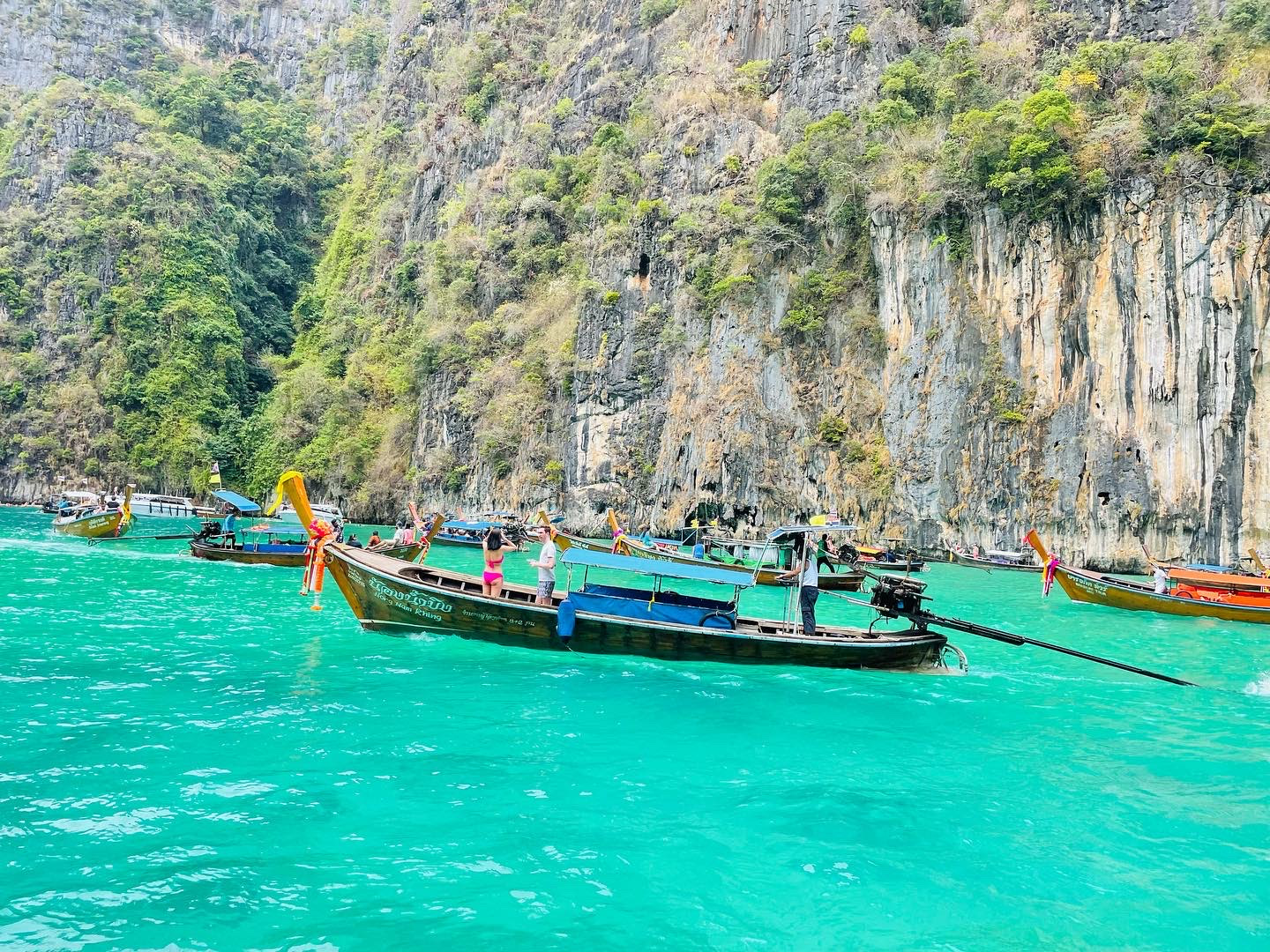
The tour had multiple stops, including Maya Bay and Pileh Lagoon on Ko Phi Phi Leh, which are probably the most beautiful spots in the archipelago.
Maya Bay is also famous for being the location of the movie “The Beach” starring Leonardo DiCaprio. It used to be a public beach, but due to overcrowding and pollution, swimming is now forbidden.
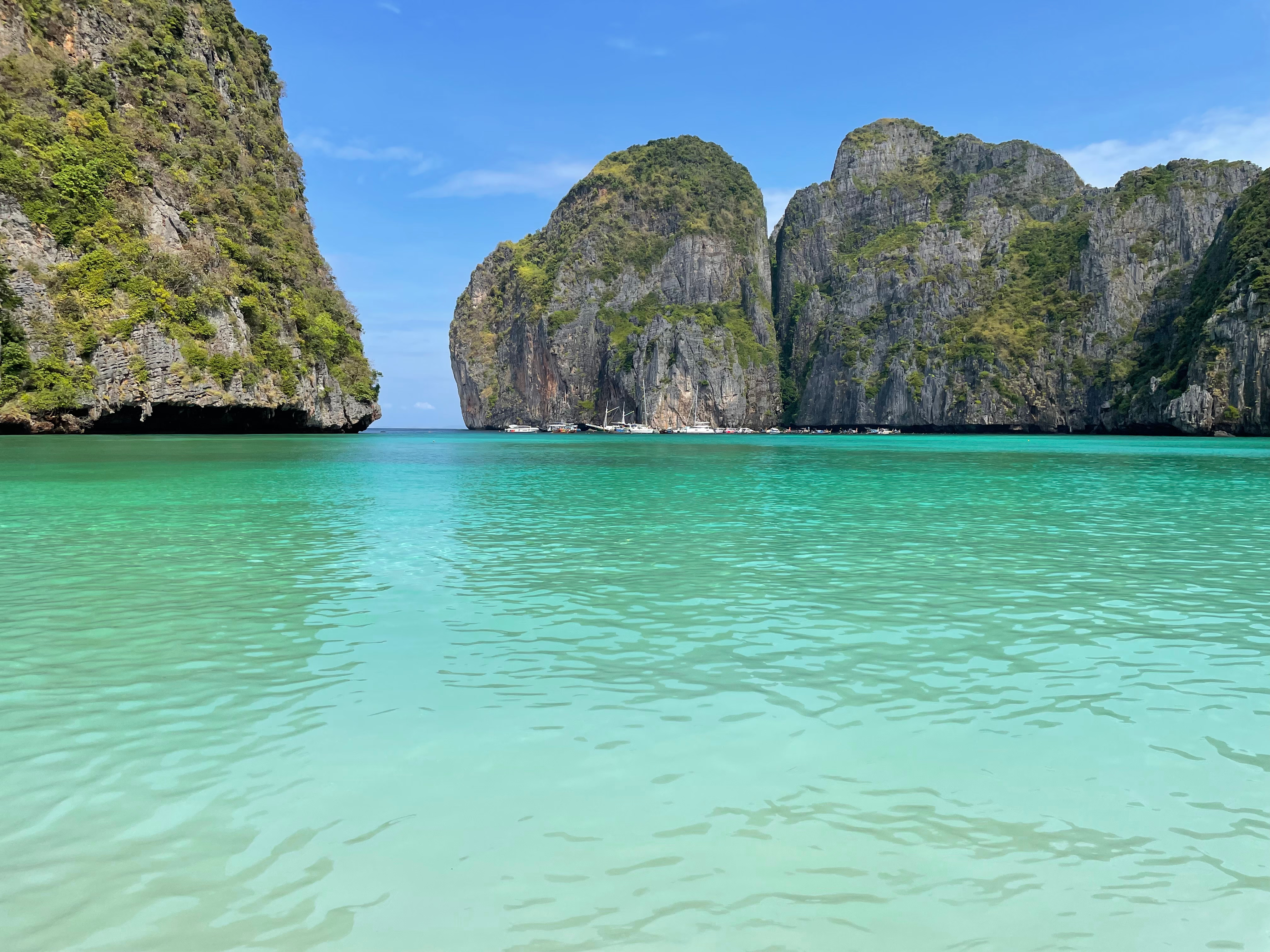
While we are aware these spots still suffer today from overtourism, we still recommend visiting. The scenery really is breathtaking and you can definitely understand why everyone wants to see it.
We also stopped for lunch and a swim at several spots on Ko Phi Phi Don, the largest island in the archipelago, one of which was perfect for snorkeling. Finally, we stopped at Bamboo Island for an afternoon swim.
We recommend booking the tour at the official company booths spread around the island. All companies offer almost the same tours at roughly the same price. Hotels and street vendors will always add a commission to the tour price.
Days 14-15: Singapore
Before heading back home, we had two more evenings and one full day in Singapore to relax and enjoy the city without any plans. This was probably the moment when the city grew on us the most.
We went running at 11pm in close to 30°C and humidity near 100%. We visited the ArtScience Museum and stayed for numerous light shows at Gardens by the Bay and Marina Bay Sands.
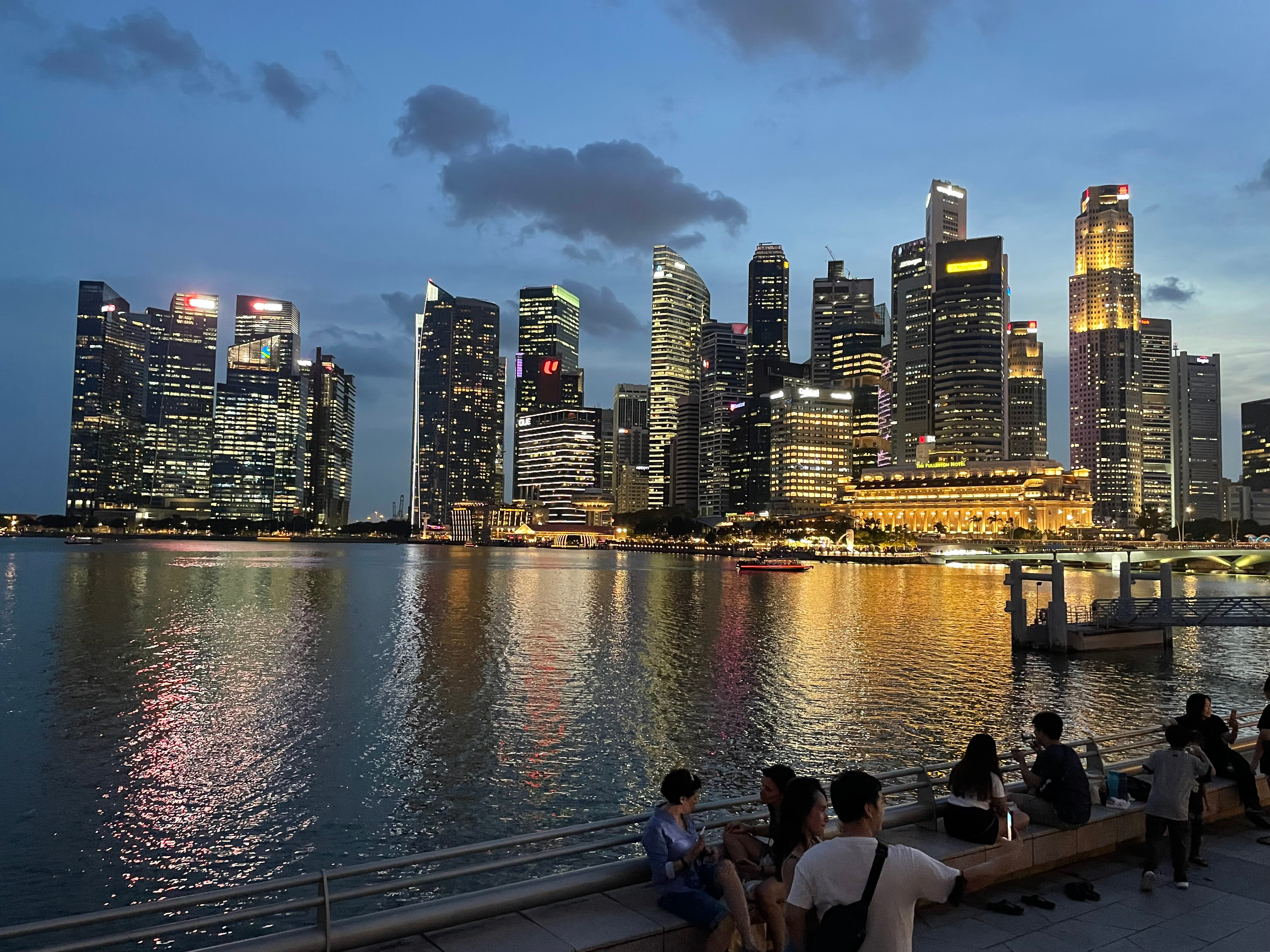
It really felt like a proper travel experience, no pre-booked plans, no rush to see everything, just enjoying the city and the vibes.
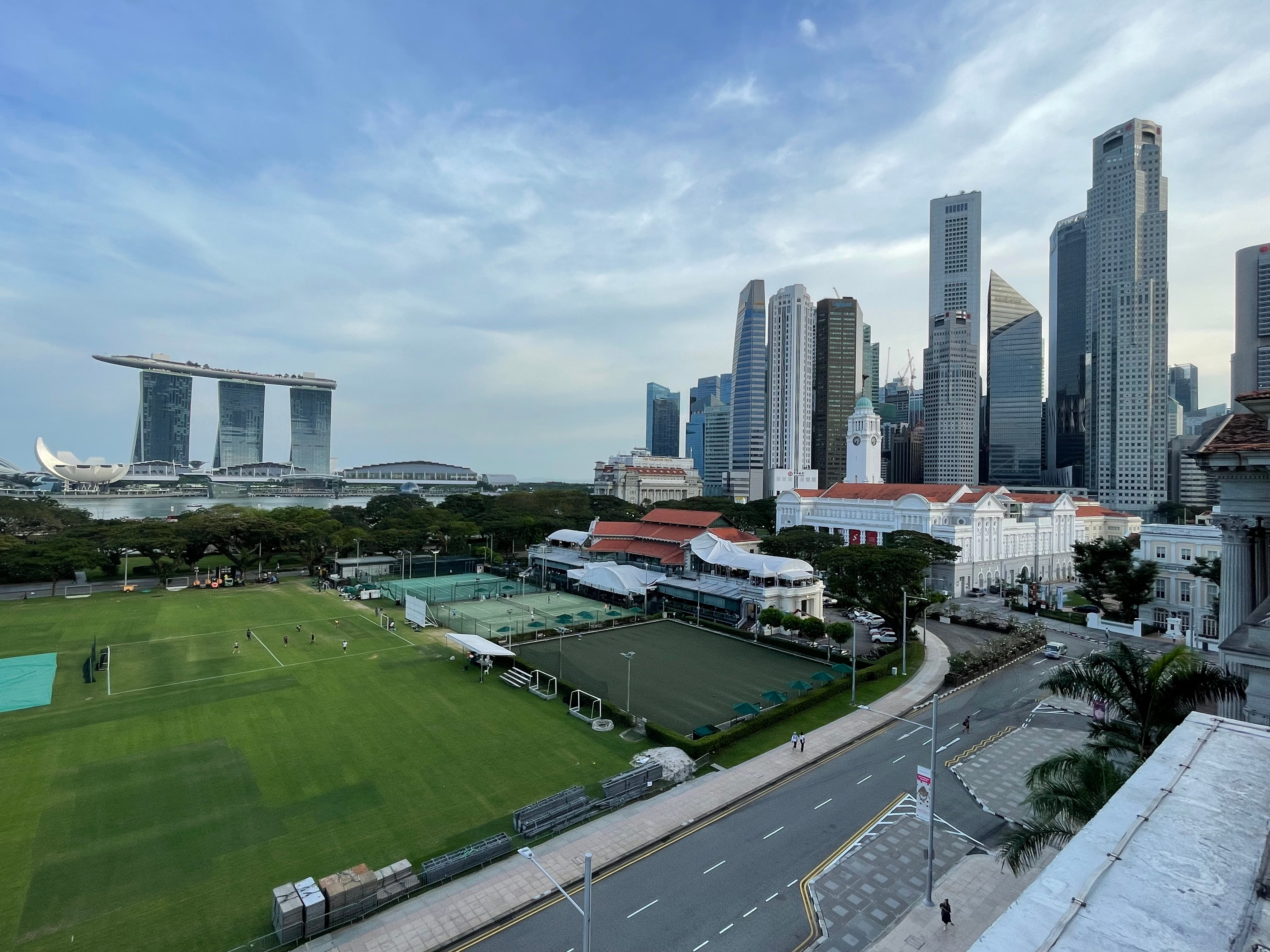
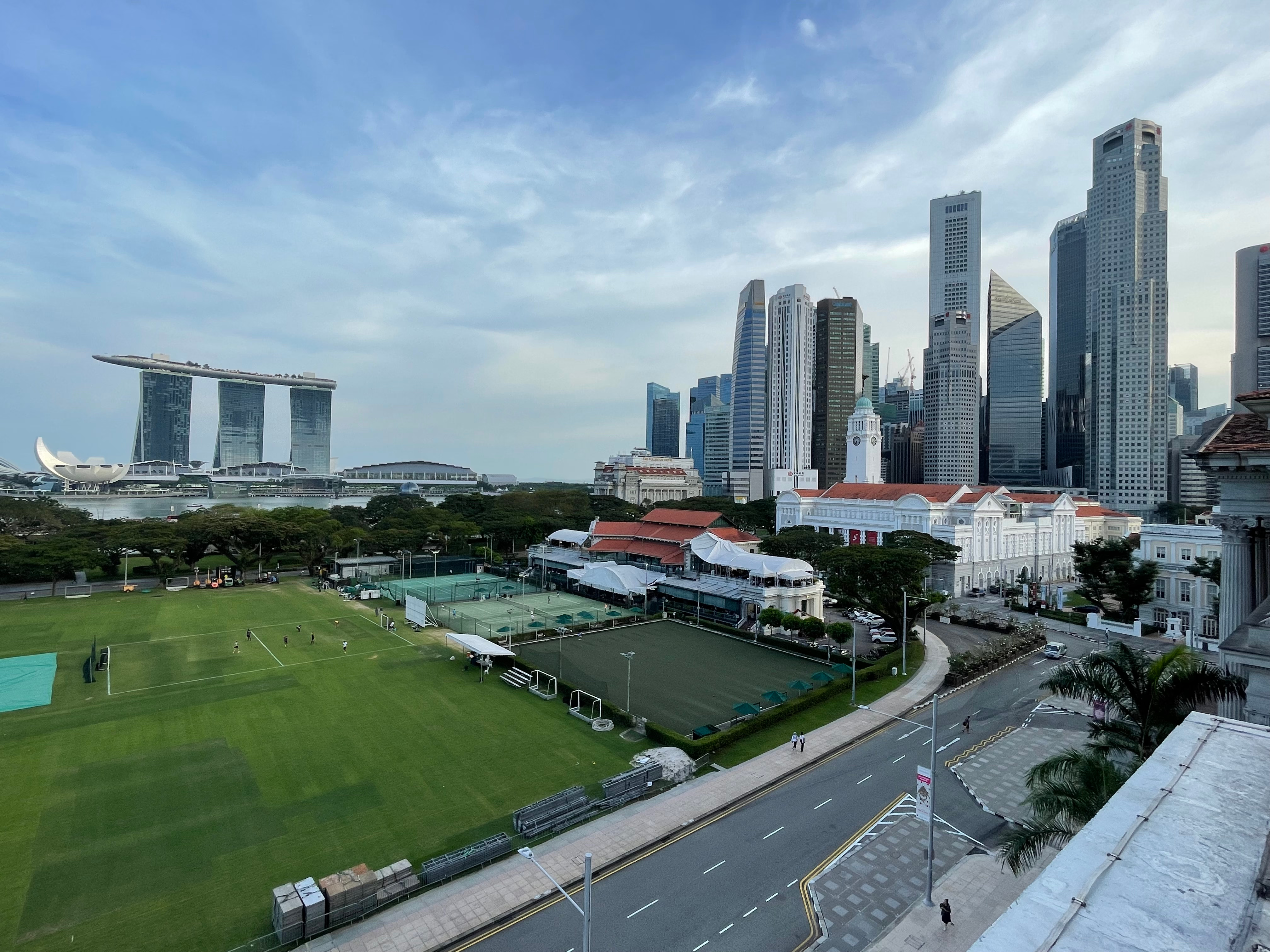
We wandered around different neighbourhoods and for the afternoon we booked our final tour with Monster Day Tours. This covered the downtown area and ended on the rooftop of the old Parliament House building, a great spot to say goodbye to this amazing trip.