Salkantay trek to Machu Picchu
Three days of trekking through the high Andes and the jungle valleys leading to Machu Picchu.
Salkantay Pass
About the trek
Most people have Machu Picchu on their bucket list. But what if, instead of the classic train trip from Ollantaytambo, you could get there on a 4-day trek through the high Andes?
This is not the Inca Trail, the more famous route that crosses the Andean jungle and also ends at Machu Picchu.
The Salkantay Trek is a high-altitude multi-day hike through some of Peru’s most imposing peaks, then down through jungle valleys to Machu Picchu. You can do it independently or as part of a package tour, with your luggage carried camp to camp and meals provided by the company.
A 4-day trip means three days of hiking and one day at Machu Picchu. Most companies offer several lengths, but the 4- or 5-day option is the most popular.
We booked the 4-day tour with Salkantay Trekking and ended up in a small group with two guides. The company goes to great lengths to organize all the details and make the experience as smooth as possible. And the guides, Saul and Nico, made this trip really special. The whole experience was amazing and we encourage everyone to book such a tour to enjoy this unique trip to Machu Picchu.
Day 1: Soraypampa and Humantay Lake
The trek starts west of Cusco, at the base of the mountains in Challacancha. Day one is gentle, and our guides used the easy pace to help the group get to know each other. After a few kilometers you reach the camp at Soraypampa, already at 3,800 meters above sea level.
On organized group treks like this one, a chef cooks every meal at camp. Do not expect cheap and fast trail food. We had some amazing treats throughout the trek, maybe even the best food we had in Peru. The guides also provide plenty of snacks and drinks along the way, so all you need to carry is your day backpack.
After lunch at Soraypampa, there is a short but steep hike up to Humantay Lagoon, a blue glacial lake at the foot of the mountain and glacier of the same name.
This hike is used as a fitness check for day two. The lagoon is really beautiful and well worth the hike. Unfortunately, the mountain peaks were covered in clouds, so we couldn’t see them.
Back at Soraypampa for dinner and a good night’s sleep. The camp sits in a valley with direct views of Salkantay peak. We had clear weather the next morning, and waking up for sunrise was a treat.
Day 2: Salkantay Pass
This is by far the hardest day. You reach the highest point of the trek and cover more than 23 kilometers.
It starts early with an easier stretch, then quickly turns into a steep climb to Salkantay Pass at 4,630 meters above sea level.
Everyone reacts differently to altitude. Some notice it above 2,000 meters, others above 3,000. We were used to hiking at 2,000 meters, but 4,000 is a different beast.
In the morning you get plenty of coca leaf tea, or even dry leaves to chew, which helps with the altitude and gives you a boost.
The ascent includes a famous narrow, twisty section called the “Seven Snakes”. The hard part is not the terrain, but the constant stream of mules passing by, sometimes blocking the trail, other times moving fast downhill.
The Seven Snakes section went by quickly, but above 4,000 meters it gets harder to breathe and harder to relax. Our group kept a good pace and stayed on schedule.
For the last stretch, everyone went at their own speed. We were tired, but the scenery is so good that you can stop often to catch your breath and take photos.
Even with the sun out all day, it was still cold at this altitude, as you can see from the jackets we were wearing. You do not need special gear, but pack plenty of layers and expect a wide range of temperatures over four days.
From the pass, the trail descends into the Peruvian high jungle. The scenery changes fast as vegetation takes over and the snow-covered peaks fall behind you.
Leaving the high mountains also means a dustier, slipperier trail. Donkey trains carrying equipment kick up clouds of dust that can make breathing difficult at times.
This is the longest day of the trek. From Salkantay Pass to the camp at Collpapampa, you cover another 15 kilometers or so and drop around 2,000 meters in elevation. The gradient stays manageable because the descent is spread over the full distance.
Collpapampa is a beautiful camp with views of the surrounding mountains and a river in the valley below. It sits much lower than Soraypampa, so the air is warmer. There is even a shower and toilet, which helps after the dusty descent.
Day 3: Jungle trekking to Aguas Calientes
Day three is easy and mostly flat, with a bus transfer halfway through. It is more of a pleasant walk than a hard hike, and we had plenty of time to talk with the rest of the group. This was probably the day we bonded most, guides included.
One highlight was a stop at a local coffee farm, where we watched traditional roasting and tasted coffee from beans roasted on the spot.
By now you are deep in the lush jungle landscape around Machu Picchu. After lunch, a van takes you to Hidroelectrica, the starting point for the final 10-kilometer hike to Aguas Calientes.
The trail follows the narrow Vilcanota River valley through dense forest at the foot of the mountain where Machu Picchu sits. If you know where to look, you can spot the ruins from several points along the way.
At the end of the day, and the trek, we arrived in Aguas Calientes, the town at the base of Machu Picchu.
It is a touristy place with plenty of hotels, restaurants, and shops. There is not much to do here except rest up for Machu Picchu the next morning.
The last night is spent at a simple but clean and comfortable hotel in town.
Day 4: Machu Picchu
Our tour included the Machu Picchu visit. Day four started early with a bus to the entrance, and we had a clear morning for one of the most memorable sunrises of our lives.
Machu Picchu itself deserves its own separate article. You can explore the terraces using several paths, but you have to buy your ticket in advance for a specific route.
It gets crowded quickly, and you have to follow your route without backtracking to spots you have already passed, so make sure you spend enough time at each spot. The staff enforces this firmly. These strict rules can make the visit feel less relaxed than you might expect, but even so, Machu Picchu is a once-in-a-lifetime experience and well worth the visit.
The classic spot everyone recognizes is right at the beginning of the tours, when the terraces are below you and you see the famous Huayna Picchu peak rising behind them.
Once you’ve taken all the possible pictures, you continue descending the terraces and walking around the actual ruins. There are a lot of surviving walls and structures to explore, as well as a few open spots where you can look out over the valley and the mountains beyond.
You can book an additional ticket to hike to the top of Huayna Picchu, but we had limited time and wanted to spend more time exploring the ruins.
Towards the end of the tour, we had another great view from below the terraces. You can still recognize the mountain shape in the background but this time you see the full extent of the terraced ruins.
Recommendations
The Salkantay trek remains one of the most memorable trips we have ever taken. The shift from high mountains to jungle, the altitude, and the draw of Machu Picchu make it a genuinely unique hike.
Salkantay Trekking is a great company to book with: professional, friendly, and focused on making the trip run smoothly. We also met solo travelers and independent groups along the trail, so going without a tour is doable too.
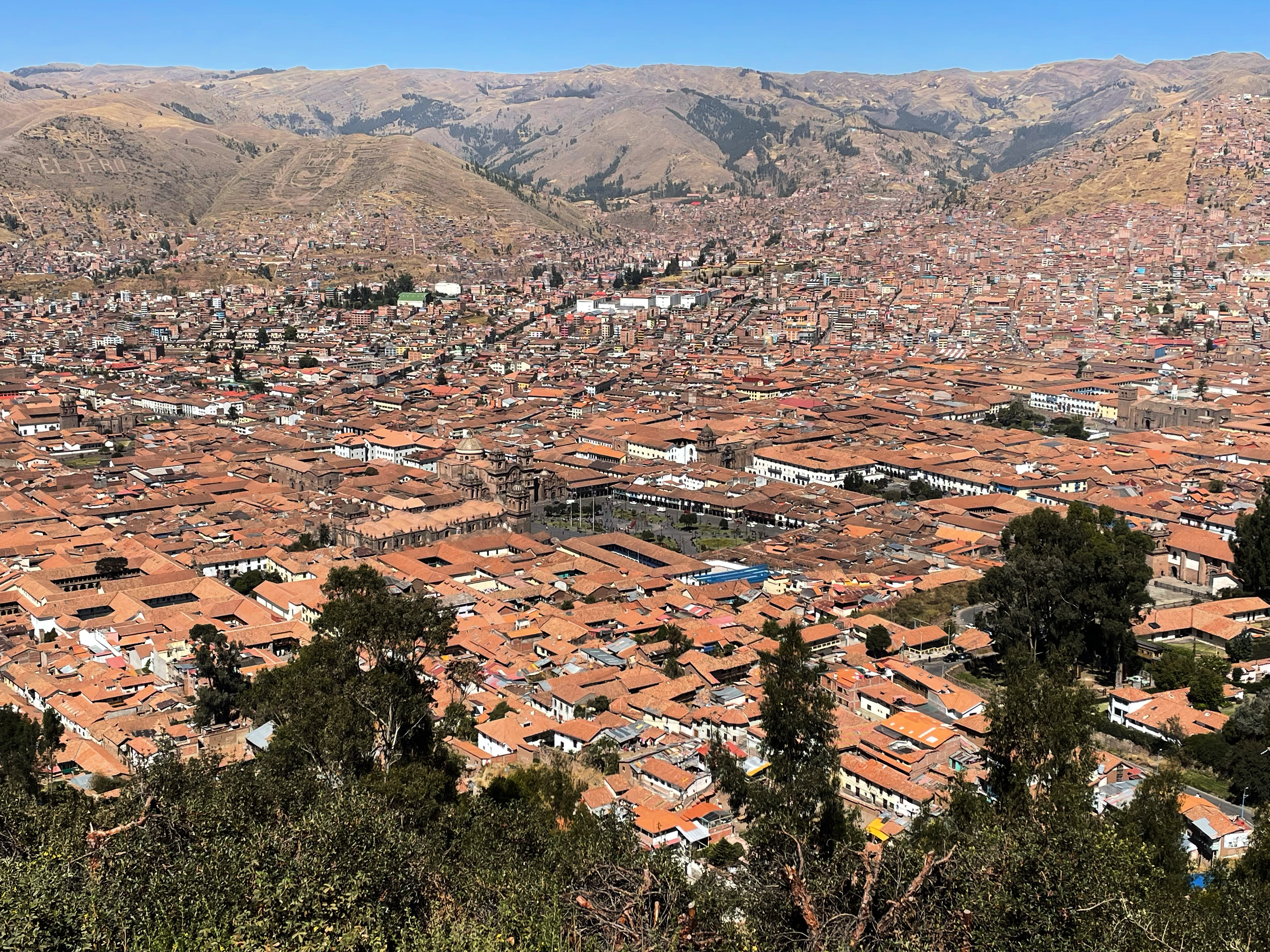
If you’re not a regular high-altitude hiker, spend a few days in Cusco before the trek to acclimatize above 3,000 meters. Cusco itself sits at 3,400 meters above sea level and is the gateway to the Sacred Valley and plenty of other interesting places where the Inca civilization left its mark.
We spent four days in Cusco before the Salkantay trek and really loved the vibe of the city. The contrast with Lima is stark, and the mix of ancient and colonial architecture makes it worth a visit no matter how you plan your hike to Machu Picchu.
We were also fortunate to catch the annual Inti Raymi festival, the Inca New Year celebration, during our stay.
Of course, your experience at Machu Picchu does not depend on how you get there, but a long trek through the high Andes definitely makes the whole thing special and memorable.