Alpine tour from Salzburg to Val Gardena
Eleven days on the road crossing the Alps from the Northern ranges around Salzburg to the Italian Dolomites in South Tyrol.
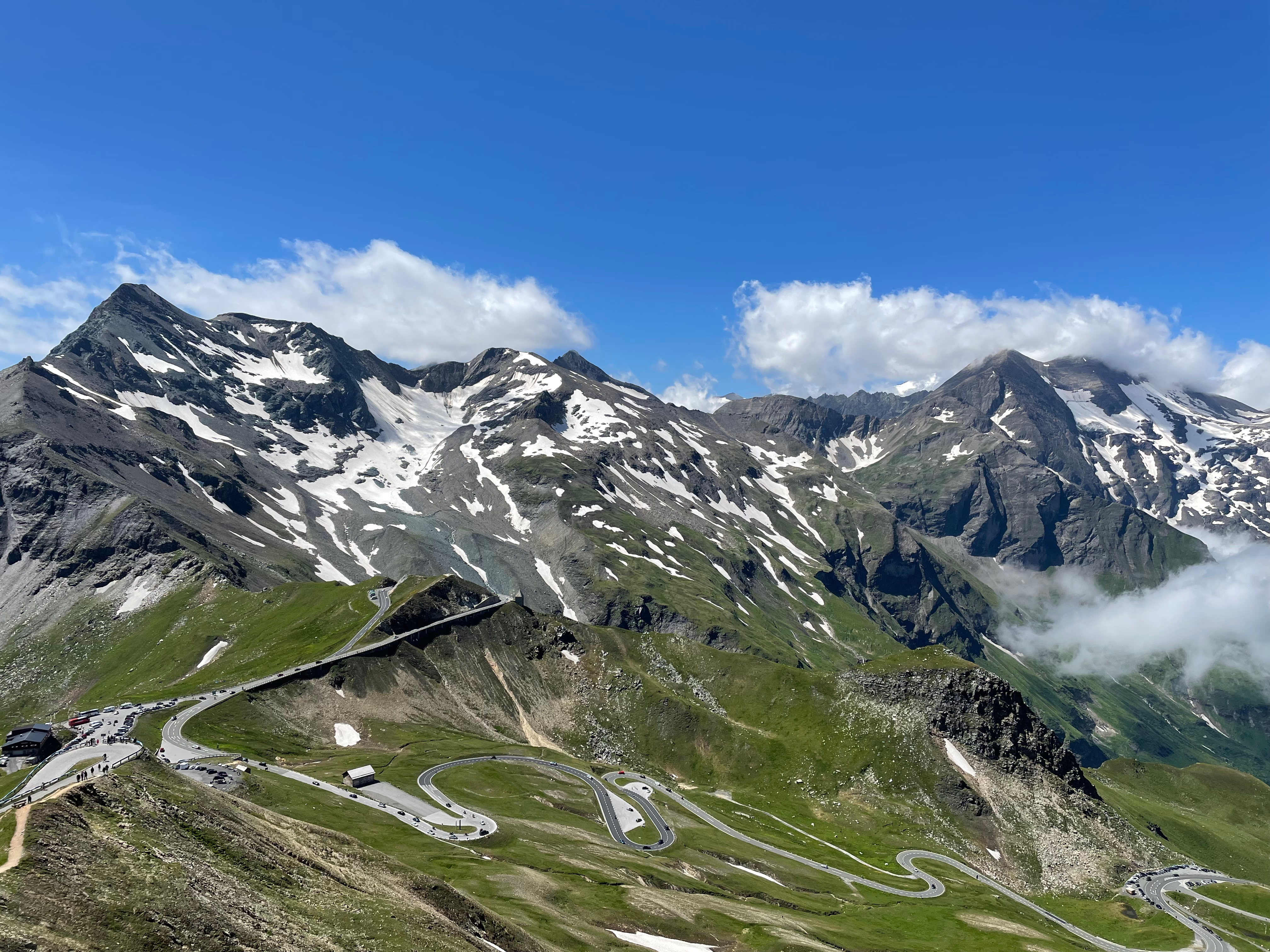
Grossglockner, Austria
- Countries
- 🇦🇹 Austria · 🇮🇹 Italy
- Region
- Europe
- Duration
- 11 days
- Best months
- July-September
Highlights
- Salzburg and the quaint villages of the Salzkammergut
- Driving on some of the most spectacular roads in Austria and Italy
- Hiking in Val Gardena despite a handful of rainy days
- Our first ever via ferrata experience
Quick tips
- Pack layers and always be prepared for rain in the mountains.
- Prepare for crowds in the most popular locations, especially the Dolomites, but also at Hallstatt and on the Grossglockner road.
- Resist the urge to plan around popular spots, there are plenty of hidden gems to discover.
Day 1
01
🇦🇹 Salzburg
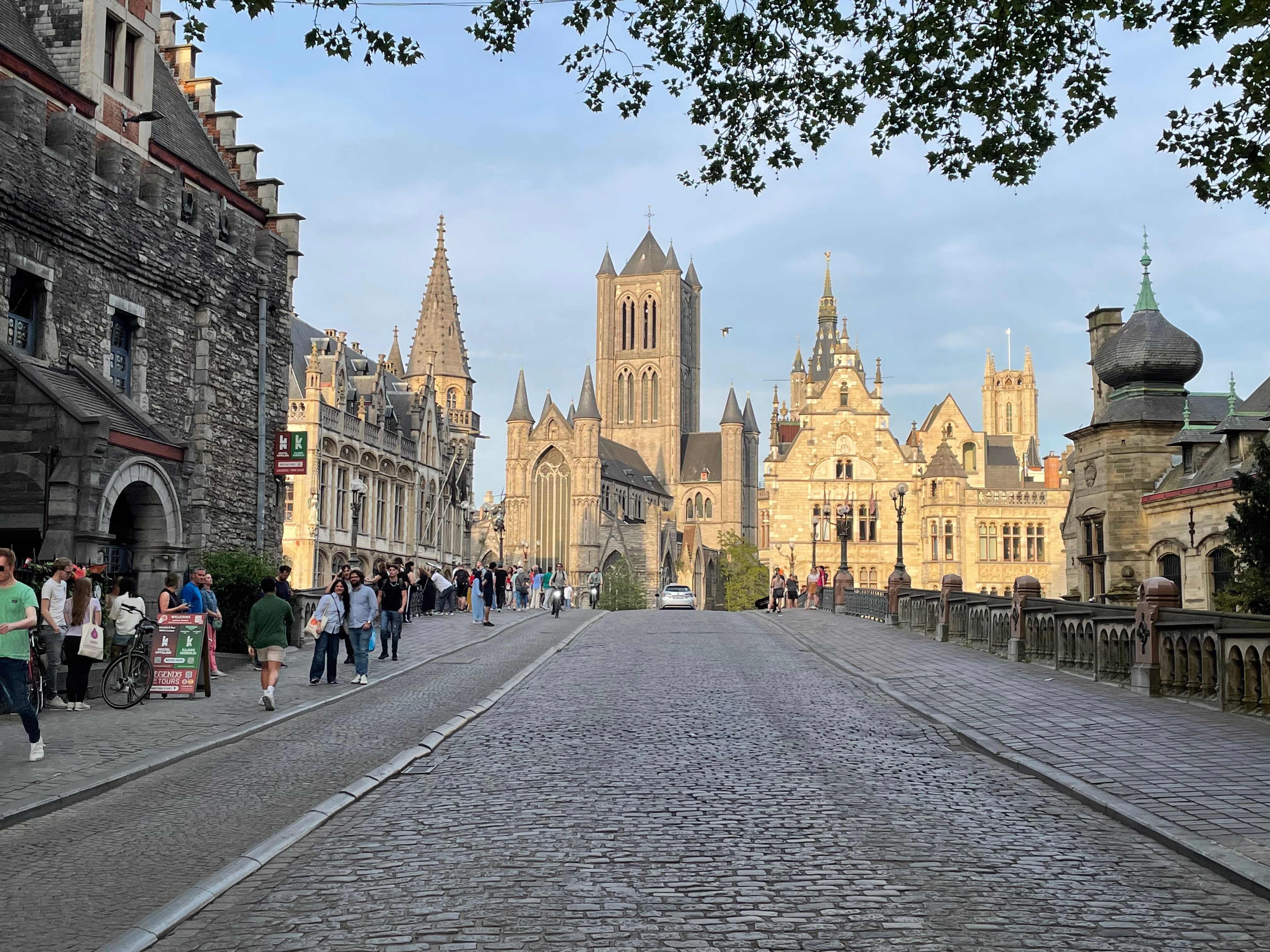
City tour — old town, fortress, and the Salzach.
Day 2
02
🇦🇹 Salzburg • 🇦🇹 Berchtesgaden
Untersbergbahn, Kehlsteinhaus, and short hike on the banks of Königssee.
Day 3
03
🇦🇹 Hallstatt • 🇦🇹 Gosau • 🇦🇹 Zell am See
Pleasant walks in Hallstatt and Gosau before heading west for the evening at Zell am See.
Day 4
04
🇦🇹 Grossglockner • 🇮🇹 Dobbiaco
Grossglockner road, glacier hike at Kaiser-Franz-Josefs-Höhe, driving down to Italy to spend the night in Dobbiaco.
Day 5
05
🇮🇹 Dobbiaco
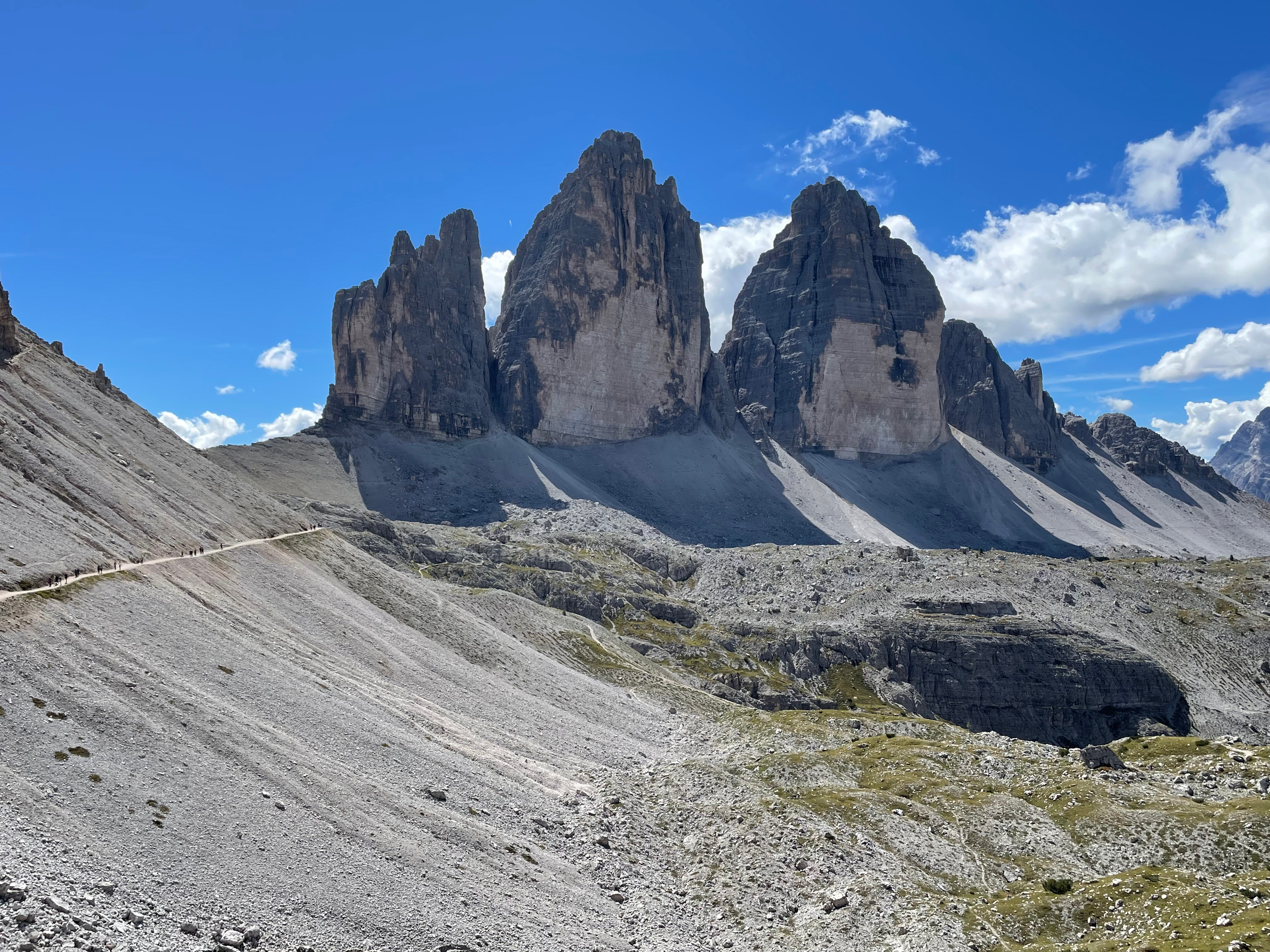
Classic Tre Cime di Lavaredo loop
Day 6
06
🇮🇹 Dobbiaco • 🇮🇹 Val Gardena
Lago di Dobbiaco and Lago di Braies, then moving west on the scenic road through Val Badia and Val Gardena.
Day 7
07
🇮🇹 Val Gardena
Driving up Passo Pordoi and hike to Piz Boe, the highest point in the Sella group.
Day 8
08
🇮🇹 Val Gardena
Drive along Val di Fassa, on to Lago di Carezza and back to Ortisei/Val Gardena.
Day 9
09
🇮🇹 Val Gardena
Seceda hike from Col Raiser.
Day 10
10
🇮🇹 Val Gardena
Drive to Passo Sella and hike the Sassolungo circuit.
Day 11
11
🇮🇹 Val Gardena
Drive to Passo Gardena and finish the trip with our first ever via ferrata.
Days 1–3: Salzburg and around
This trip was originally planned for 2020, but got moved forward one year because of the travel restrictions during the COVID-19 pandemic.
We initially planned a grand tour of the Alps, including Switzerland and maybe even France, but we realized each Alpine country deserves at least four or five full days.
We also really wanted to experience the Dolomites for the first time, so we built the second half of the trip around several solid days in Val Gardena.
We drove from home all the way to Salzburg, then took a two-day detour to Italy’s Adriatic coast. We left those days out of this itinerary to keep the focus on the alpine experience.
Salzburg
We spent the first day on foot in Salzburg. The city is pretty compact and easy to navigate, although climbing up to the Hohensalzburg fortress does require a bit of effort.
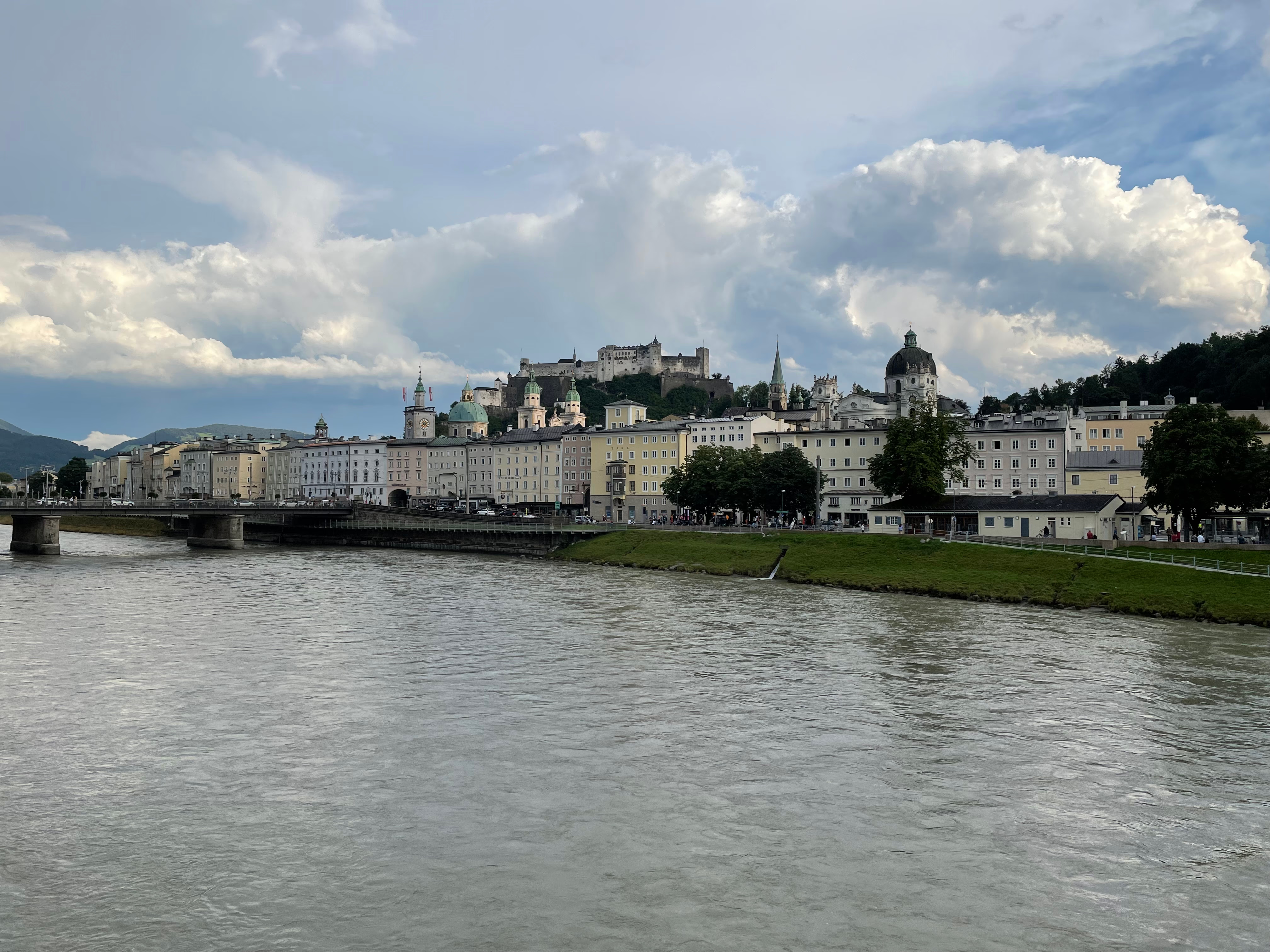
This was the first city we visited outside Romania after 18 months of travel restrictions, and we still remember how strange the experience felt.
Salzburg is the second most visited city in Austria, but at that time it really felt like an average low-profile European city. There were no big crowds, no queues to buy tickets and no lines to get into the museums.
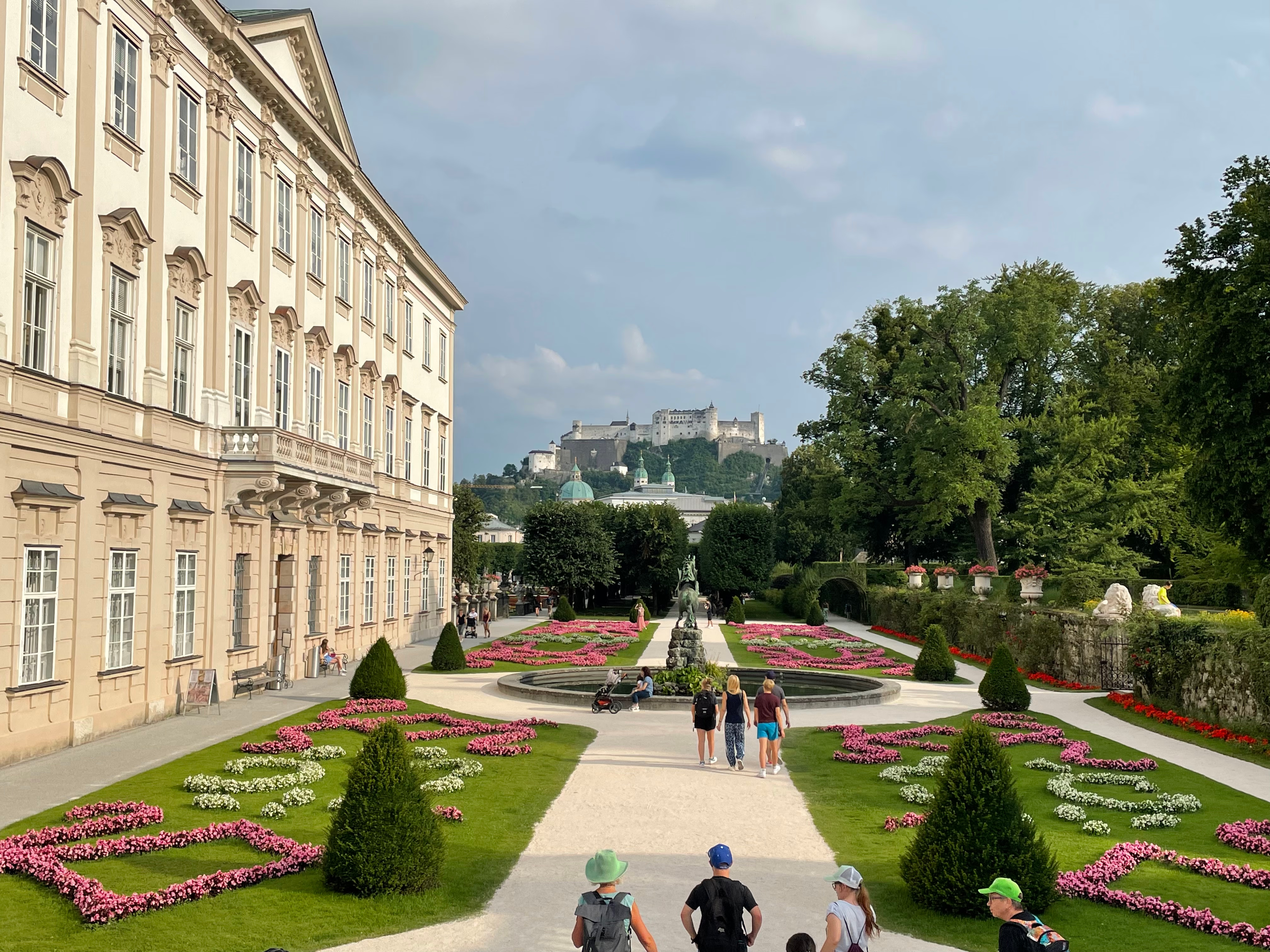
We started our day walking around the Mirabellgarten, a beautiful park with a nice view over the city and the Salzach river.
Then we crossed the river and entered the old town. Getreidegasse is a particularly nice pedestrian street with a lot of shops and restaurants. The Mozart museum is also located here, but we decided to skip it this time.
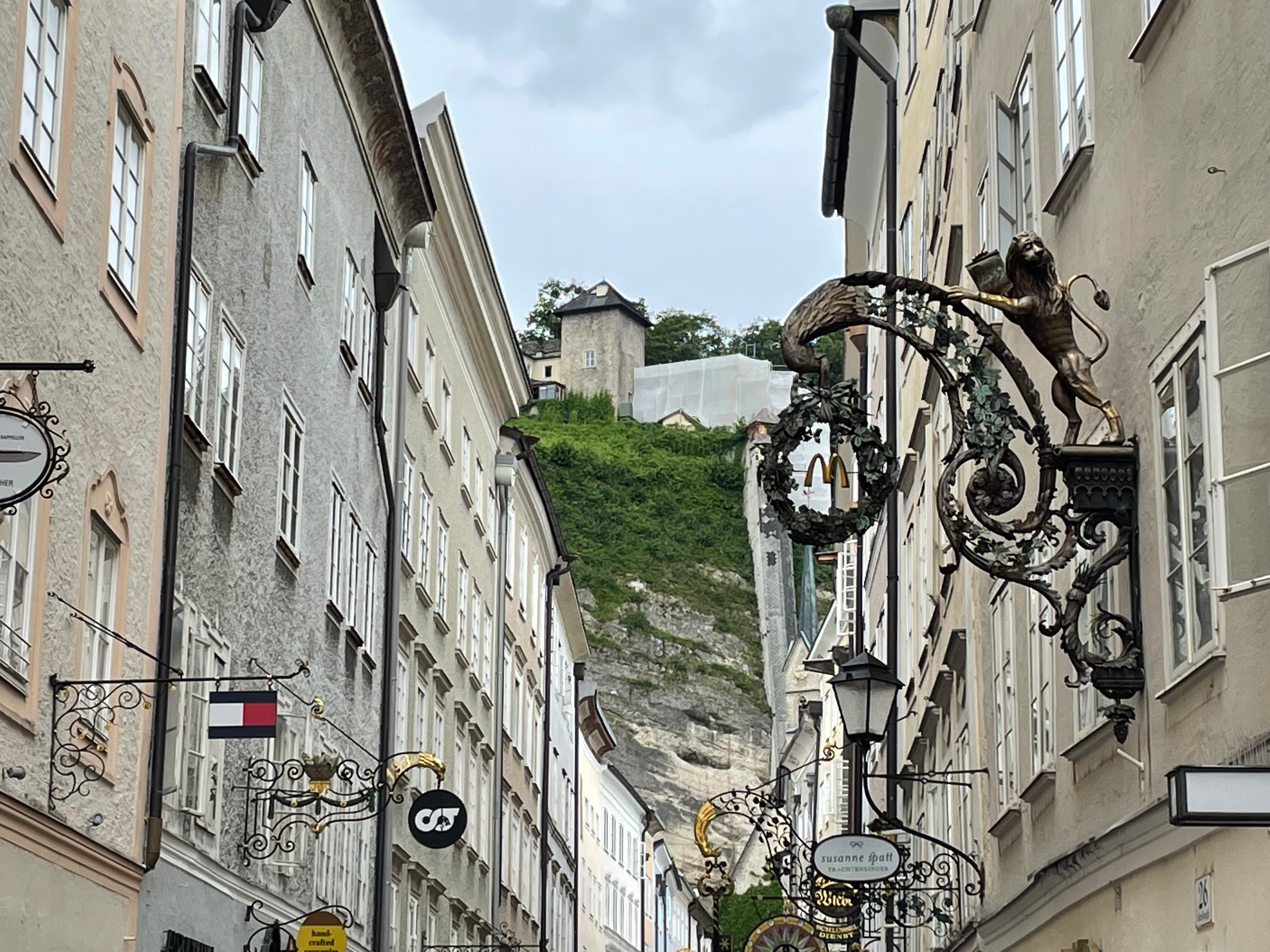
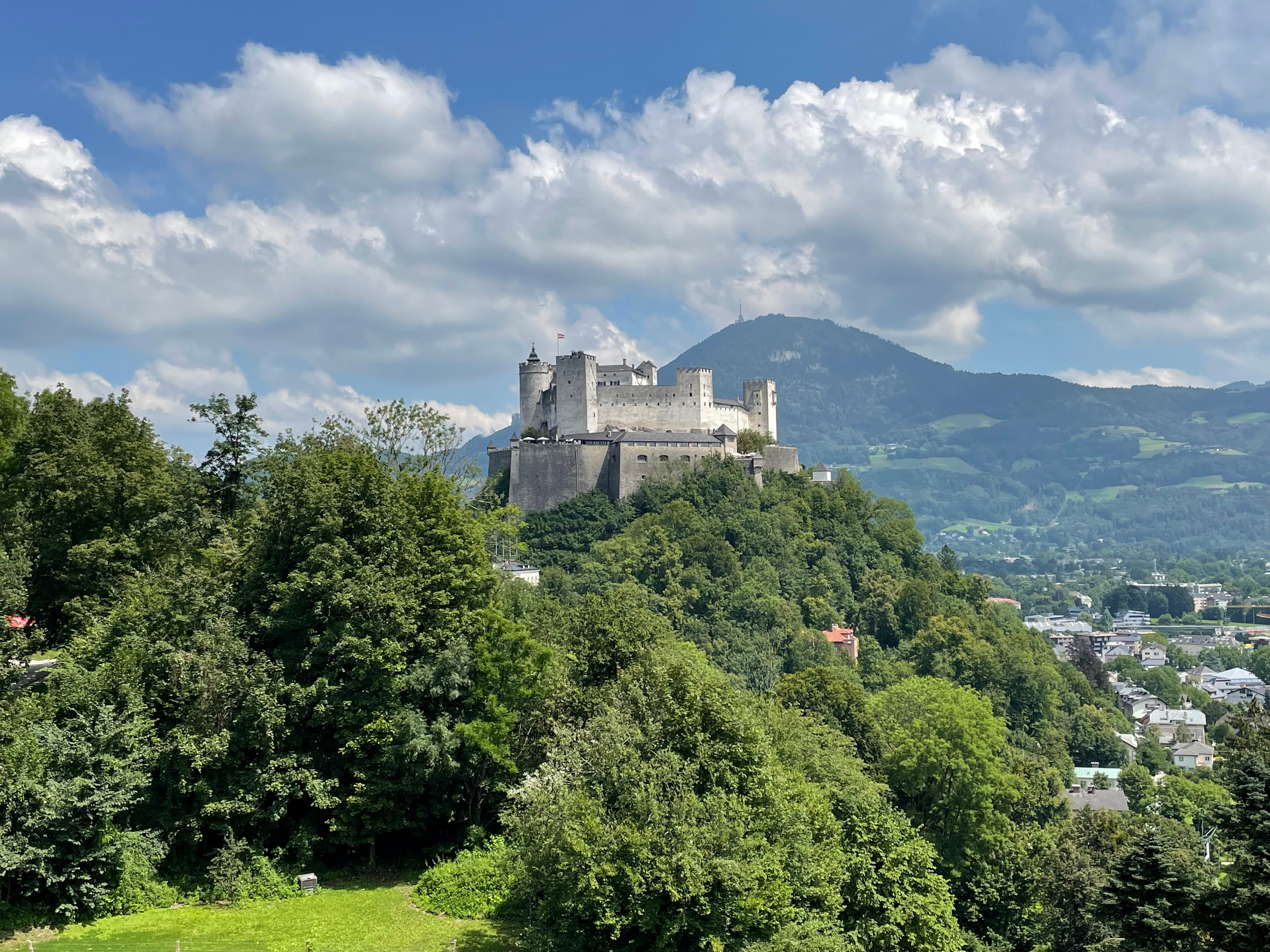
From the large Residenzplatz we started walking up towards the Hohensalzburg fortress. The climb is not too steep and the views over the city are quite impressive.
The fortress itself is also worth visiting, with a nice museum and plenty of interesting details in the inner courtyard.
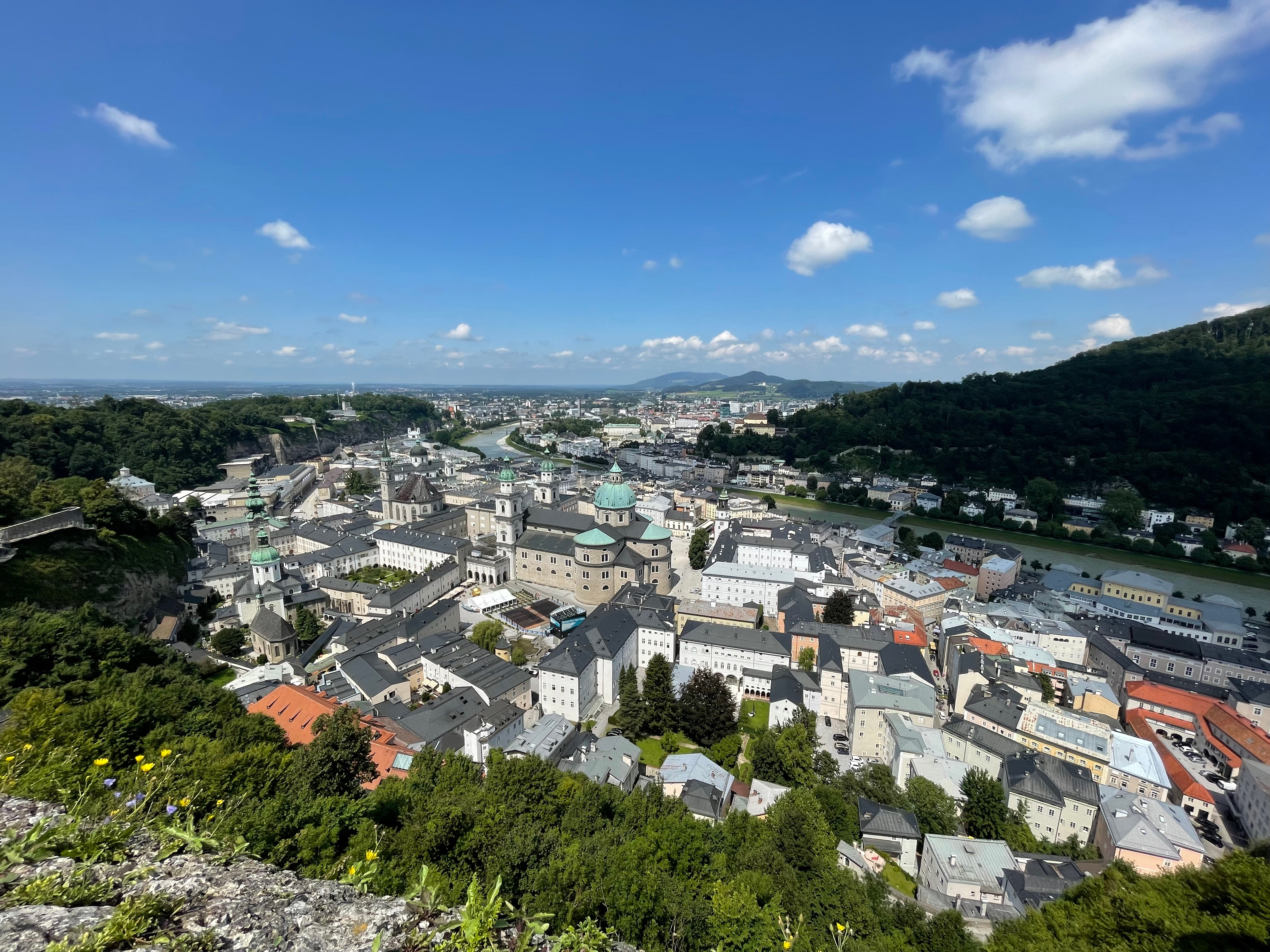
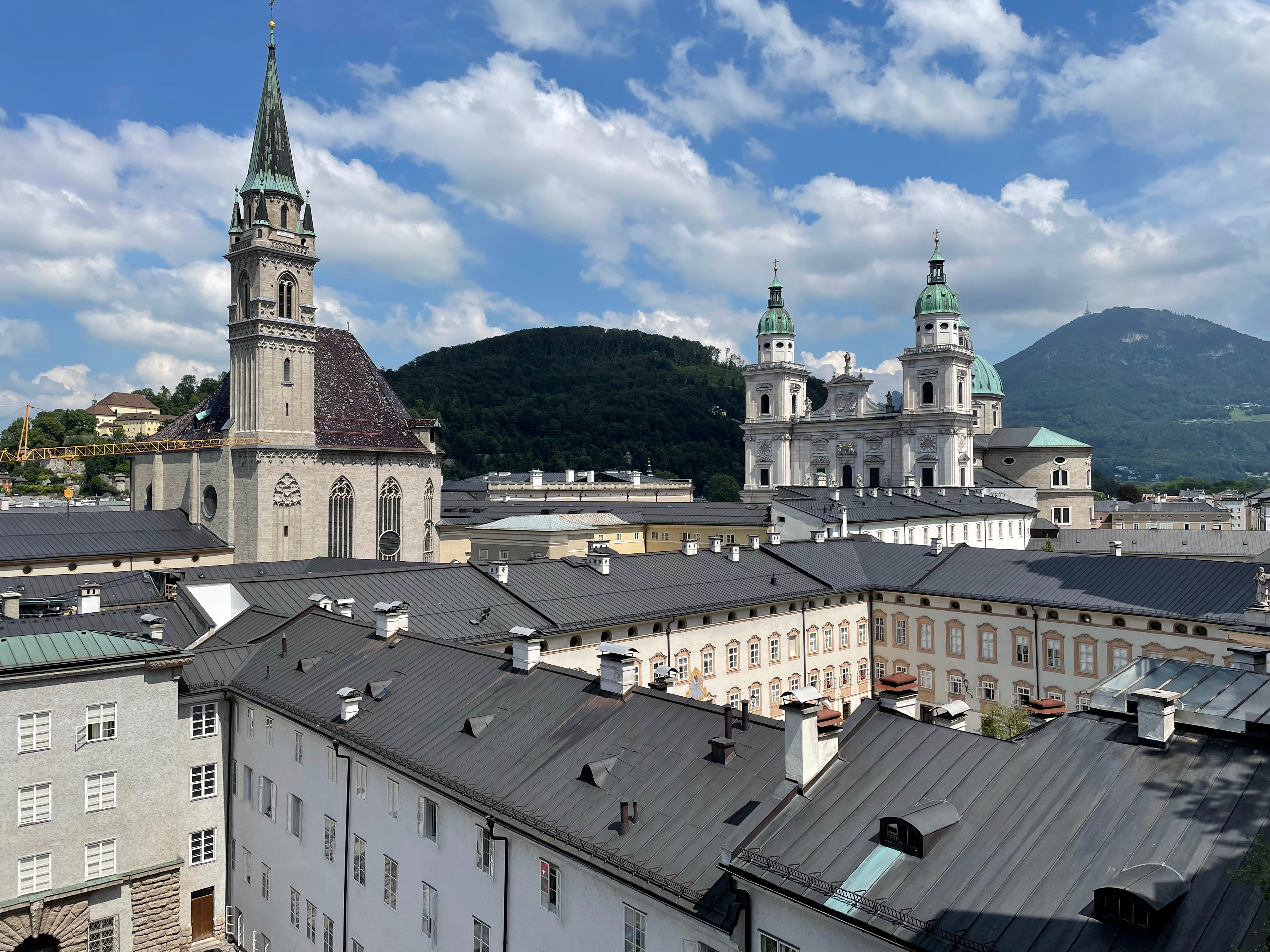
A path leads from the fortress along the hill ridge and back down toward the city, with equally impressive views of the old town’s grand palaces and churches.
Back across the river, there’s a great spot near the Kapuzinerkloster monastery, with a nice view over the city and the Salzach river.
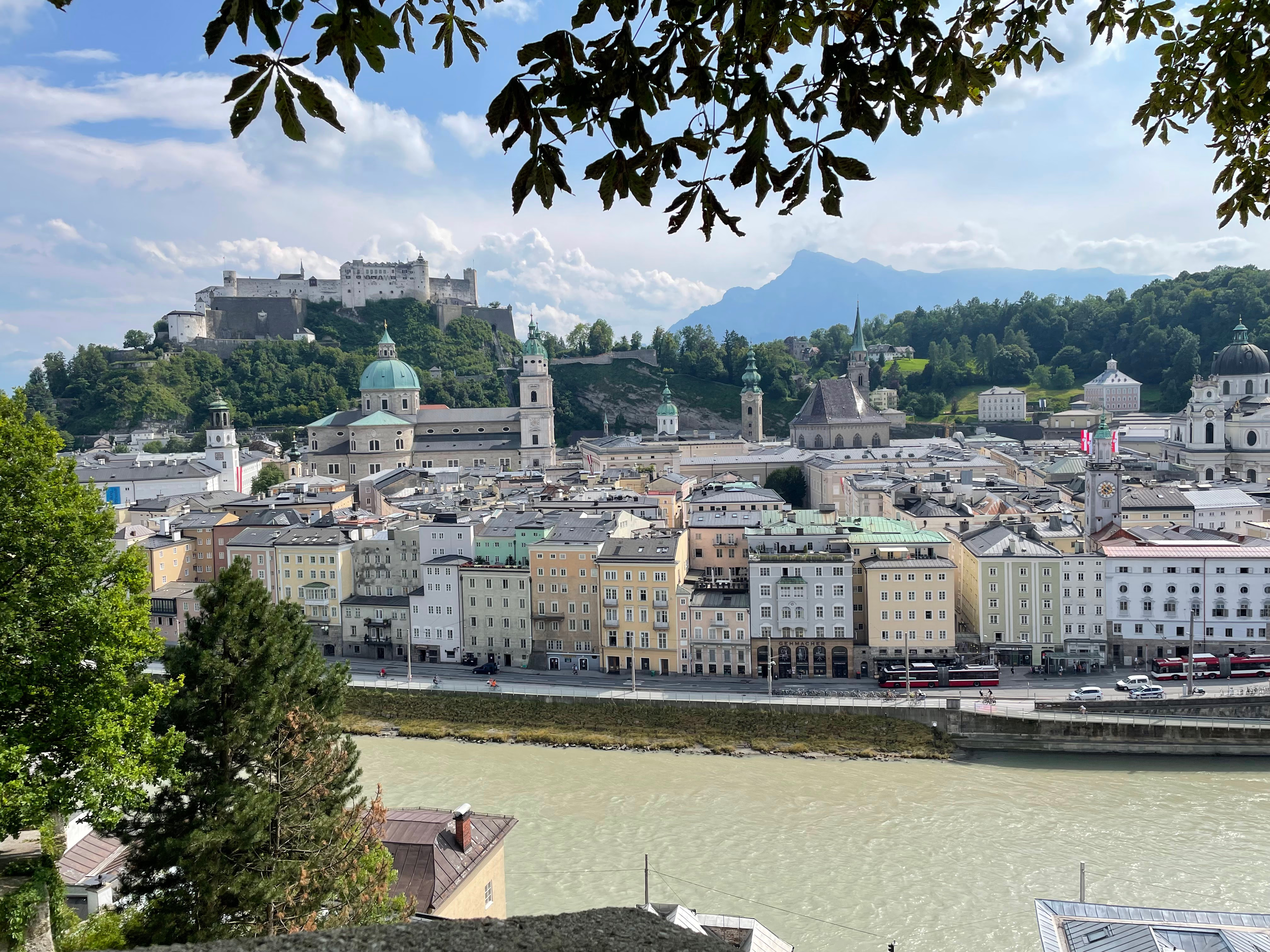
Overall, Salzburg felt like a great way to get back into travelling, with a more relaxed city-focused day, especially after we spent 12 hours in the car the day before.
Untersberg and Berchtesgaden
Day 2 started by driving south just outside of Salzburg to the Untersberg mountain. We took the Untersbergbahn cable car to the top of the mountain and then we walked around the ridge for a bit.
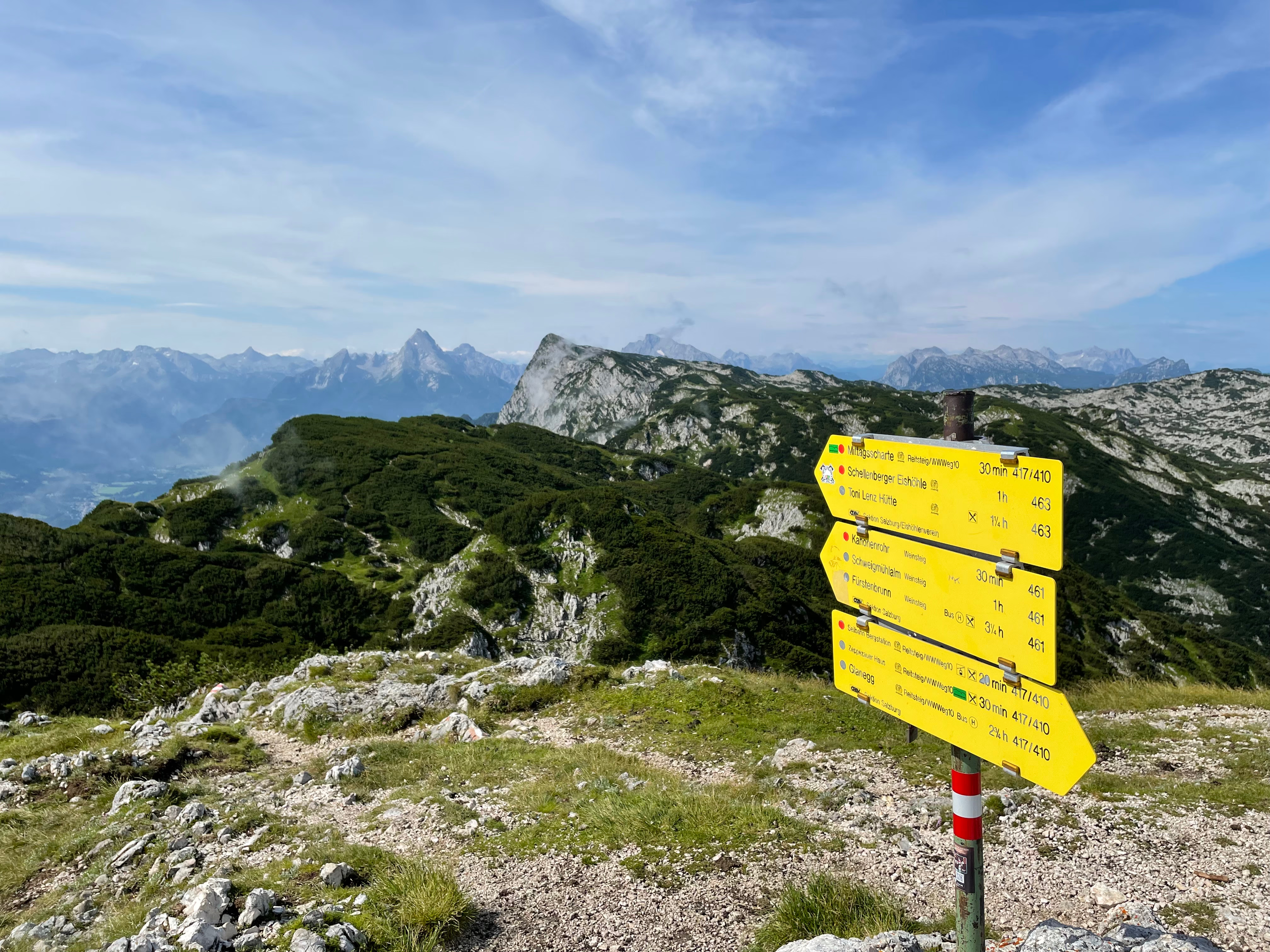
Once you’re on the main ridge, there are plenty of hiking trails at different difficulty levels. The ridge also marks the border between Austria and Germany. We took the easy trail south to the summit of Untersberg, which offers a great panoramic view of the surrounding mountains.
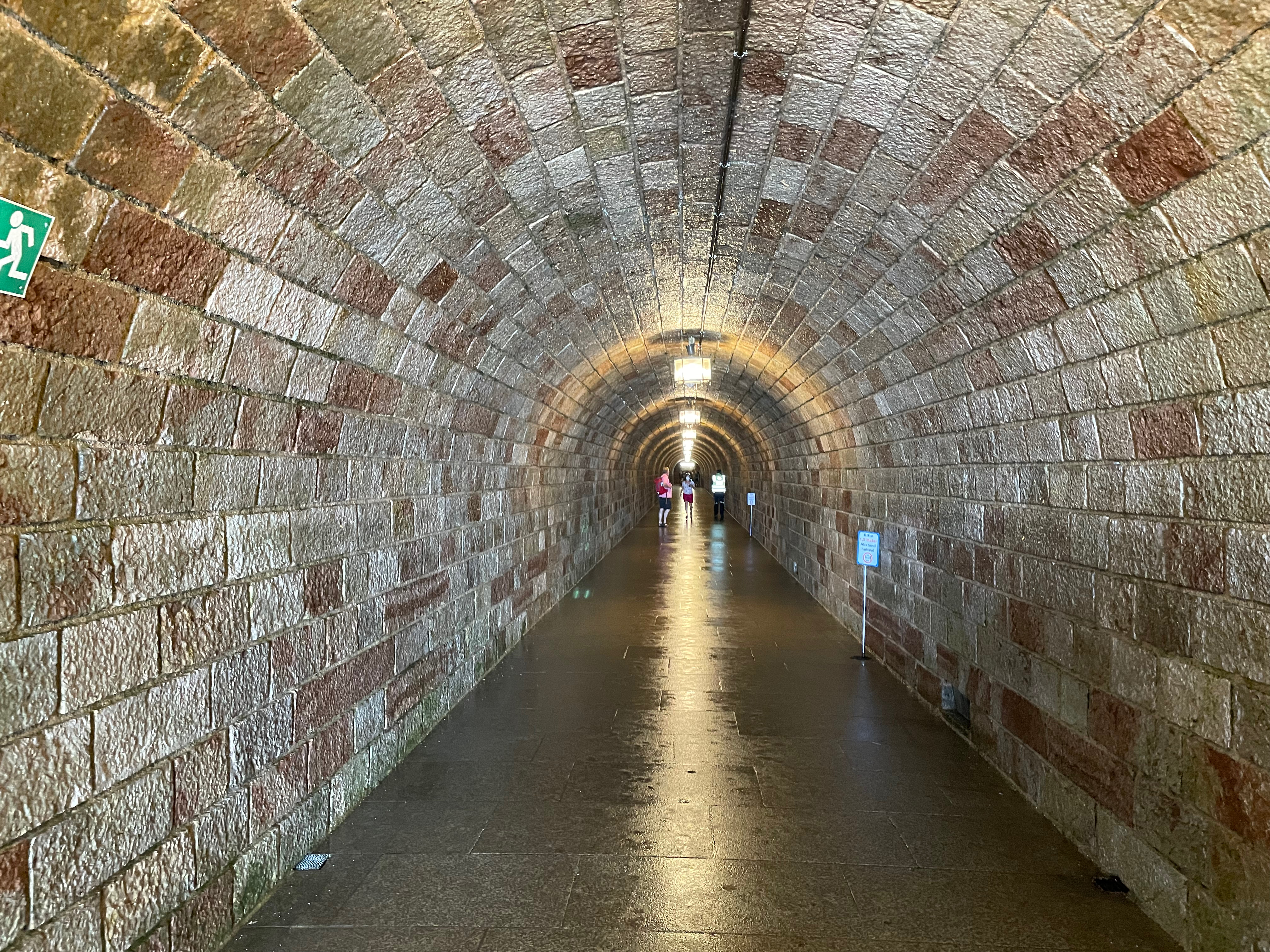
After riding the cable car back down, we drove further south, crossed into Germany, and visited the Kehlsteinhaus (Eagle’s Nest). This was Hitler’s mountaintop retreat, where he spent much of his time as chancellor. The building itself was destroyed after the war, but the tunnel leading to the elevator cut into the mountain remains.
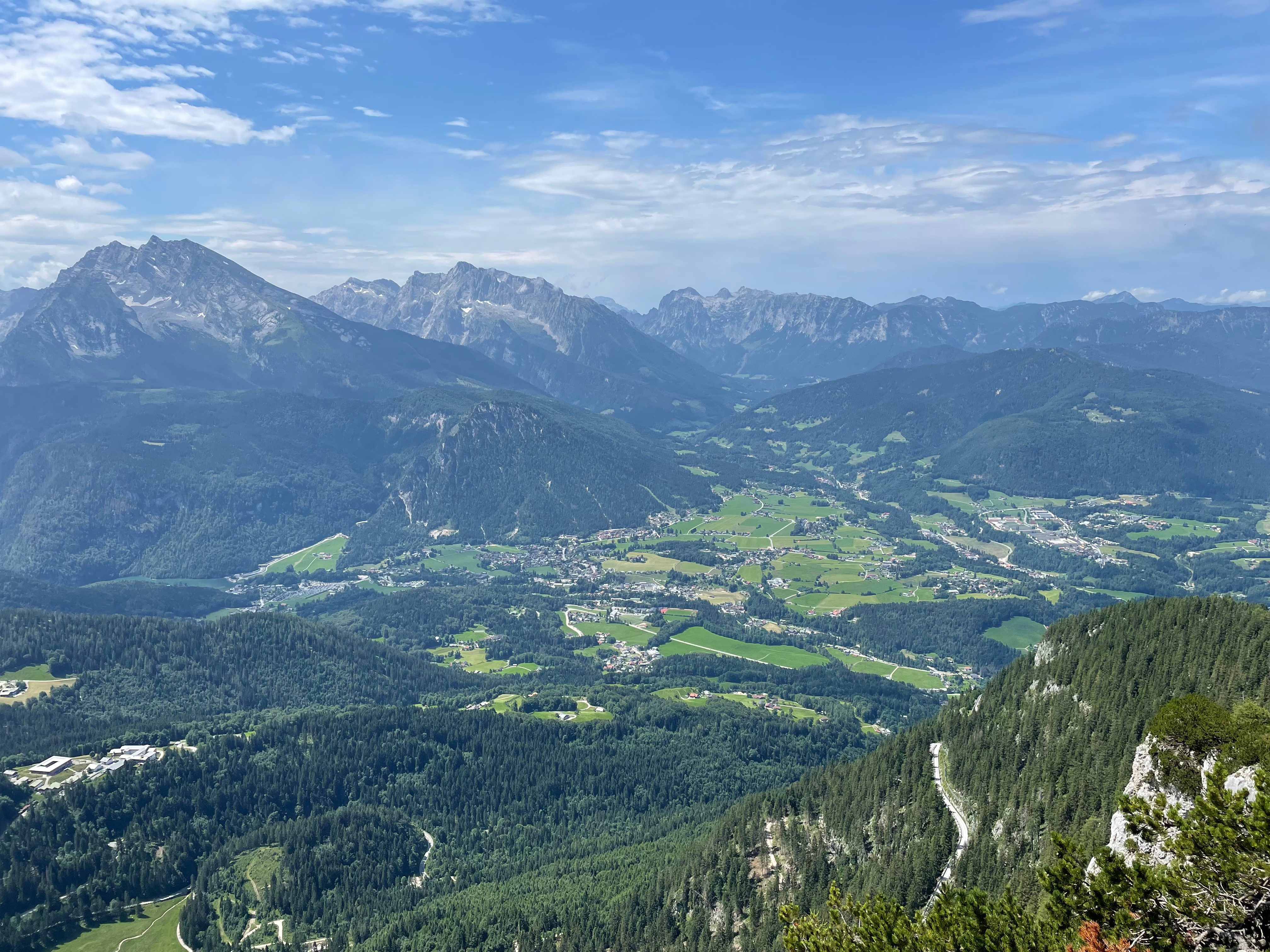
The view from the top is simply breathtaking in any direction, with the Alps stretching out as far as the eye can see.
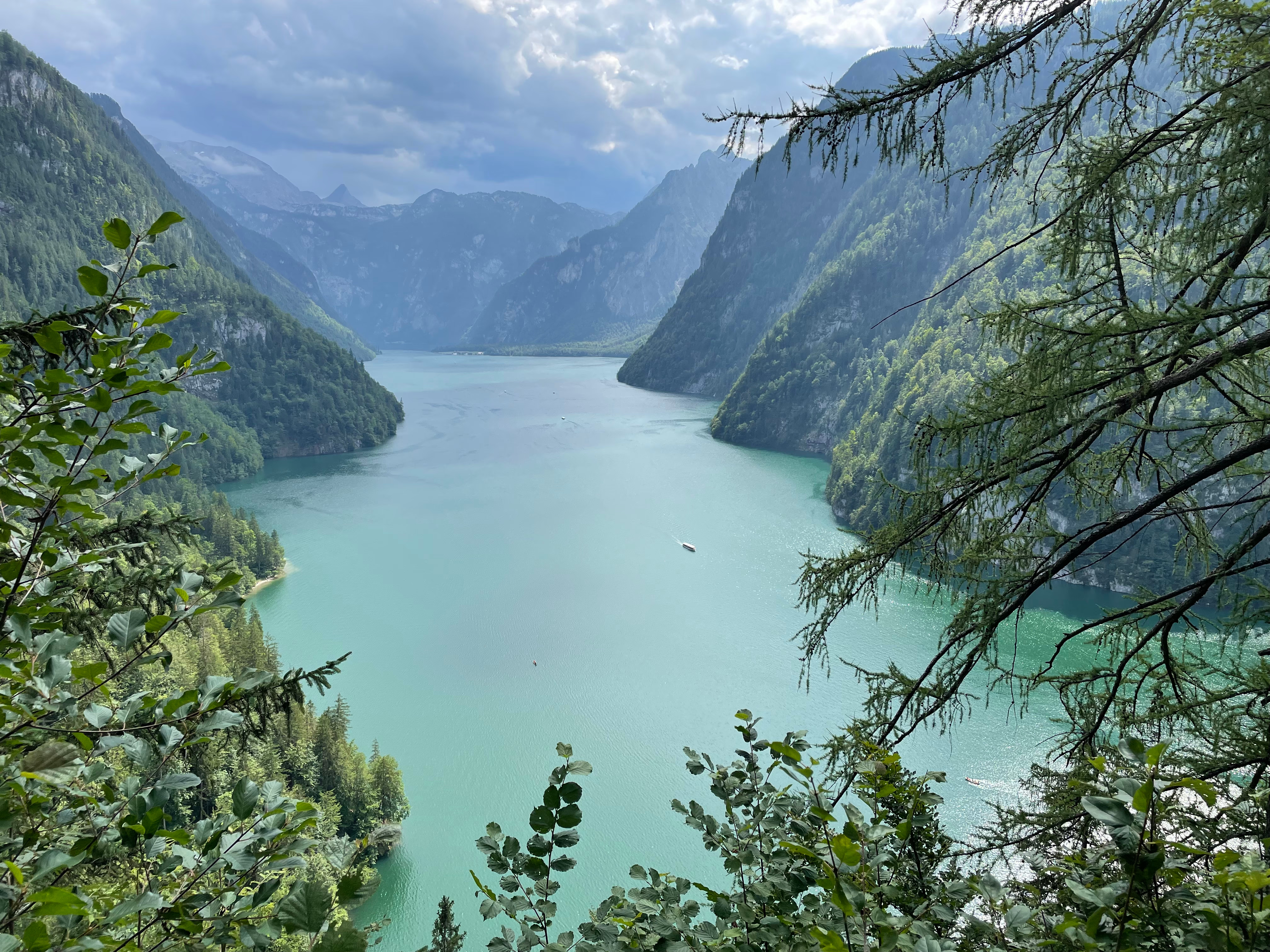
We finished the day with another pleasant hike along the shores of Königssee, the fjord-like lake wedged between the sheer limestone walls of the Berchtesgaden Alps.
Salzkammergut villages
Day three is a string of the region’s most photographed villages and resorts. Hallstatt is the one everyone knows — a handful of houses stacked between a cliff and a lake, with a history of mining salt going back thousands of years.
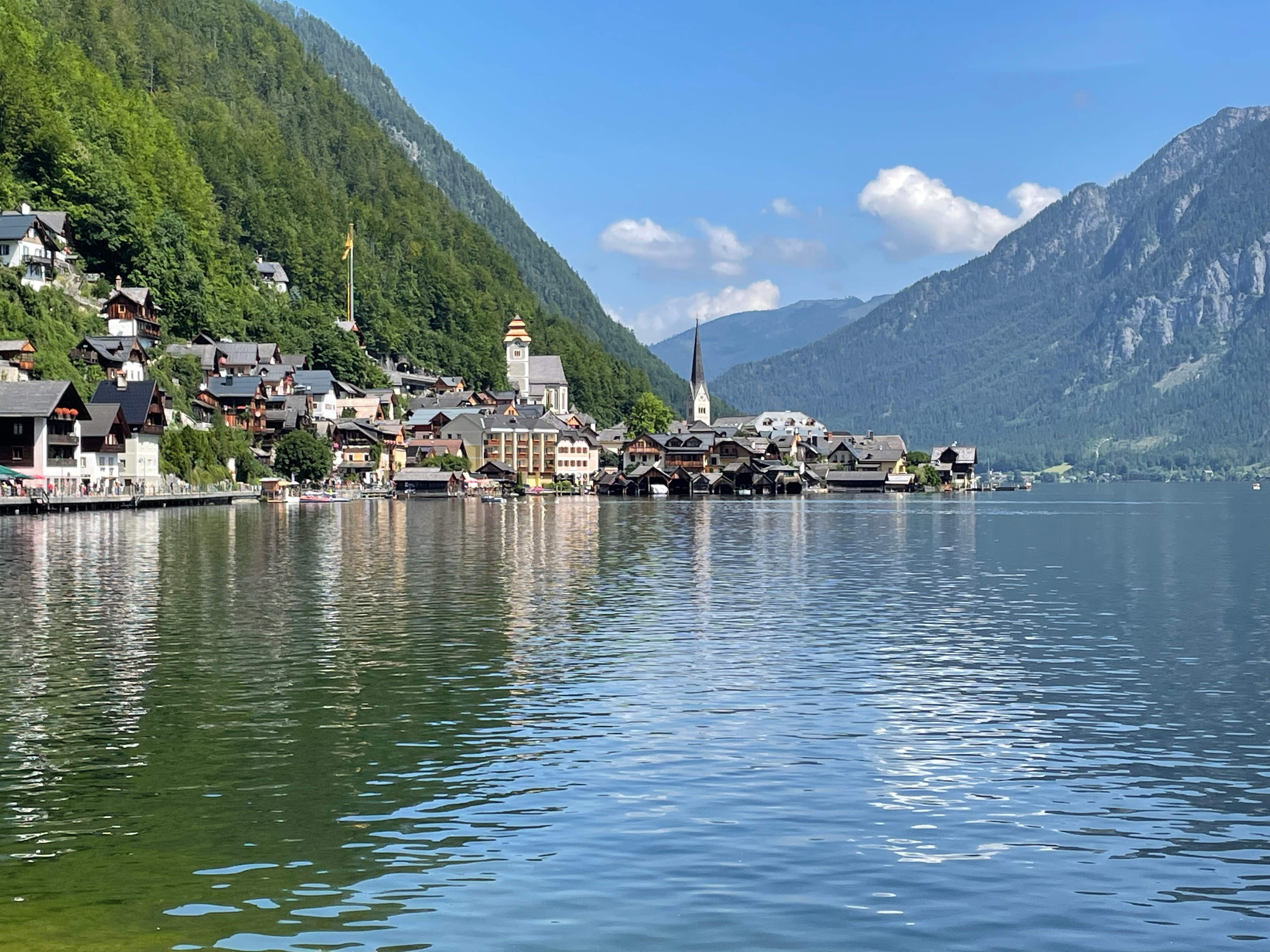
Arrive early if you can. Parking is limited and the later you arrive the farther from the village you can park. Also, by mid-morning the streets of Hallstatt are packed with large groups that arrive by bus.
You don’t need more than an hour to walk around the entire village and take as many photos as you want. There are plenty of back alleys and small streets to explore, but the most popular spots are by the main street that runs parallel to the lake shore.
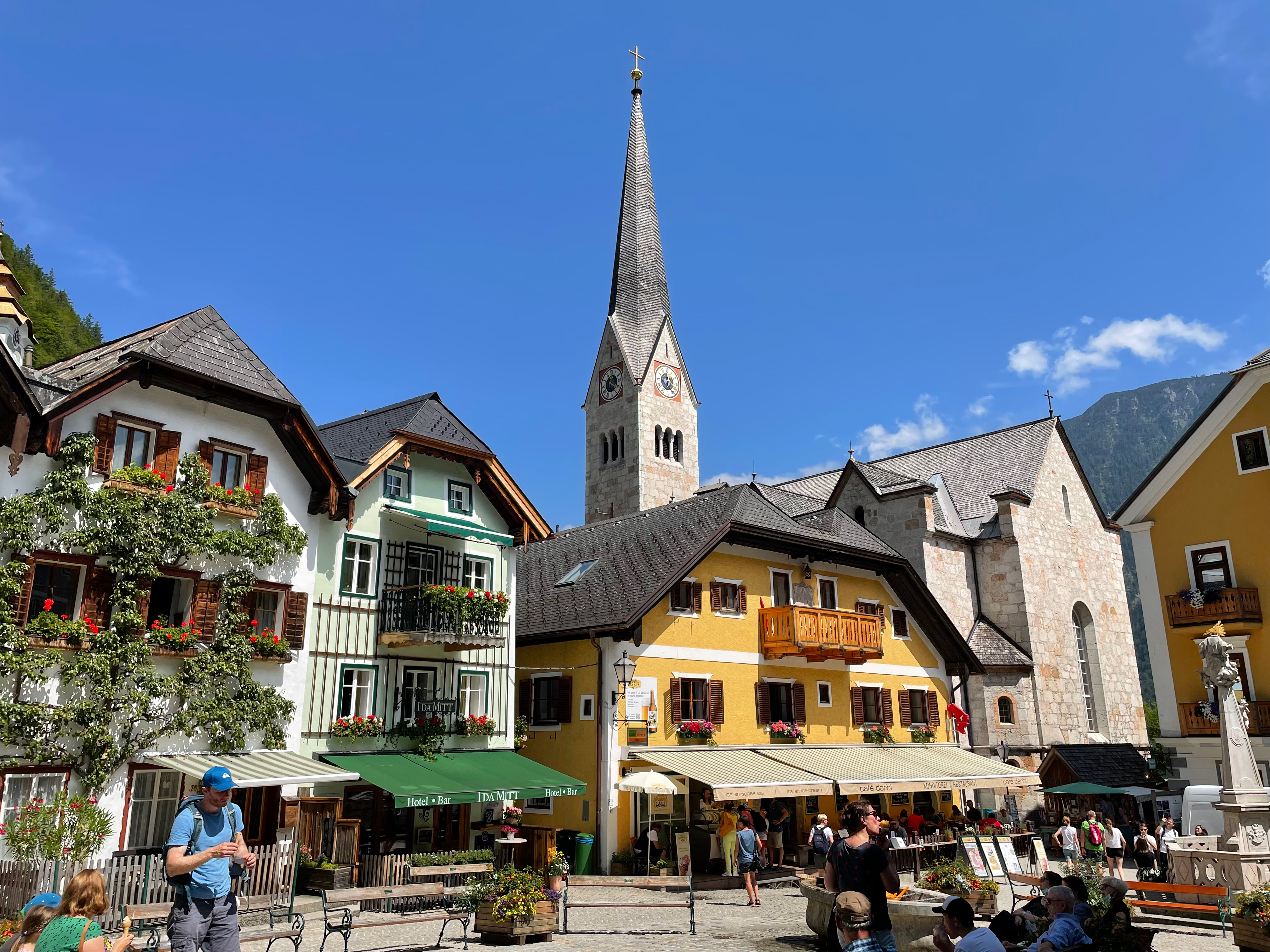
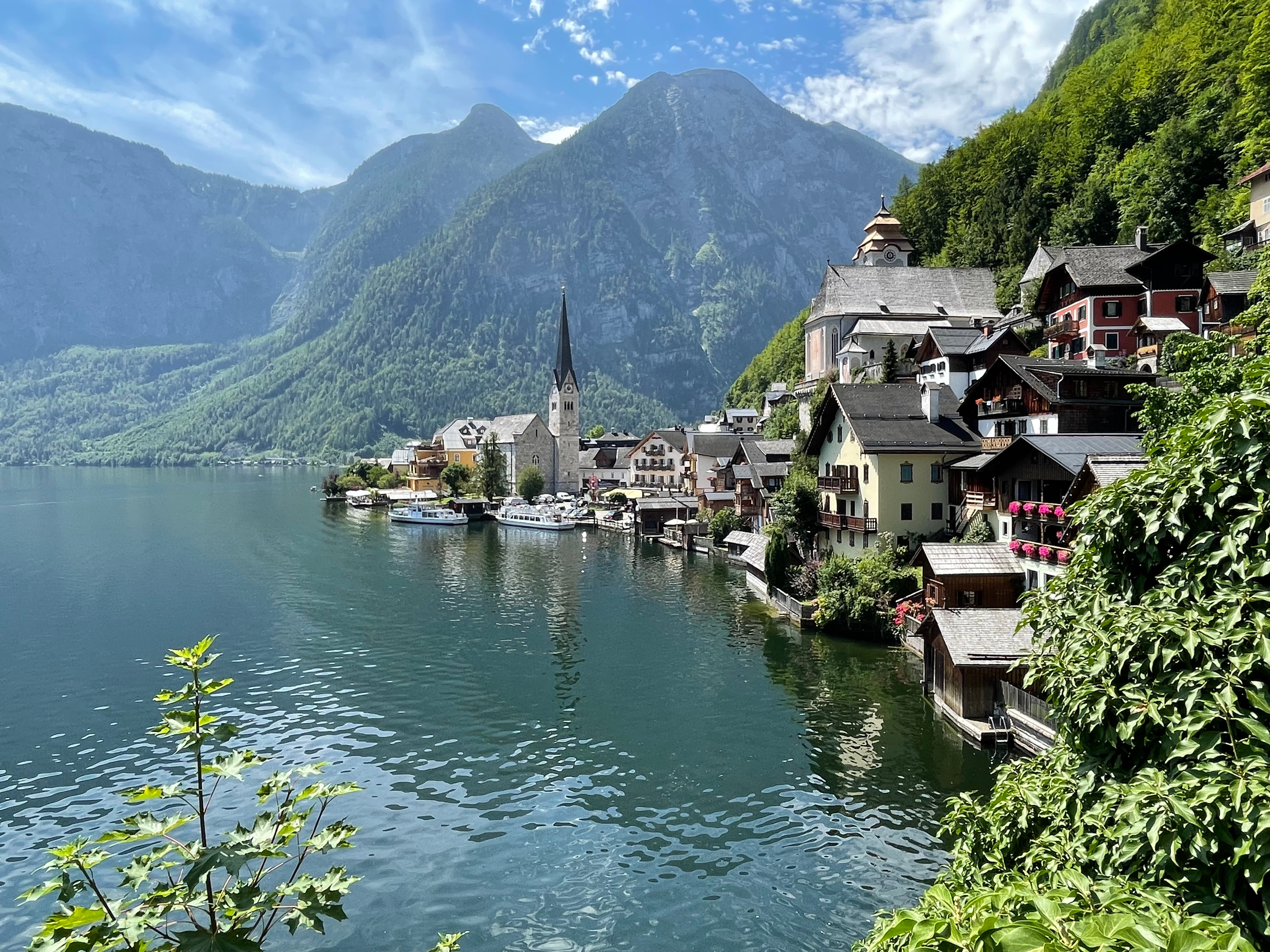
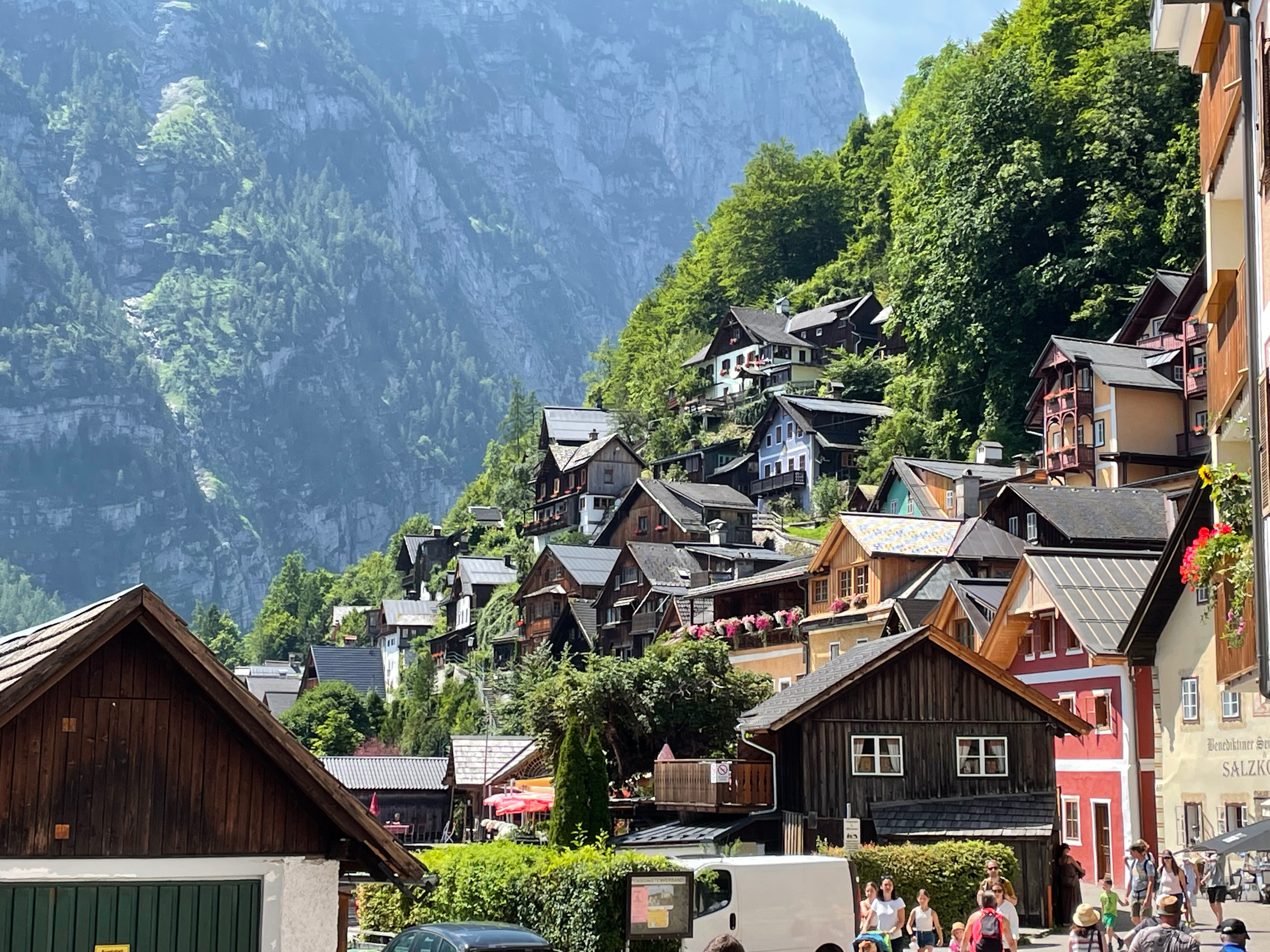
If you feel like Hallstatt is getting too crowded and noisy by midday, you can move a bit to the west in the Gosau valley. We researched some alternative destinations in the area and Gosau village seemed like a good option.
It was such a lovely surprise: a quiet town in the greenest valley we’ve ever seen, with houses scattered across the landscape and tall bell towers marking old churches and small chapels.
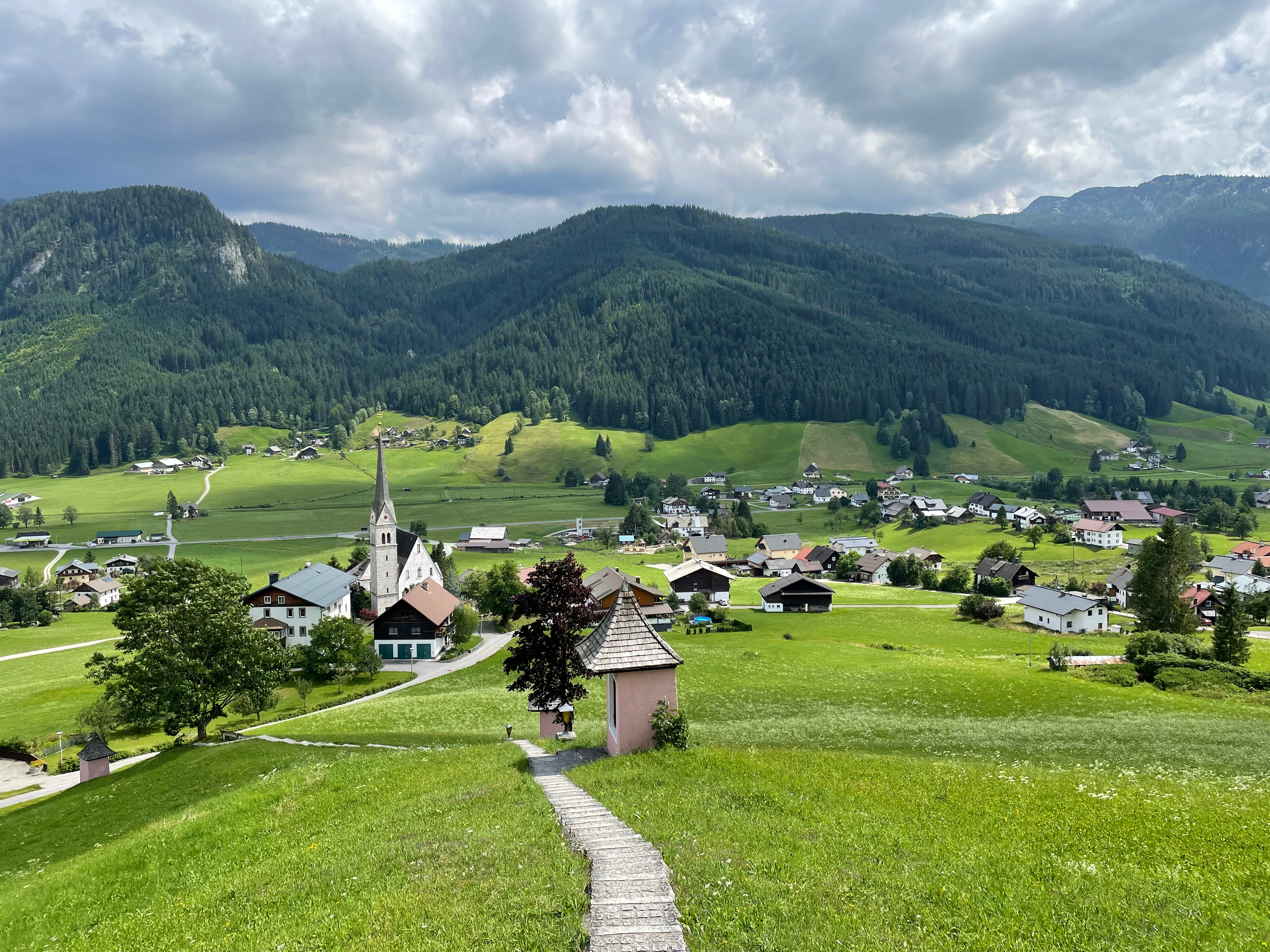
Just south of the village, you can also spend time at the Vordere Gosausee lake. From there you can also hike to amazing viewpoints towards the Dachstein mountains and the famous Austria Sky Walk ladder.
Unfortunately, we had limited time, and just as we reached the lake it started to rain. We moved further west to Zell am See and spent the evening and night in this winter sports resort at the foot of the Hohe Tauern mountains.
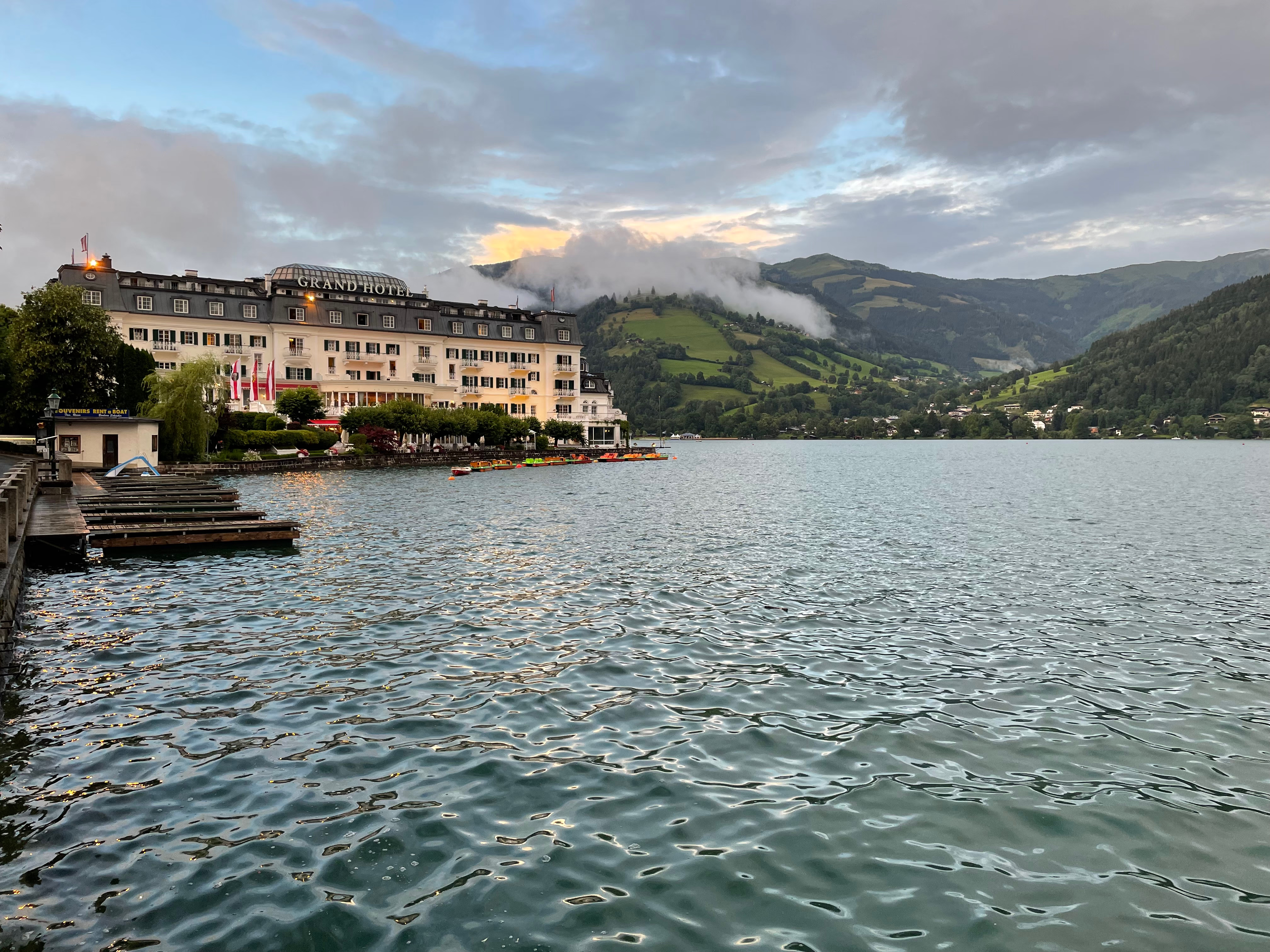
Day 4: Grossglockner
The Grossglockner High Alpine Road is Austria’s most famous mountain pass — 48 km of switchbacks with stunning alpine views that stretch for kilometers at a time.
You’ll need to pass through a toll booth and pay a hefty €46.50 fee for a car (2026 prices). It was cheaper back in 2021, but inflation and the road’s growing popularity have pushed the price up year after year.
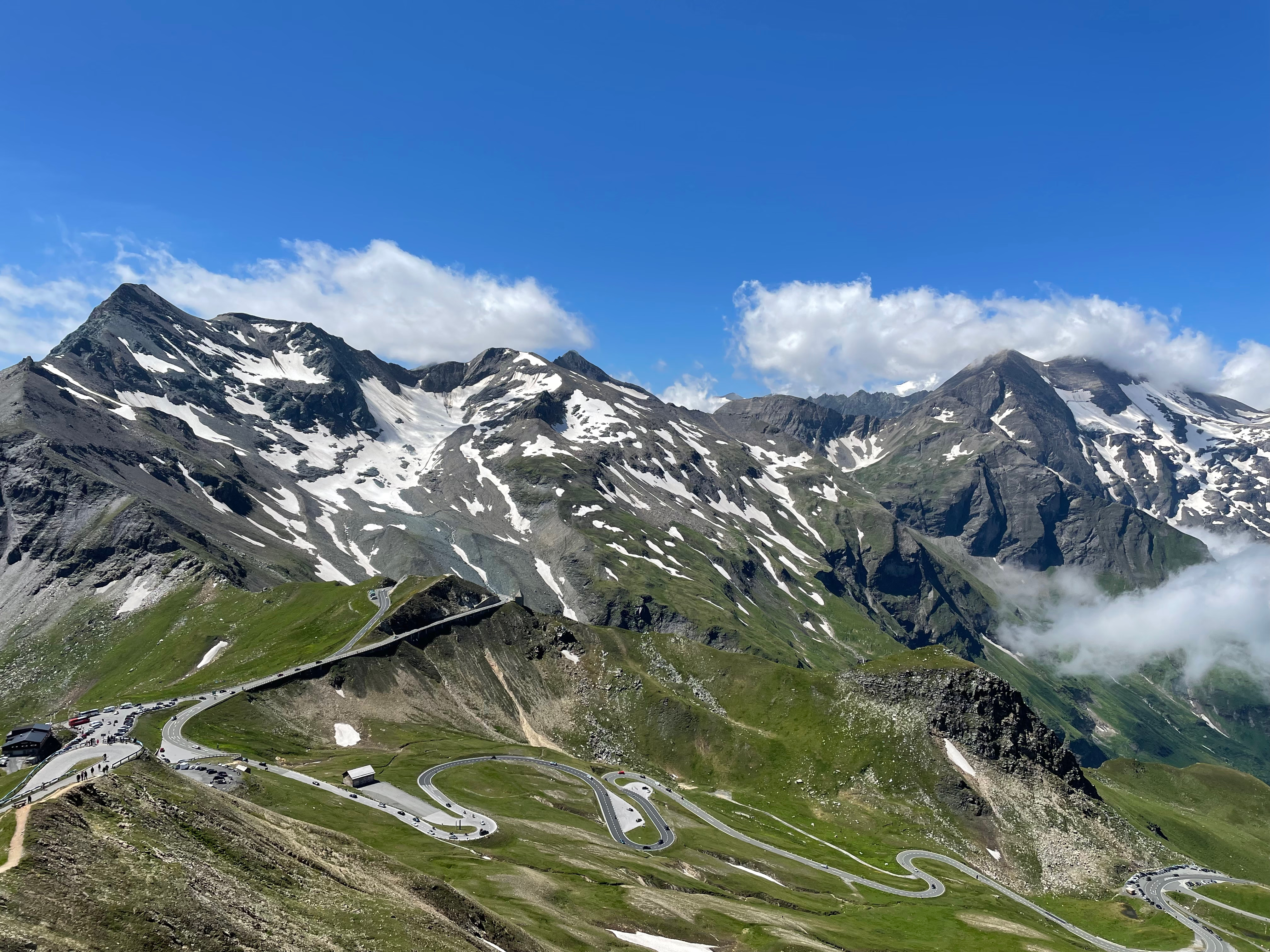
The road reaches up to 2508m above sea level, with breathtaking views of the surrounding Hohe Tauern mountains. This range has the highest peak in Austria, the Grossglockner at 3798m.
At the top, a fork leads to Kaiser-Franz-Josefs-Höhe. A huge multi-story parking lot there also serves as the starting point for several hikes in the area. This is the most spectacular viewpoint directly in front of the Grossglockner peak and puts you face to face with the Pasterze, Austria’s largest glacier.
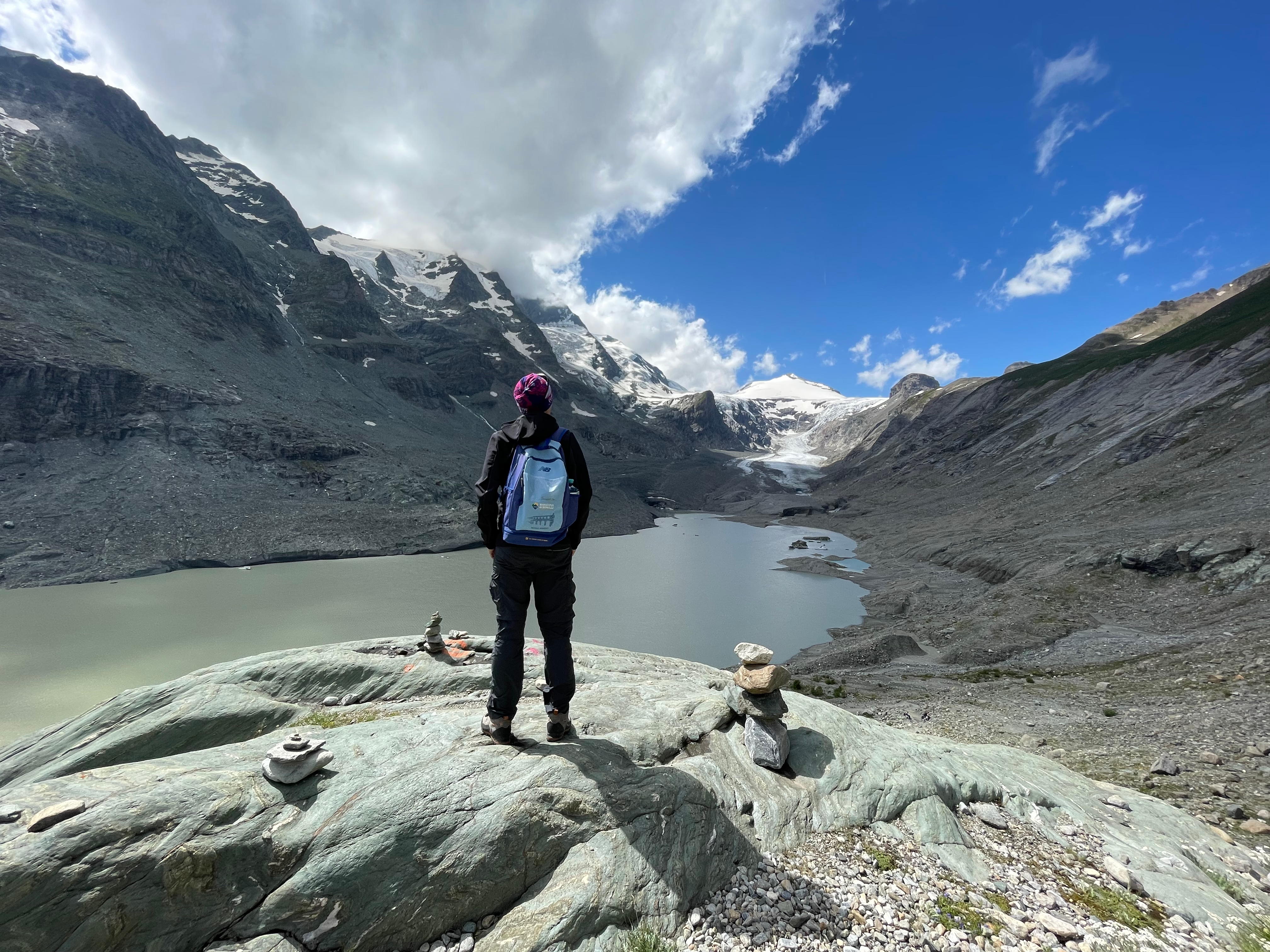
The hike down to the glacier can be tricky, as the route changes every year with the spring melt. What’s shocking is how much the glacier has shrunk: as you descend from the viewpoint, you’ll pass signs showing what it looked like in the 1960s, 70s, 80s, and beyond.
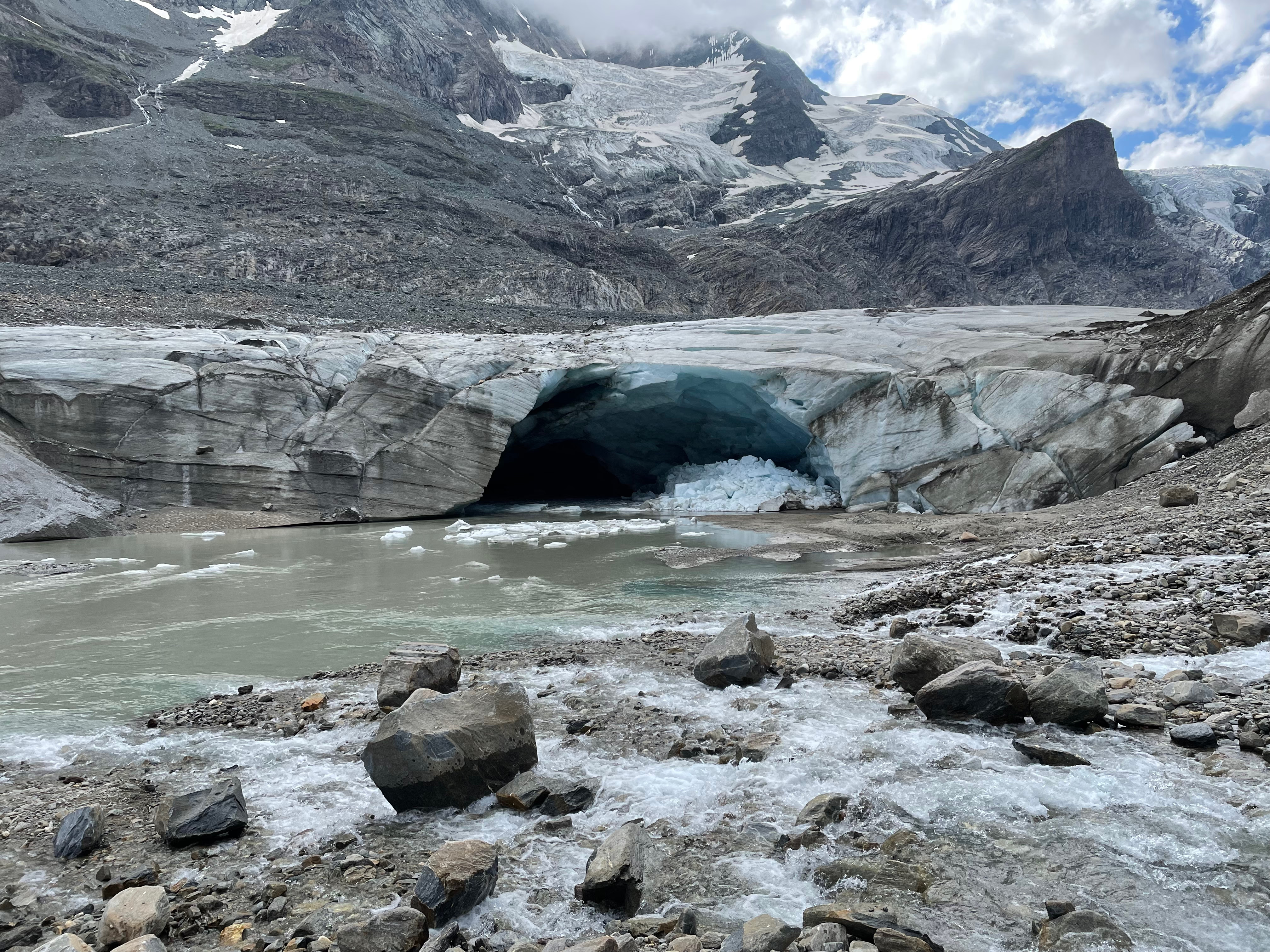
This is how the glacier looked back in 2021, but don’t expect it to look like this when you visit.
From here, the road descends toward Lienz, the last major town in Austria before Val Pusteria carries you into Italy. Just across the border, you’re in the eastern Dolomites.
Days 5–6: Dobbiaco
People often use Cortina d’Ampezzo as a base for the eastern Dolomites, but after doing our research we found Dobbiaco better placed for the classic Tre Cime di Lavaredo hike and Lago di Braies.
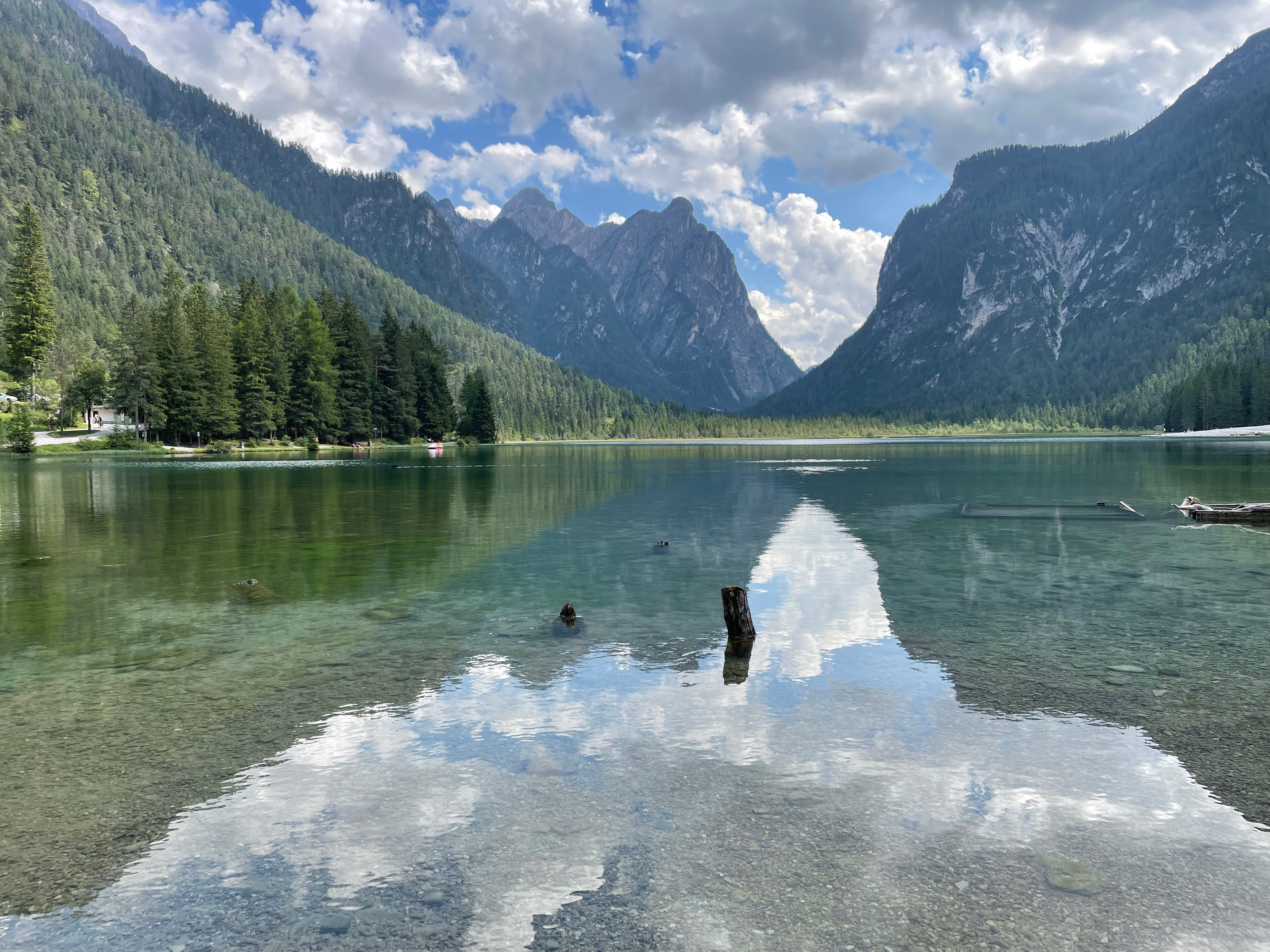
Tre Cime di Lavaredo
This was our first time in the Dolomites and we went for the classic touristy approach to the Tre Cime hike. Keep in mind that since 2021 this spot has become increasingly more popular and you’ll have to pay a hefty parking fee (40€ in 2026) and you also have to book your spot in advance.
The classic approach is to park at Rifugio Auronzo and walk the loop around the three peaks. One advantage of this starting point is that you still have time for a shorter second hike to Cadini di Misurina, another hugely popular Instagram spot where everyone queues up for the perfect shot.
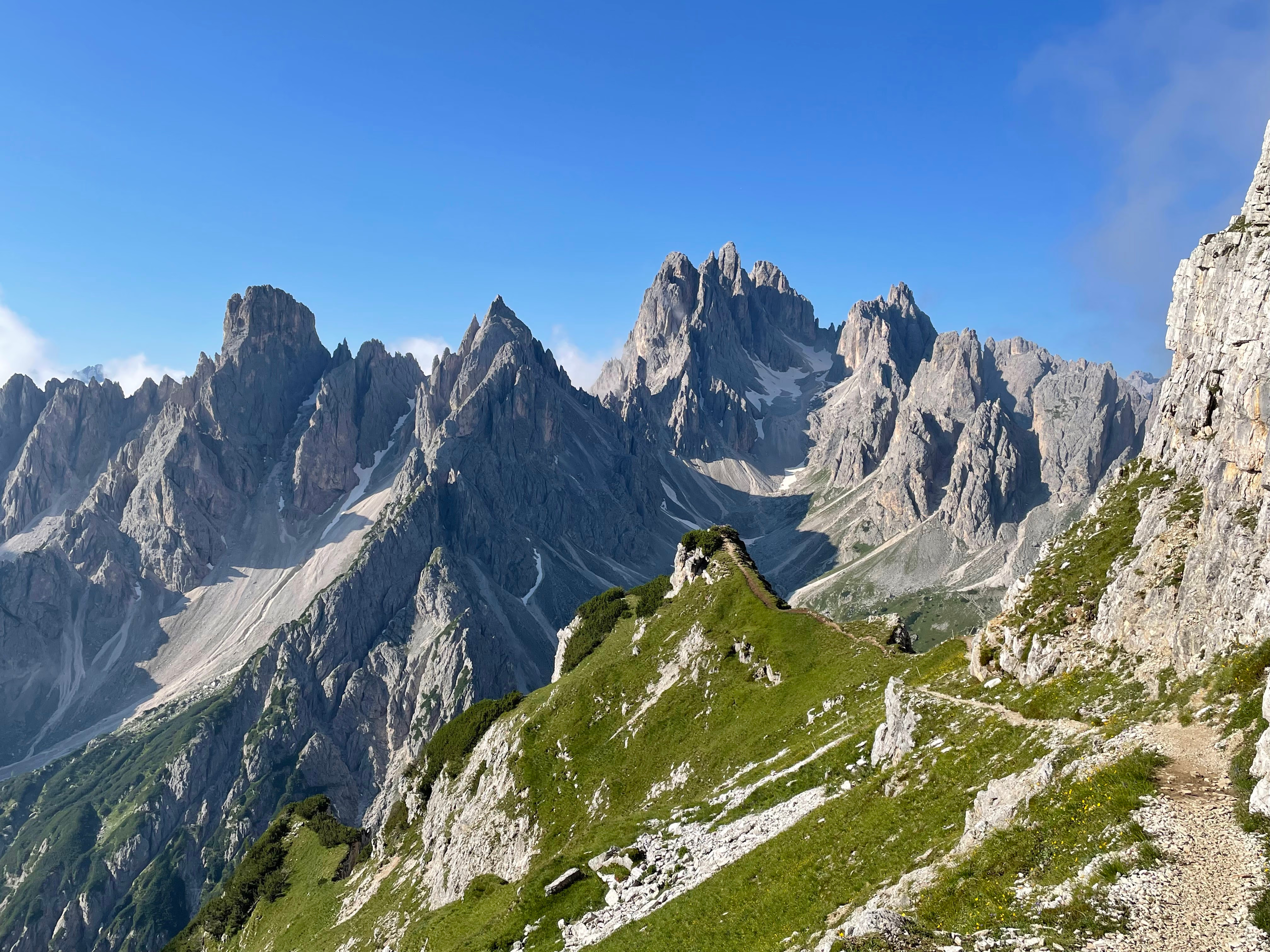
When we visited in 2021, the spot wasn’t popular yet — we may have been the first to arrive and had the whole trail to ourselves. It’s much more crowded now, but we don’t recommend queuing for a photo. Enjoy the view from the trail and look for nearby spots with fewer people.
Back to the Tre Cime loop: the trail is easy at first, with a short climb to Forcella Lavaredo, then an easy downhill walk to Rifugio Locatelli. The full loop is about 12 km and takes four to five hours.
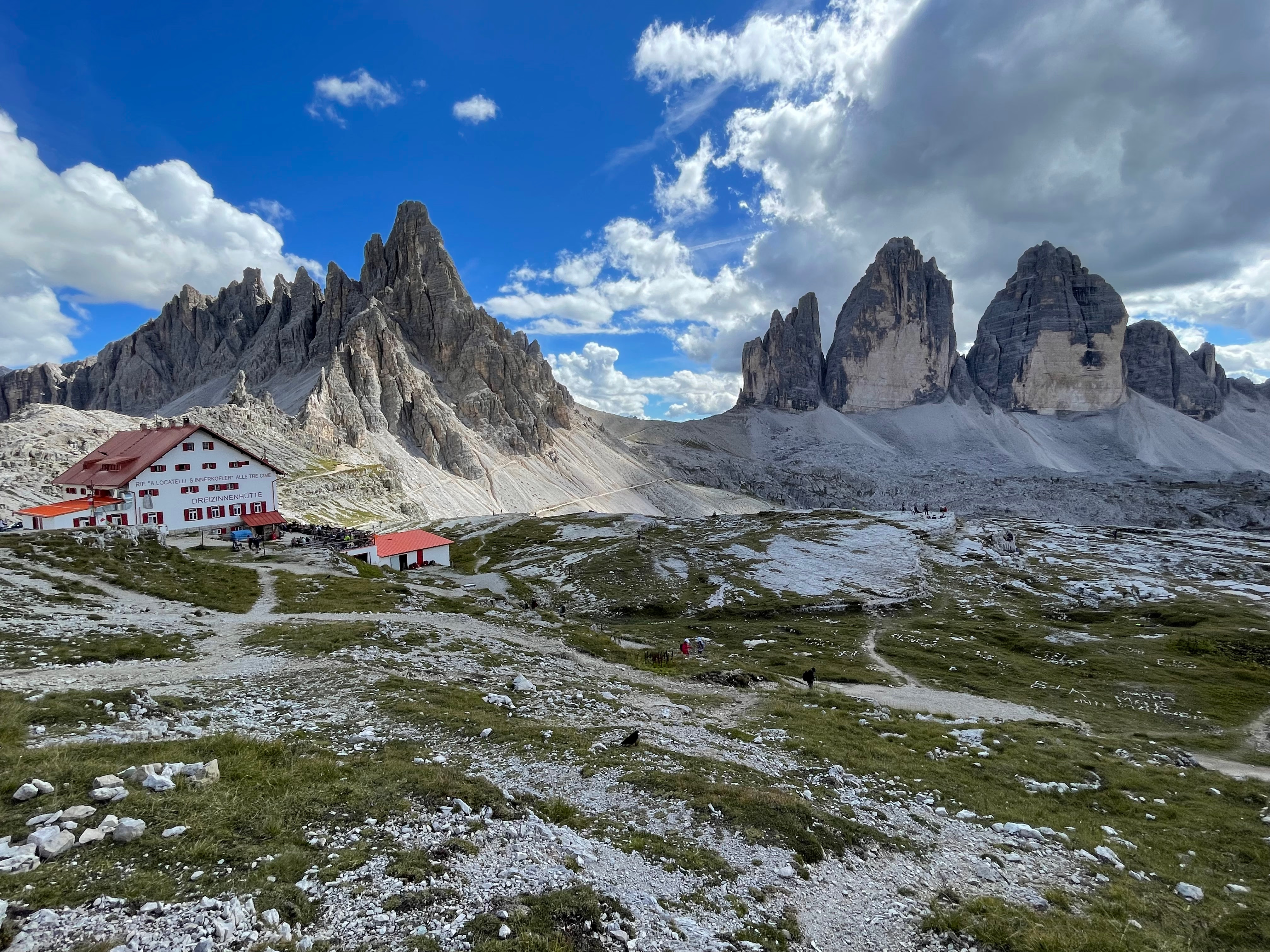
We have mixed feelings about this hike. Tre Cime is a must-see in the Dolomites, but the trail is very crowded and the views are only truly impressive at Rifugio Locatelli.
Over the years, we’ve found other trails that reach Rifugio Locatelli. If you want an alternative and prefer fewer crowds, try the hike from Val Fiscalina.
Lago di Braies
Fifteen minutes from Dobbiaco, you’ll find Lago di Braies, a stunning lake with turquoise water and vertical walls rising straight from the shore.
It’s one of the most popular spots in the Dolomites so expect huge crowds, especially since you can park a few hundred meters away from the lake. Keep in mind, during the peak season, there’s a pre-bookable parking fee you have to pay to enter the area.
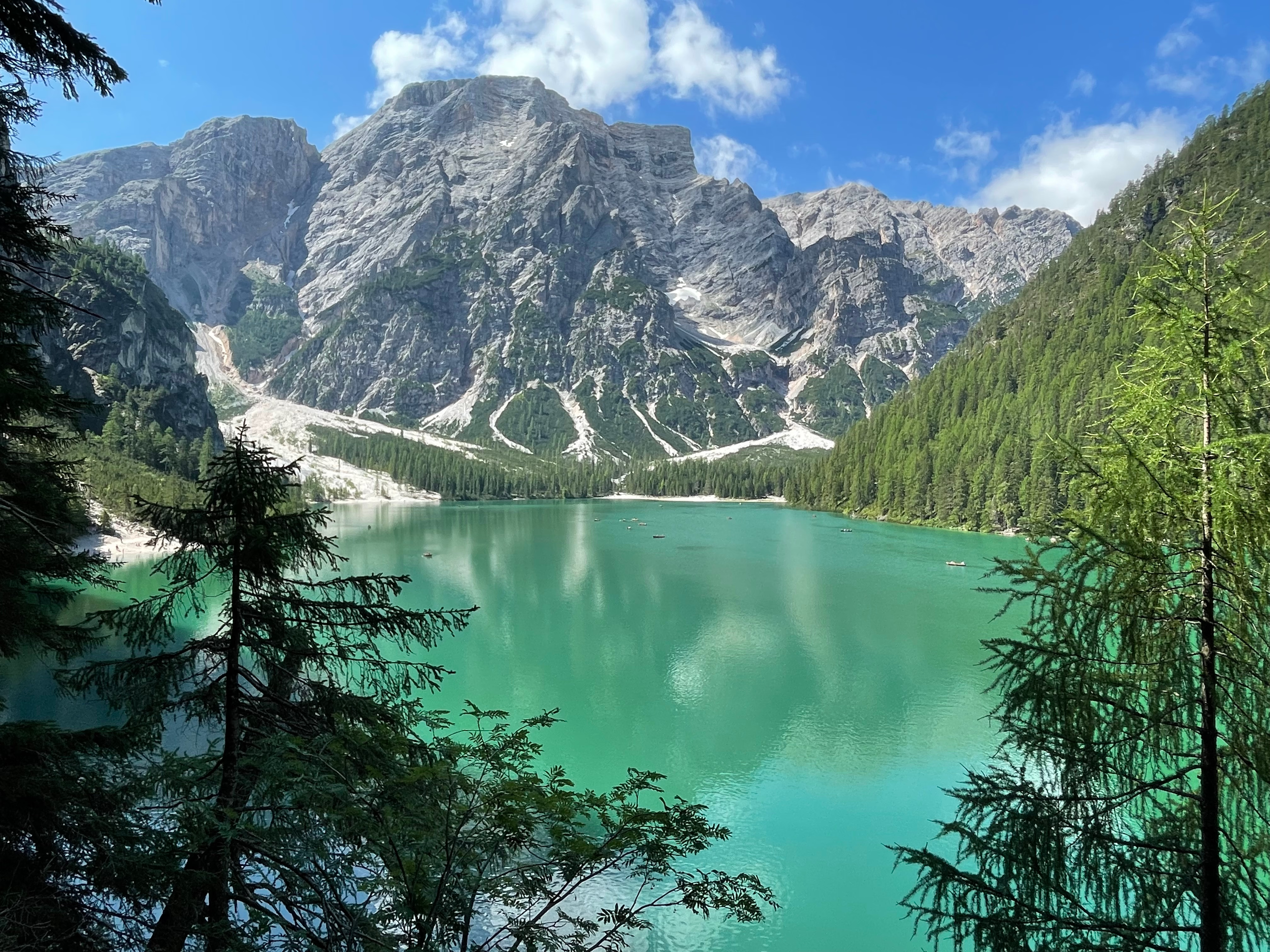
We recommend visiting the lake early in the morning or late in the afternoon and preferably during the week. The short loop around the lake takes about 45 minutes to an hour, but back in 2025 a short section was closed due to a landslide, so make sure you check that out before planning the whole loop.
After the morning visit to Lago di Braies, our itinerary took us south-west towards the heart of Südtirol, in the beautiful Val Gardena area.
Days 7–11: Val Gardena
Südtirol, also known as Alto Adige, is the German-speaking region of Italy. Most of it lies within the Dolomites, and Val Gardena is the most popular area — surrounded by several mountain ranges and national parks.
If you’re visiting the Dolomites for the first time, check out our beginner’s guide so you don’t make the same mistakes as we did the first time we were there.
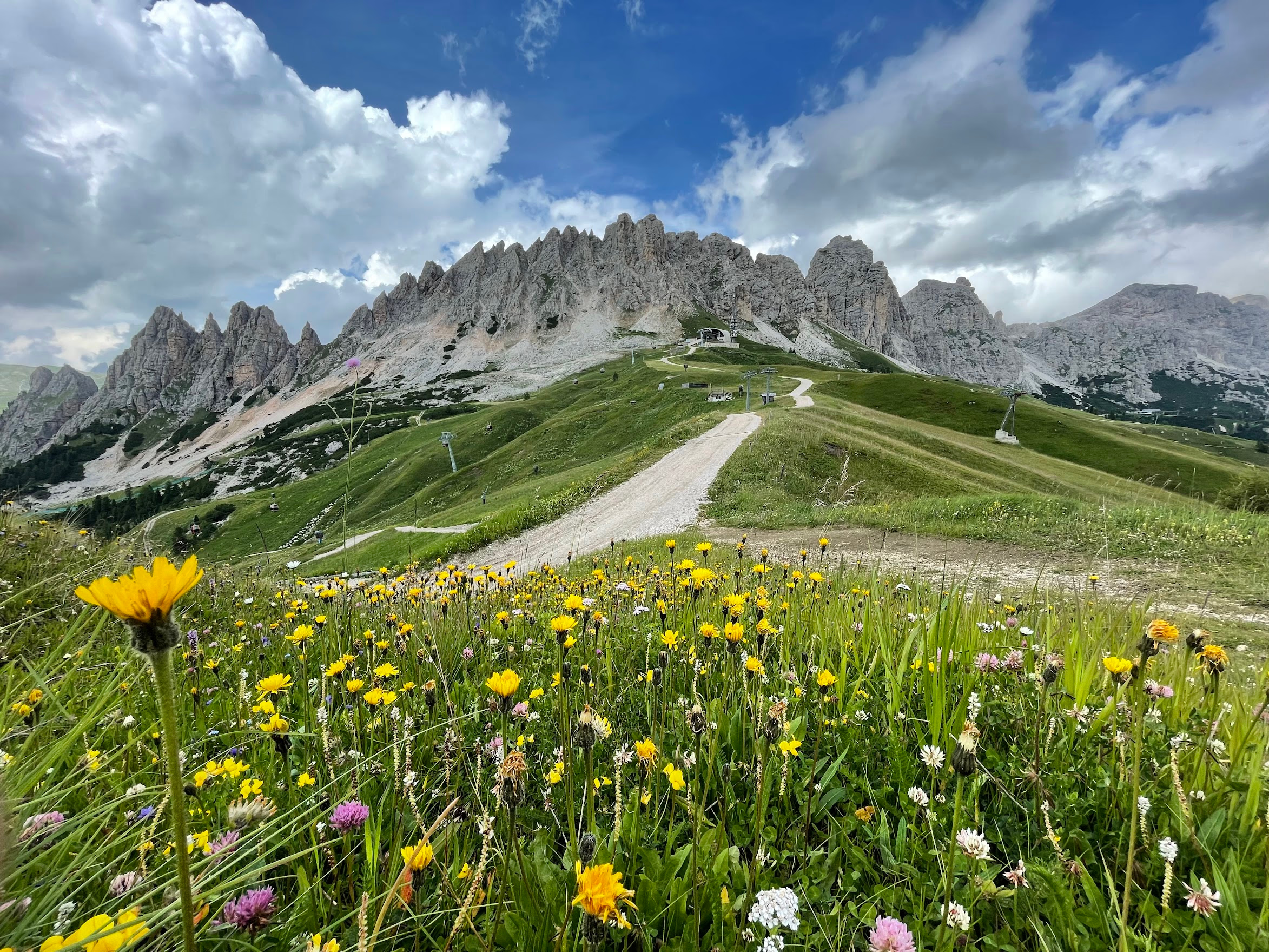
In Val Gardena, you can stay in Ortisei, the largest town, but also the most expensive one, or you can stay in Santa-Cristina or Selva, the two smaller towns that are closer to Passo Gardena. We stayed in Selva, which turned out to be a great choice since most of the hikes start from Passo Gardena or beyond.
Piz Boe and Sella Ronda
On our first hiking day, we set out for Piz Boe (3,152 m), the highest point in the Sella group. It sounds like a big hike, but it’s one of the easiest 3,000 m peaks to reach in the Dolomites, which makes it popular with relative beginners.
The hike starts at Passo Pordoi (2,239 m), reached from Val Gardena via Passo Sella. Val Gardena sits on one side of the famous Sella Ronda — a loop of four mountain passes popular with cyclists in summer and skiers in winter.
From Pordoi, you can take the cable car to Sass Pordoi (2,950 m) or hike through a narrow rocky valley to Forcella Pordoi (2,848 m). We started early, before the cable car opened, and reached the top of the Sella ridge before the first car even arrived.
The path up gives you amazing views towards Marmolada, the highest peak in the Dolomites and the glacier that covers its upper side, one of the few remaining glaciers in the Dolomites.
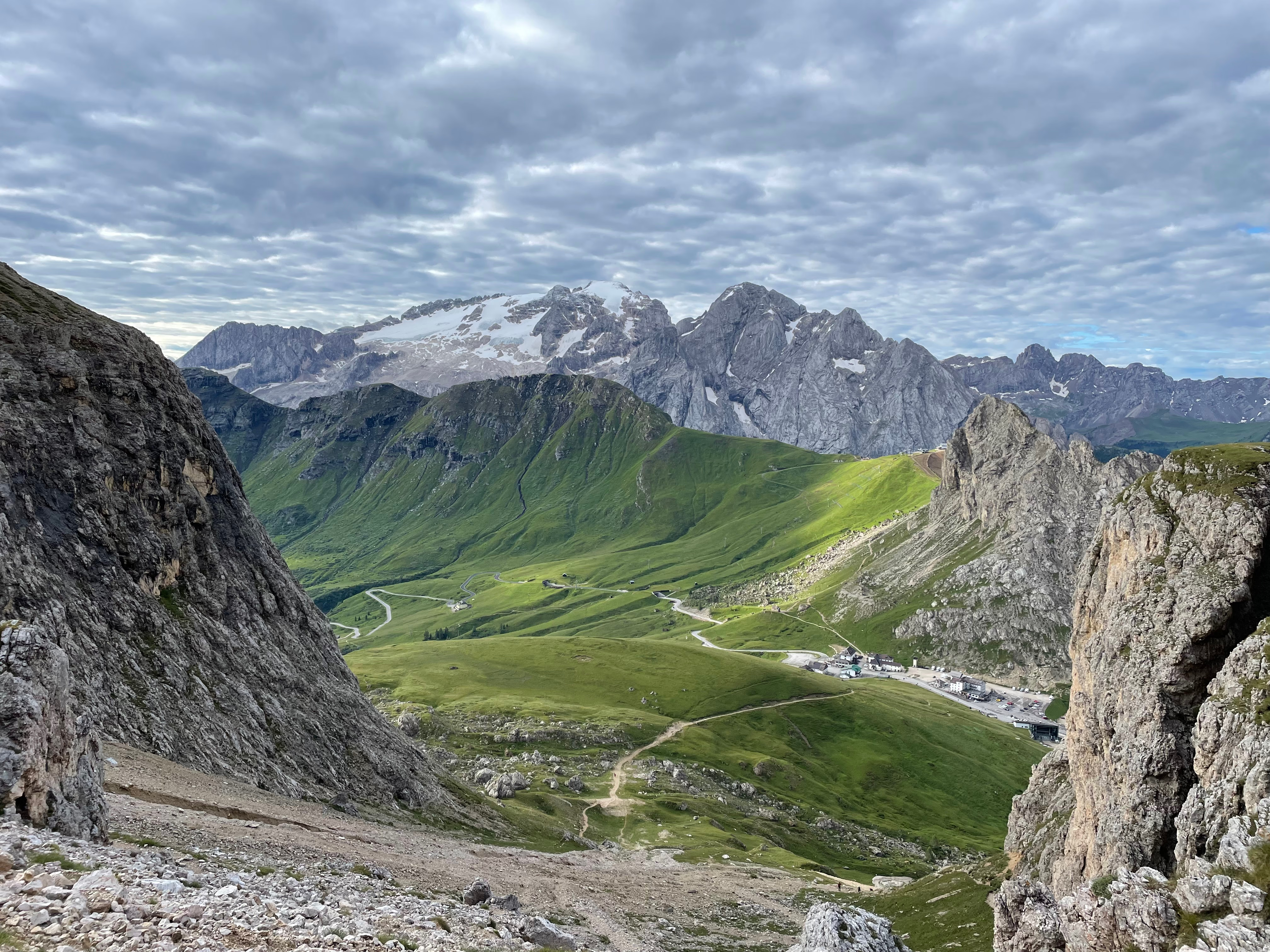
From the top, the trail becomes easy for a while, as you make your way to the base of the actual peak. Here, there’s a steeper climb, with some metal ladders and chains in some areas, but nothing too sketchy or super-exposed. At the top, there’s even a rifugio if you want to grab a drink or a souvenir.
It is not unusual to see snow at this altitude, even in the summer, so keep that in mind when preparing your gear and clothes, as it can be significantly colder than at 2000m.
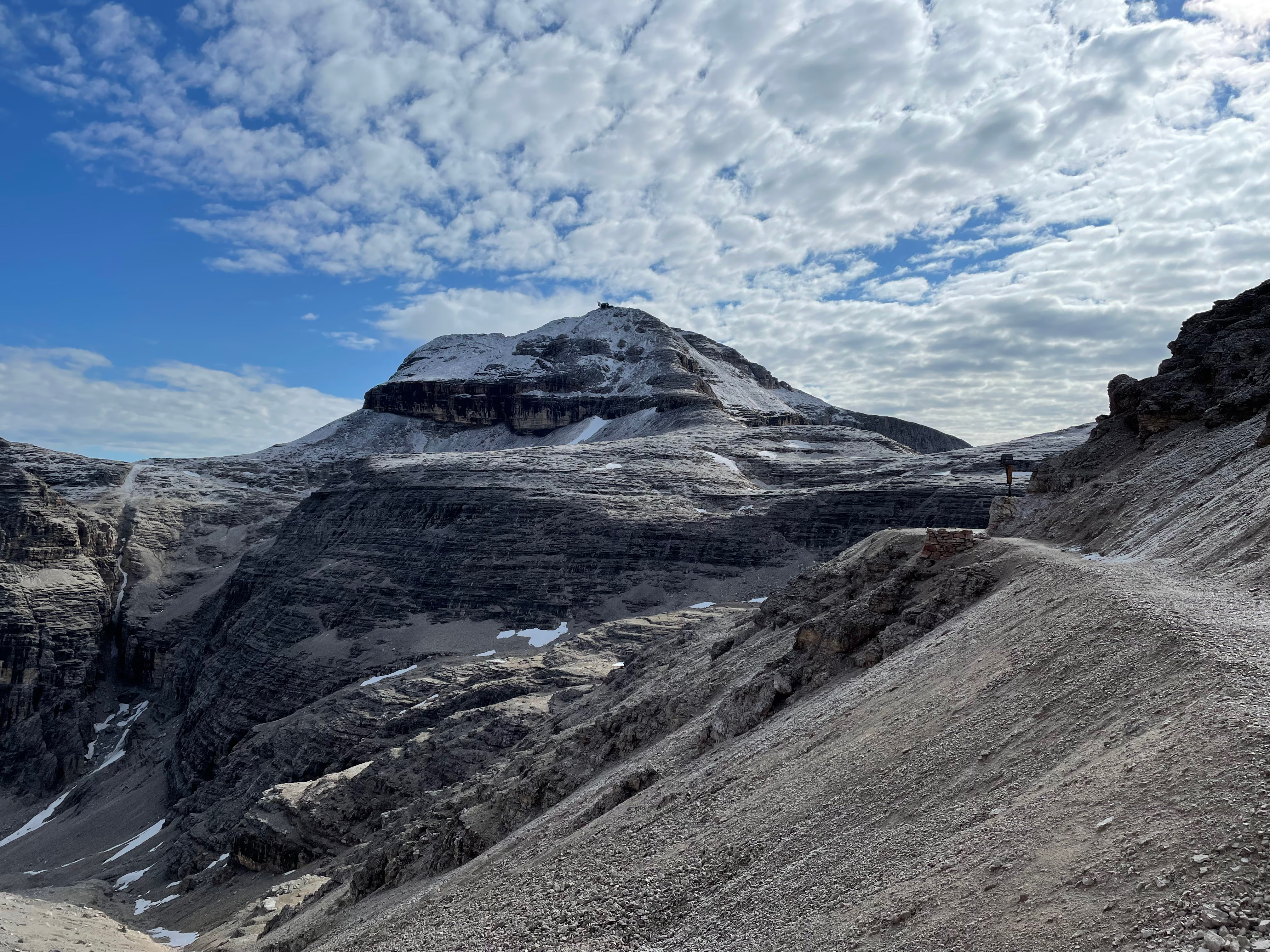
Unfortunately, clouds covered the peak when we arrived, so we couldn’t see much. On the way down, we spared our knees another 600 m of descent and took the cable car back to the parking lot at Passo Pordoi.
With the high mountains still under cloud for the rest of the day, we completed the Sella Ronda loop instead — driving over Passo Campolongo and Passo Gardena and back to Selva. If you enjoy scenic roads, the Sella Ronda is a must-do.
Lago di Carezza and Ortisei
We hadn’t planned this day in advance — the weather ruled out a full hike. When visiting the Dolomites, always have a backup plan and be ready to adjust your hiking schedule; the weather is unpredictable.
Our first stop was Lago di Carezza, another beautiful turquoise lake reachable by car, with the jagged peaks of the Latemar group in the background.
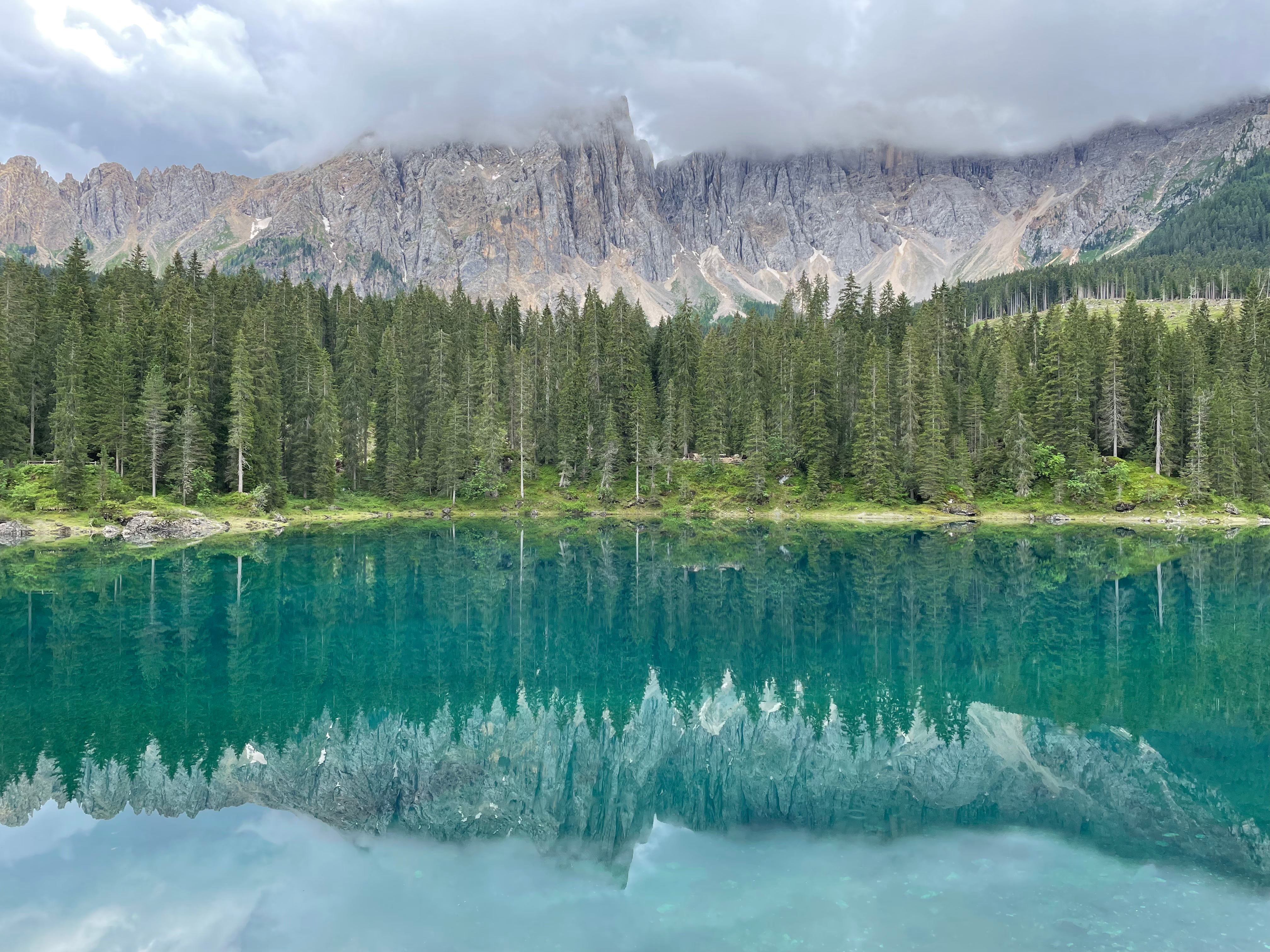
Keep in mind, though, that the lake can lose much of its water during the summer, so the view can be disappointing toward the end of the season.
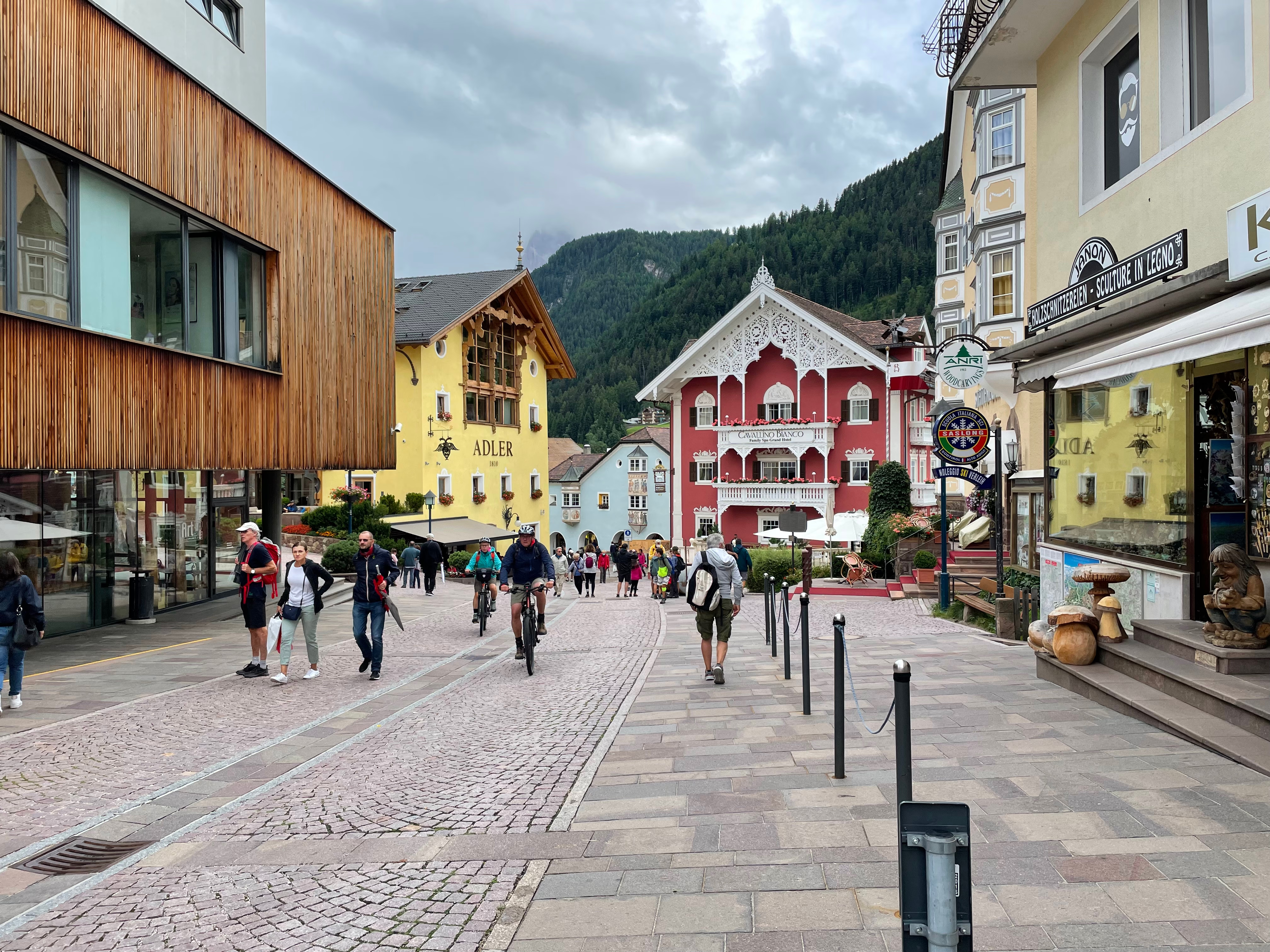
Our second stop was Ortisei, the main resort of Val Gardena. The town is compact and easy to explore on foot, with a few nice viewpoints and a large pedestrian street lined with shops and restaurants.
Seceda
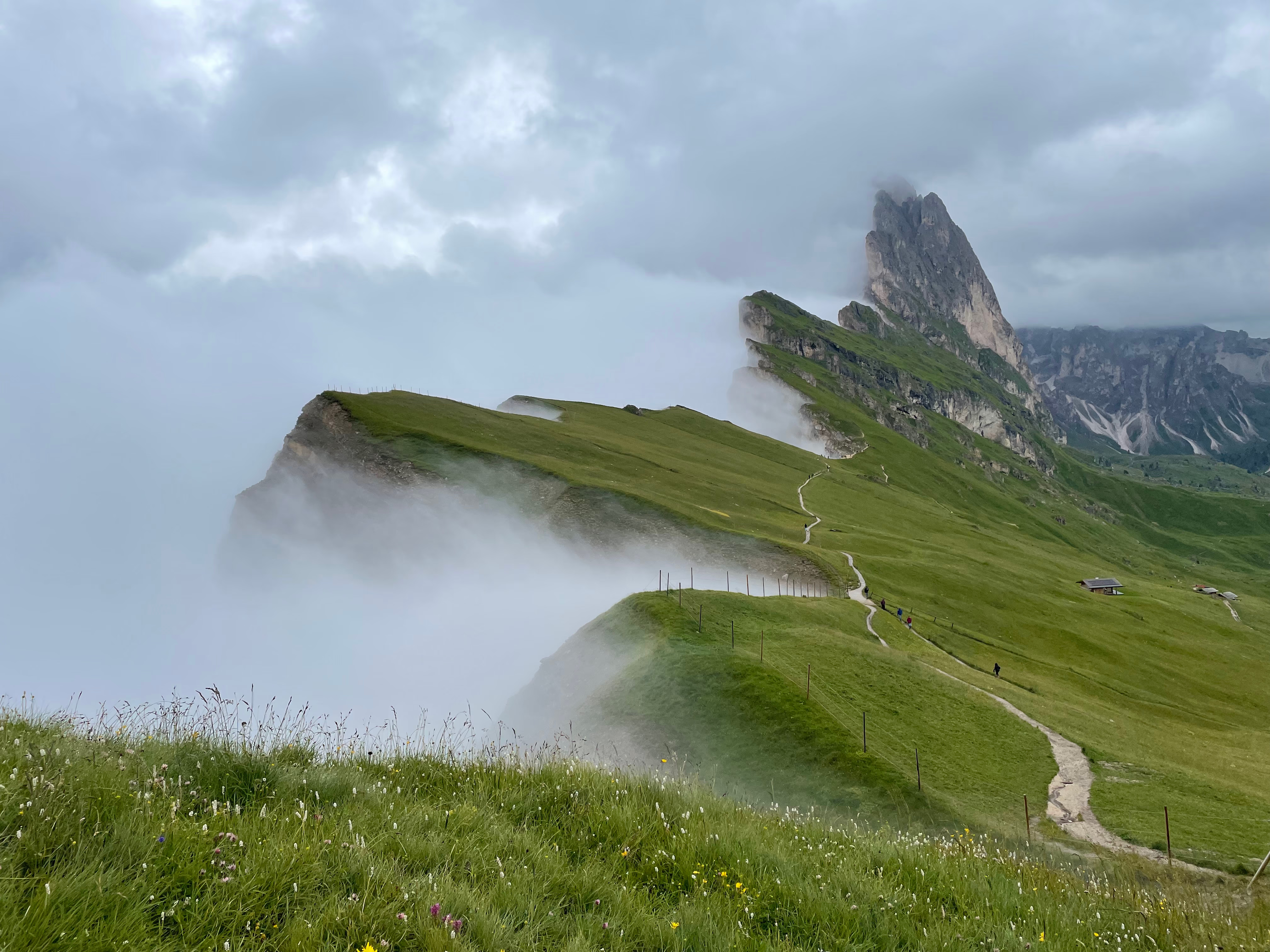
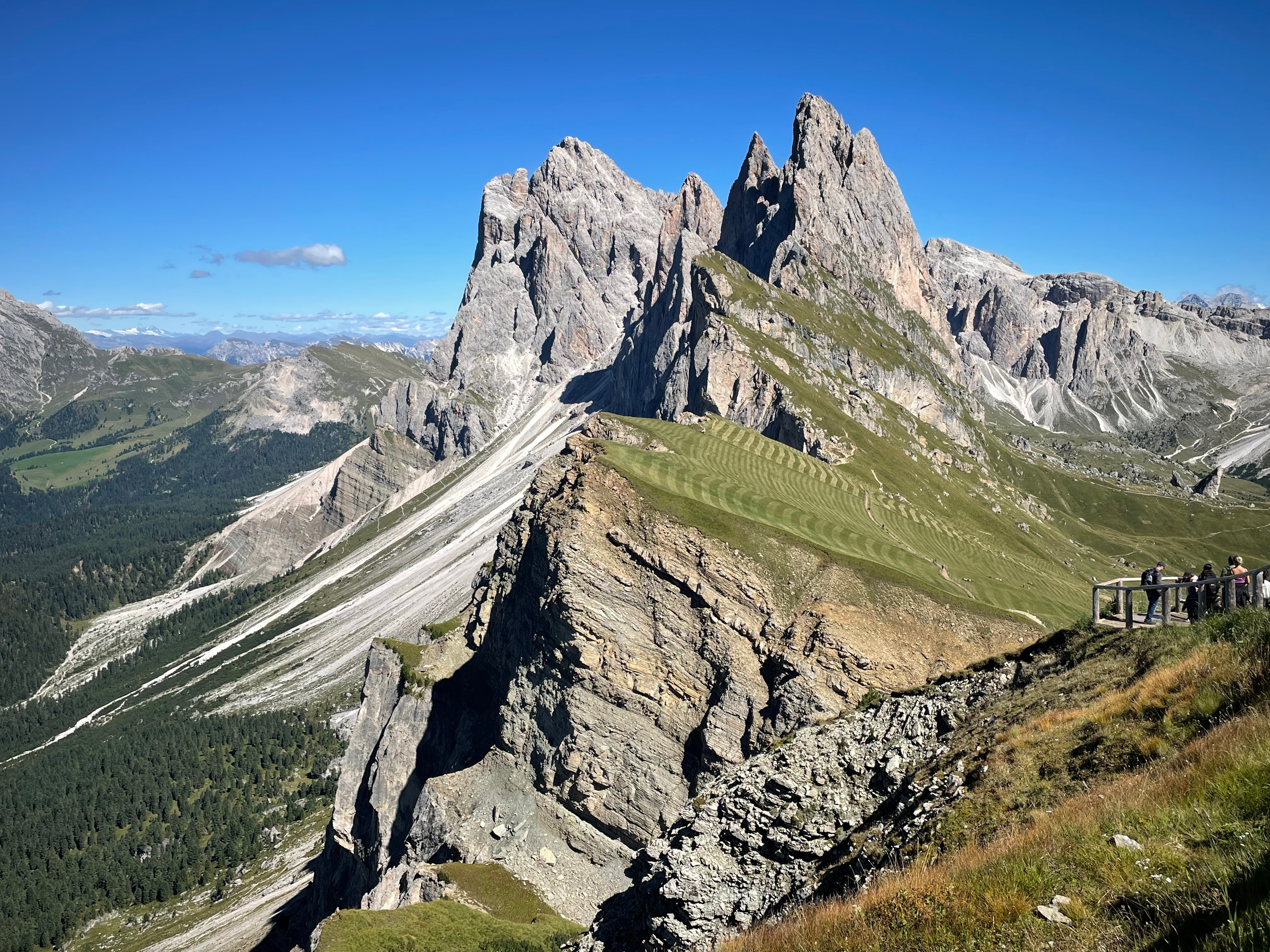
The Seceda ridge is one of the most photographed places in the Dolomites — jagged grass slopes dropping into a void. It suffers from the same crowding problem as Lago di Braies and Tre Cime.
A cable car runs directly from Ortisei to Seceda, so expect long queues every day. It’s also one of the most expensive cable car rides in the Dolomites, so we definitely don’t recommend it.
Instead, take the Col Raiser cable car from Santa Cristina. From Col Raiser, you have a pleasant hike up to Seceda that takes 1-2 hours depending on the path and how many stops you make.
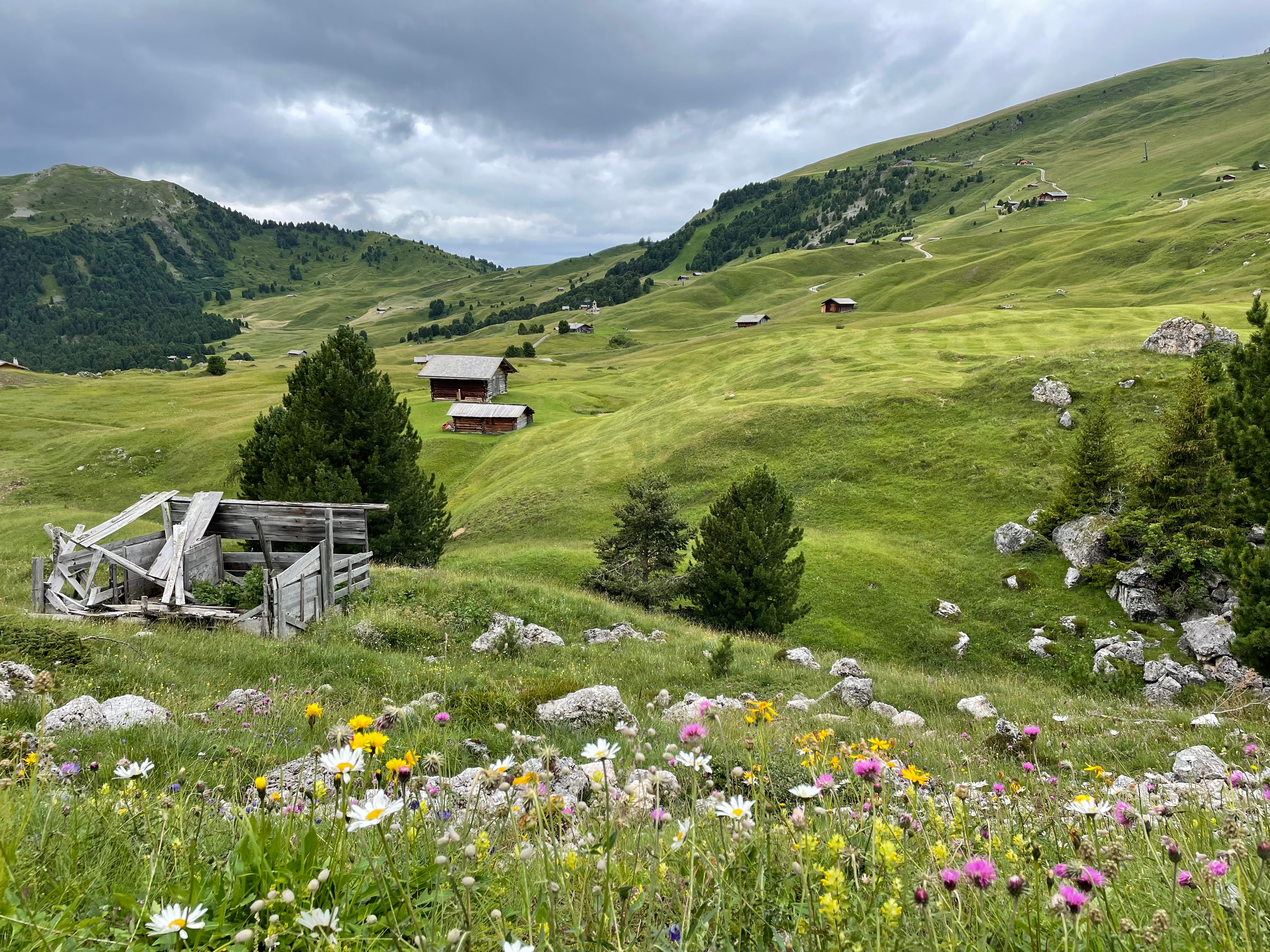
The landscape is beautiful as you are walking through the green pastures above the trees and have amazing views towards the Puez mountains and Sassolungo.
When we visited in 2021, we had a rainy week — as you’ve probably noticed from the photos above — but Seceda is spectacular even in rain and cloud.
We returned to Seceda twice since then, so we have a photo from a clear sunny day as a comparison. You can be the judge of which one is better.
Sassolungo circuit
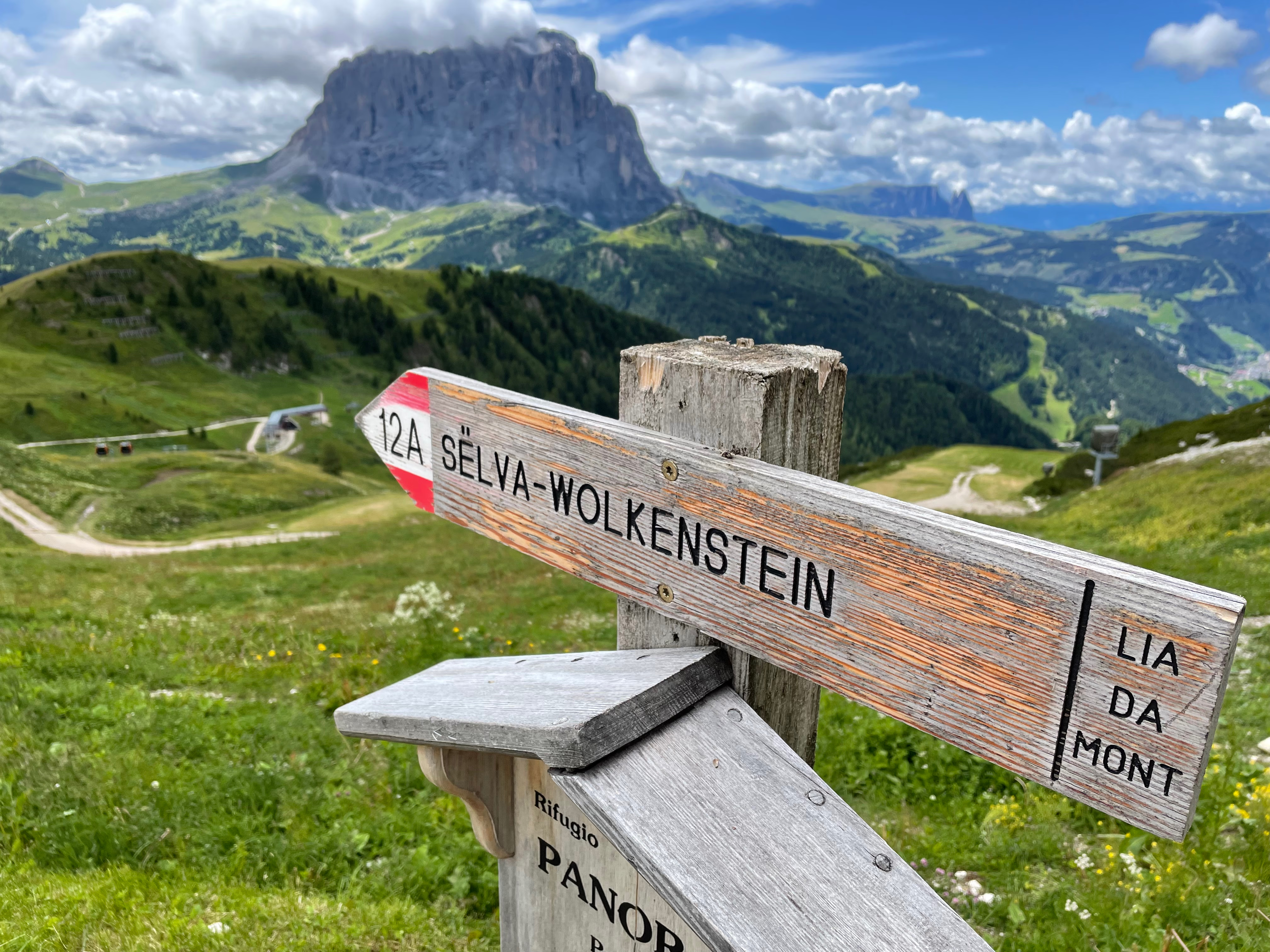
On our final full day in Val Gardena, we went freestyle — we hadn’t planned anything. Clouds hung high over the Sassolungo massif and the Sella group, so we started with a short hike on one side of Sassolungo, expecting rain at any moment.
When the failed to show, we committed to the full circuit around the mountain wall and climbed between the massive peaks of Sassolungo and Sassopiatl to Forcella Sassolungo.
This turned out to be one of the best hikes we did in the Dolomites. After an initial flat section, the trail becomes a proper path through forest and rocky terrain, then climbs steeply toward Rifugio Vicenza.
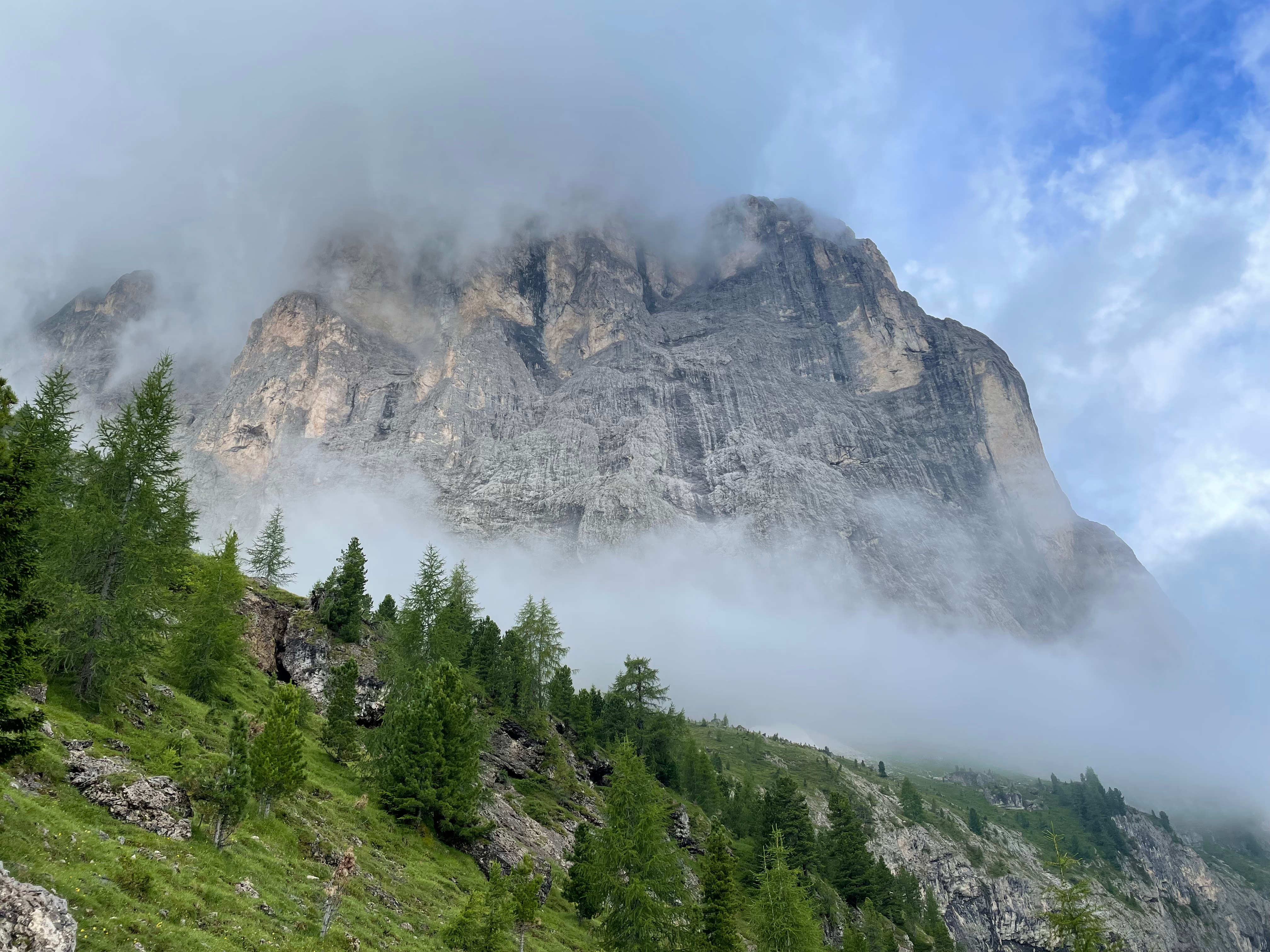
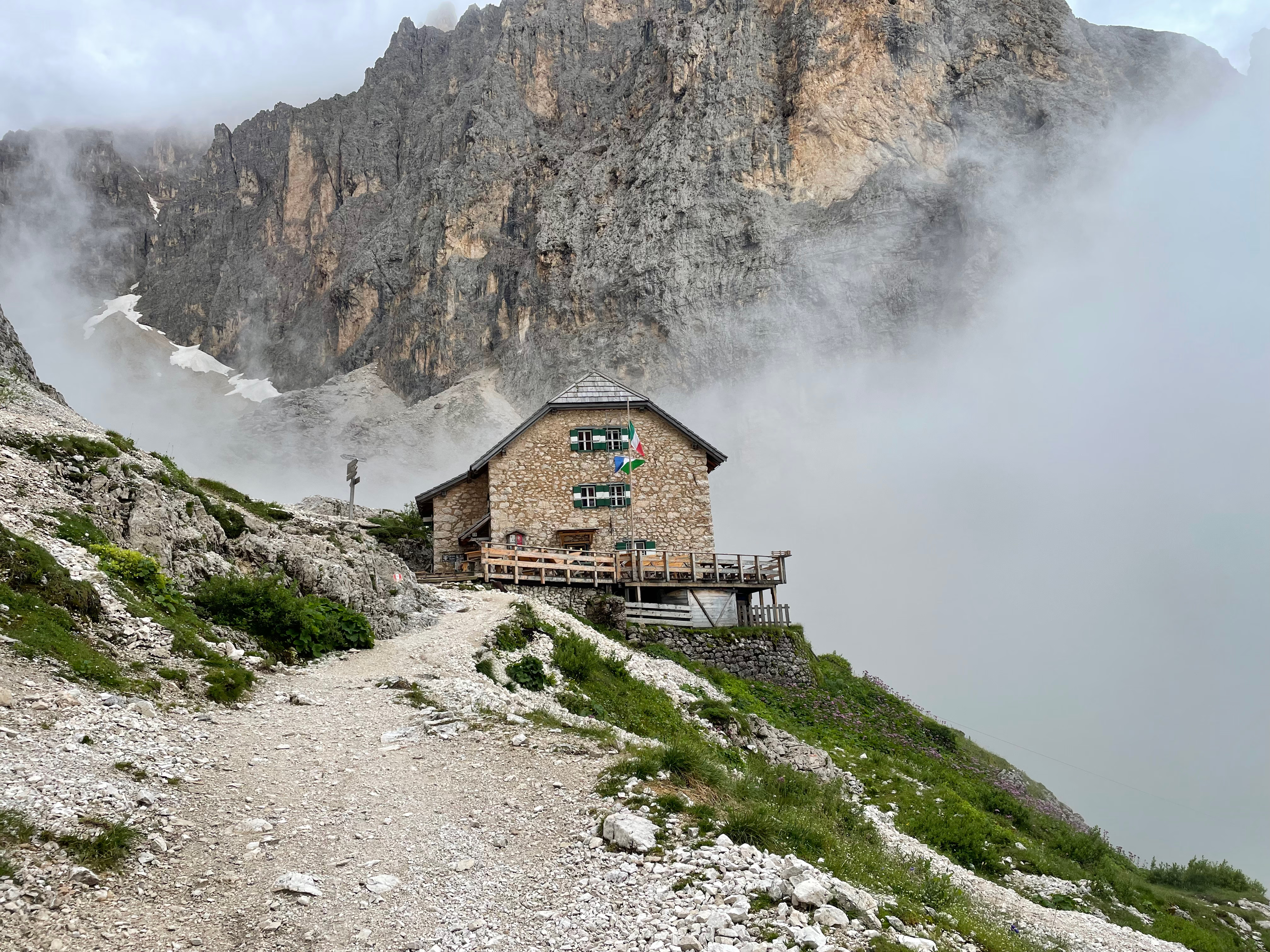
We were lucky to see the spectacle of the clouds dancing around the steep rocky face of Sassolungo. After about 3-4 hours of hiking, we reached the top of the pass at Rifugio Toni Demetz.
As rain finally arrived, we decided to take a break at the hut. This was actually the first time we had a full meal at one of the rifugios in the Dolomites and we loved it.
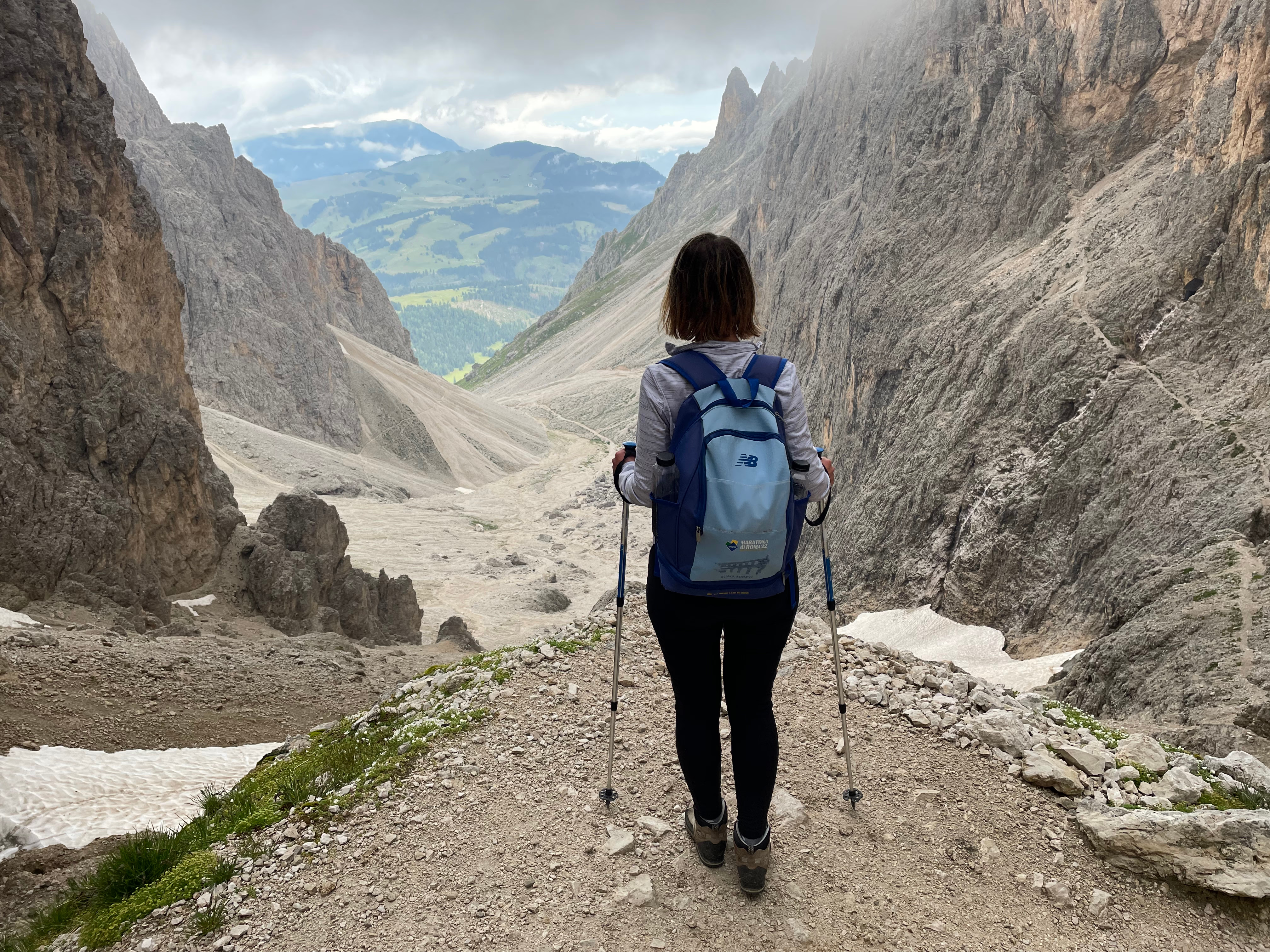
To complete the circuit back to Passo Sella you have the option to take the famous “coffin” cable car that fits just 2 people at a time, but we felt it was too windy and decided to walk the last section. It’s not a particularly steep descent.
Via ferrata on Small Cir
On the final day (half-day), we wanted something different, so in Ortisei we booked a guided via ferrata tour on the Small Cir. It’s a popular peak accessible from Passo Gardena, but a medium-level ferrata.
If you want to try via ferrata for the first time in the Dolomites without a guide, we don’t recommend this one. Since 2021, we’ve done several ferrata hikes and plan to write an article recommending routes at beginner and intermediate levels.
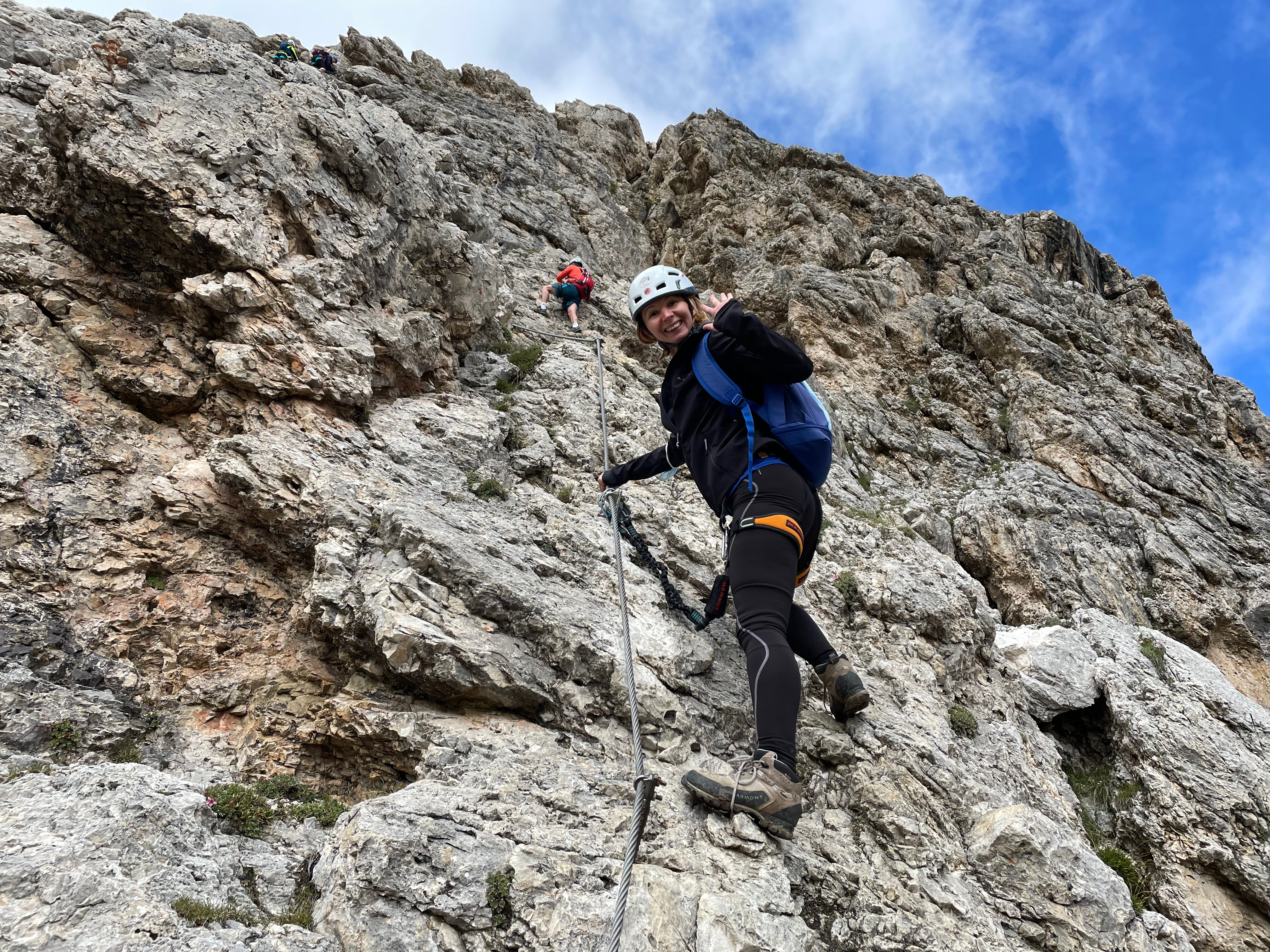
The Small Cir is a short but technical ascent, rated level C on the A (easy) to E (hard) scale, even though it only takes about 45 minutes to reach the top. The descent doesn’t follow an aided path and is quite steep.
Our guide was excellent. Besides explaining the basics of via ferrata equipment, he helped us at the trickiest points — showing us where to place hands and feet, and even giving us a lift when needed.
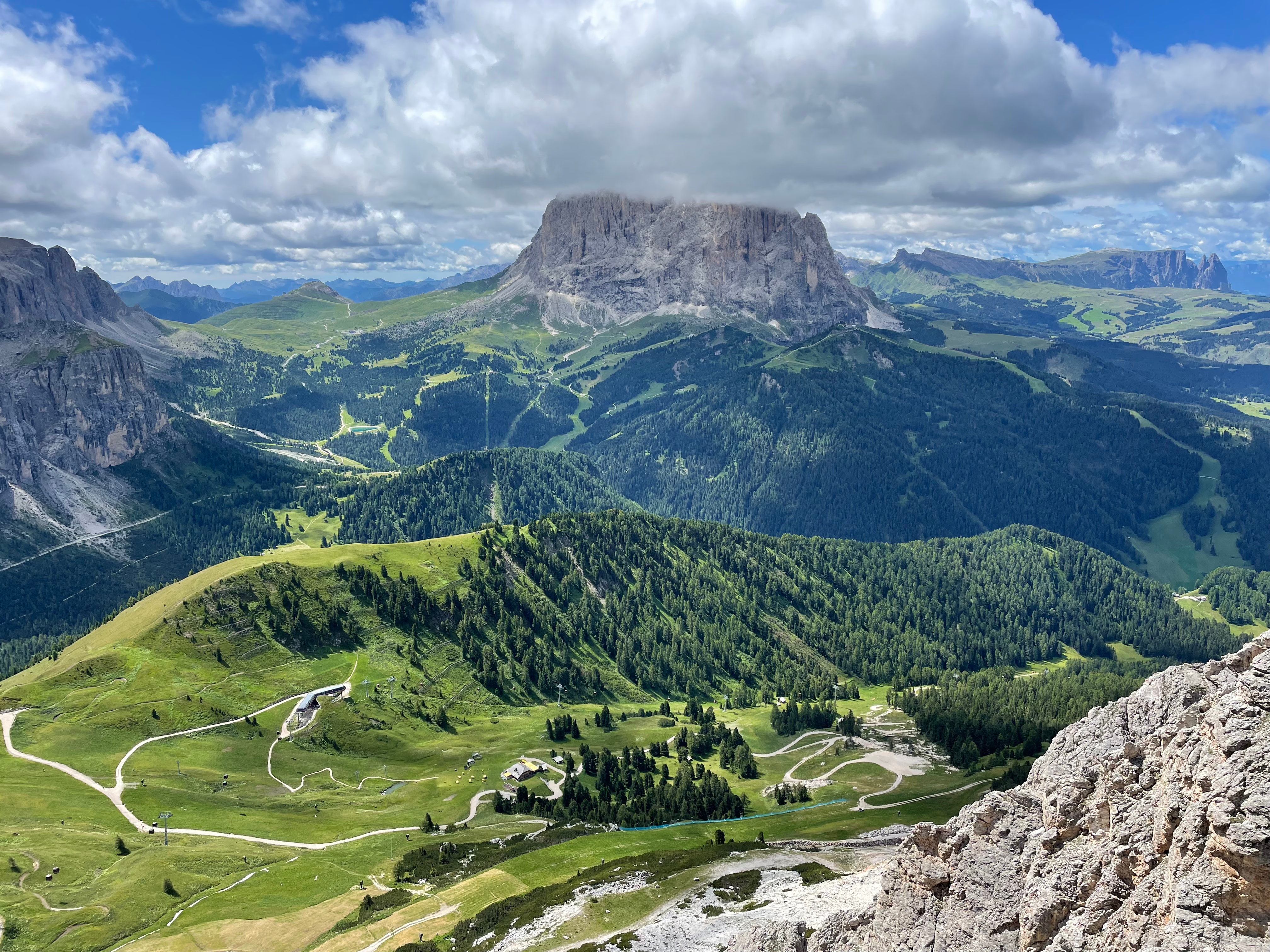
The view from the top certainly makes the 45 minutes of rock climbing worth it. On a clear day you can see the entire length of Val Gardena, the Alpi di Siusi meadow and the Sella and Sassolungo mountain groups in front of you. Not to mention numerous other mountain peaks in the background.
Travel tips
This itinerary is car-centric. You can fly in and rent a car, but choose a comfortable vehicle for the twisty, steep mountain roads. Driving through the Alps is a great way to experience the region and take in the stunning views along the way.
You won’t find many highways or bypasses here. The towns are small and spread apart, and the local roads make for a peaceful, unhurried journey. All the roads are in excellent condition and well maintained. We fondly remember not feeling rushed on the way to each destination.
Keep in mind, though, that most visitors choose the same summer months, when the mountain passes are open and the cable cars are running.
Crowds have become a real issue in recent years, especially in the Dolomites. But in truth, only five or six spots draw most of the attention — Seceda, Tre Cime, and others made famous on Instagram and social media.
There are hundreds of mountains and trails to explore, most of them quiet on any given day. Don’t fixate on the popular spots, and don’t plan every day as a full hiking day. Build in flexibility for unpredictable weather and think about alternatives in advance.
Austria and northern Italy aren’t classic budget destinations. Even small guesthouses and mid-range hotels can cost significantly more than in other parts of Europe, especially in summer and during holiday periods.
Factor in extra expenses for frequent cable cars and chairlifts — spectacular, but rarely cheap — as well as toll roads and parking fees.
There’s plenty of updated information out there about all the different spots, just do your research some weeks before heading out and you’ll have a great experience.